
Low Earth orbit is starting to look less like pristine wilderness and more like a crowded junkyard, and the latest scare involved a piece of debris that cracked a spacecraft window. The incident is a vivid reminder that the 130 M fragments of human-made clutter now circling our planet are not an abstract statistic but a direct threat to crews, stations, and the future of commercial spaceflight.
Instead of a single cinematic disaster, the danger is arriving as a series of near misses, chipped viewports, and forced mission changes that show how fragile our foothold in orbit really is.
The cracked window that changed a mission
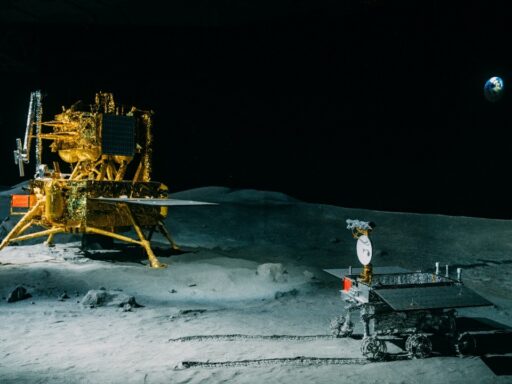
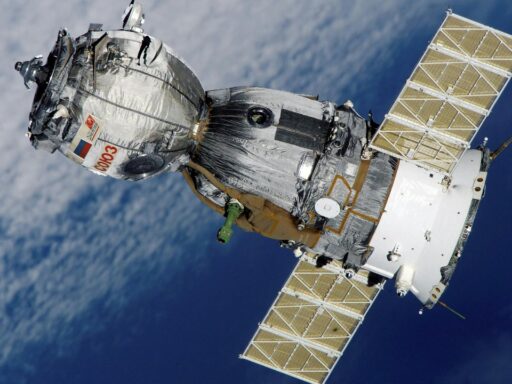
The most striking recent example involves a crew capsule that will now fly empty because one of its windows was struck by orbital junk. The Shenzhou-20 spacecraft, part of China’s human spaceflight program, was slated to carry Astronauts home from the Tiangong station, but engineers found damage on a window that they traced to a high-speed impact. In response, The Shenzhou vehicle is being treated as a testbed rather than a lifeboat, a decision that underlines how a single crack can upend months of planning once debris reaches the inner layers of the glass.
That choice did not come out of nowhere. Earlier in the year, China had already been rattled when Astronauts aboard Tiangong spotted cracks in a different Spacecraft Window, an alarming discovery that forced controllers to delay the November 5 return of three crew members so they could be sure the capsule would make it back to Earth in one piece. According to reporting on that episode, Earlier inspections suggested the damage was consistent with a collision with unidentified orbital debris, a reminder that even a tiny fragment can compromise a pressure boundary that stands between a crew and vacuum.
From paint chips to 130 Million Debris Objects
These incidents are part of a pattern that stretches back years. Astronaut Tim Peake once shared a photo of a gouge in a cupola pane on the International Space Station, explaining that a speck of material, possibly a paint flake or metal fragment just a few millimeters across, had slammed into the window at orbital speed. That impact, described as Tiny Debris Chipped A Window On The Space Station, did not threaten the station’s integrity, but it showed how even the smallest shards can leave visible scars.
The ISS has endured more serious hits as well. In one widely discussed case, a piece of space debris punched a tiny hole in an external robotic arm while the ISS was flying more than 220 miles above Earth, an altitude where relative velocities reach the speed of a bullet. NASA and other agencies have long warned that even small satellites can damage the ISS, and last year the agency had to maneuver the complex to dodge a fragment from an old spacecraft, a maneuver that highlighted how routine these avoidance burns have become.
A sky filled with untracked shrapnel
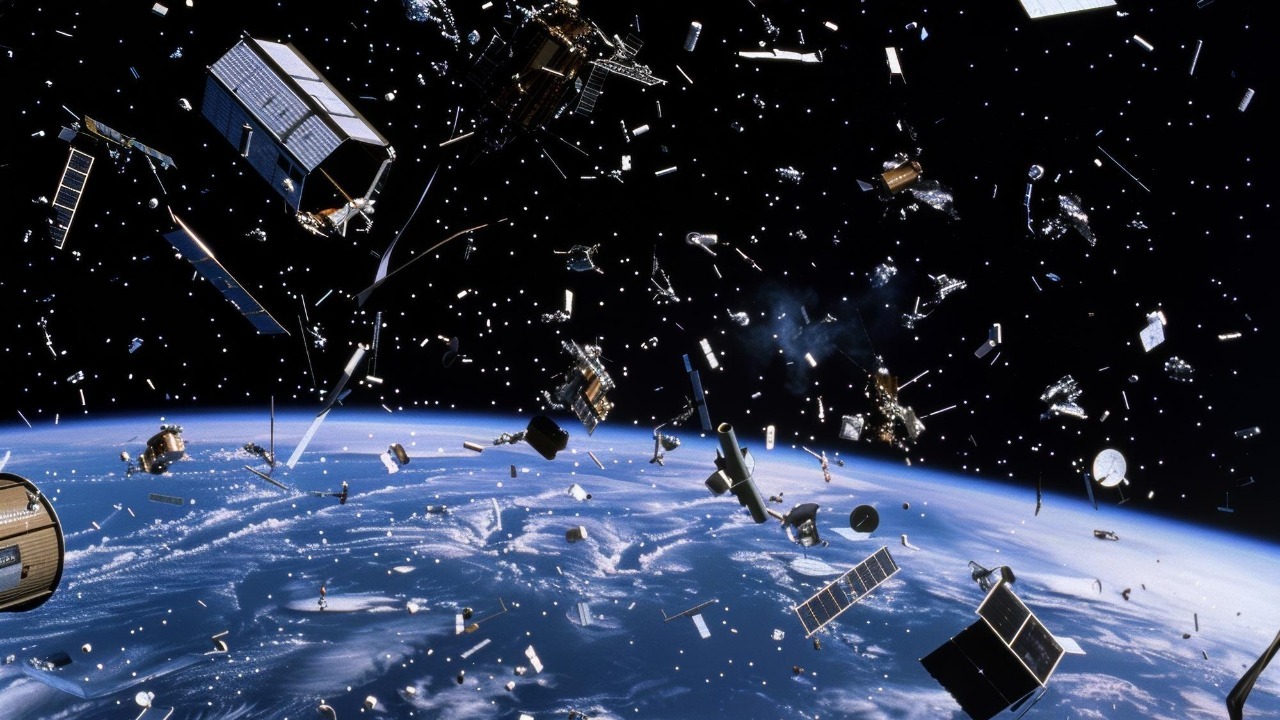
Behind every cracked window is a statistical reality that is getting harder to ignore. According to one widely cited tally, Space debris experts say nearly 130 m pieces of orbital junk are now racing around the planet, most of them too small to track but large enough to pierce a radiator, solar panel, or viewport. A separate analysis notes that there are 130 Million Debris Objects between 1 millimeter and 1 centimeter in size, a swarm of shrapnel that turns key orbital highways into shooting galleries for any spacecraft that passes through.
The numbers only look manageable when you focus on the largest fragments. According to one technical overview, we are actively tracking approximately 36,240 debris objects in orbit, a figure that covers items big enough for ground-based radar to follow. While that catalog is essential for collision avoidance, it is dwarfed by the cloud of smaller pieces, with over 130,000,000 between 1mm–1cm in size that cannot be individually monitored. The European monitoring network that feeds the MASTER models estimates that 54 million objects in the 1 mm to 1 cm range are already present, and that is on top of About 40, 000 cataloged items that are large enough to be treated as full-fledged objects rather than dust.
Emergency maneuvers and political inertia
The operational consequences are already here. One recent orbital emergency unfolded when a cracked window of the Tiangong station forced controllers to reassess their risk tolerance, a scenario that experts stressed was serious but not exceptional. In another case, a separate analysis of the same episode emphasized that Space debris led to an orbital emergency in 2025, raising the question Will anything change as more nations and private companies crowd into the same low Earth orbit shells.
For now, the answer is that mitigation is lagging behind growth. A detailed environment report from Europe notes that the amount of space debris in orbit continues to rise quickly, with About 40, 000 objects now being tracked and a much larger population inferred from models. Yet binding rules on satellite disposal, anti-satellite testing, and active cleanup remain patchwork at best. When I look at the cracked glass on Tiangong and the empty seats on The Shenzhou-20 return capsule, I see not isolated mishaps but early warning shots from a cluttered sky that is waiting for a larger catastrophe to finally force governments to treat orbital junk as the shared infrastructure crisis it has already become.