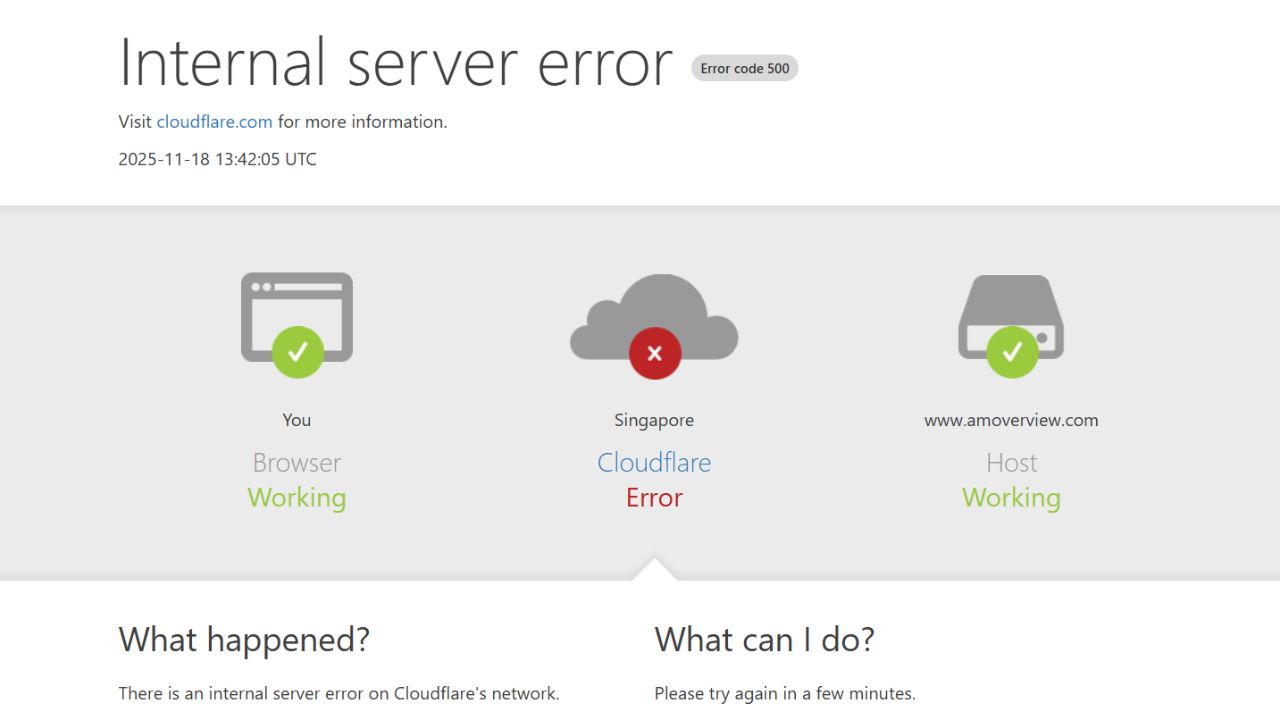

On November 18, 2025, Cloudflare experienced a major outage that led to widespread error messages disrupting websites and apps globally, including X and other key internet services. The incident, described as causing parts of the internet to stop working entirely, affected numerous online platforms that rely on Cloudflare’s infrastructure for security and performance. As the outage unfolded throughout the day, reports highlighted technical problems that halted access to many sites worldwide and left users staring at cryptic server errors instead of familiar homepages.
What is Cloudflare?
Cloudflare is a core provider of internet infrastructure that sits between websites and their users, handling content delivery, DDoS protection, and DNS services for a significant portion of the web. As explained in detail by coverage of what Cloudflare is and why it is causing outages across the internet today, the company operates a global network that routes traffic, filters malicious attacks, and caches content so that pages load faster and more securely. When that network encounters a serious technical problem, the disruption does not stay confined to a single site, it ripples through every domain that depends on Cloudflare’s systems to stay online.
The company’s infrastructure handles traffic for millions of domains, from social networks and news outlets to e-commerce platforms and software-as-a-service tools, which is why today’s outage translated into error messages across the internet rather than a localized glitch. I see that role as making Cloudflare a kind of backbone for the modern web, even though it is a private company rather than a public utility, and that status raises the stakes when something goes wrong. For businesses that have effectively outsourced security and performance to Cloudflare, the events of today underline how a single point of failure in a widely used provider can suddenly turn into a global incident that neither individual site owners nor end users can fix on their own.
Timeline of the Outage
Initial reports of trouble emerged around 12:05 PM UTC, when users began noticing that websites such as X were not working and were instead showing connection failures or server errors. According to an early alert that described websites such as X not working amid technical problems with the internet, the issue was quickly linked to Cloudflare’s infrastructure rather than to any single app or telecom provider. From my perspective, that early identification mattered because it signaled to companies and users that they were dealing with a shared infrastructure problem, not a local network fault or a targeted attack on one platform.
Within about ten minutes, the situation escalated sharply, with reports at 12:15 PM UTC that many parts of internet just stopped working as the outage spread. That description captured how quickly a technical issue inside Cloudflare translated into a visible breakdown for ordinary users, who suddenly could not load banking sites, news pages, or workplace tools that had been functioning minutes earlier. By 1:17 PM UTC, the pattern had shifted from scattered complaints to confirmed widespread downtime, with one report stating that parts of the internet just stopped working, and that progression underscored how a centralized infrastructure provider can turn a configuration or network failure into a near-simultaneous outage across continents.
Impact on Major Services
Social media platforms were among the most visible casualties, with X and more apps hit by the internet outage as Cloudflare’s problems cascaded through their back-end connections. Users trying to refresh feeds, post updates, or load media found that core features simply stalled, while some mobile apps displayed generic “try again later” messages that masked the underlying infrastructure failure. For creators, advertisers, and newsrooms that rely on real-time distribution through X and similar services, the interruption meant delayed campaigns, missed announcements, and a sudden loss of audience reach at a moment when they had little visibility into when normal service would resume.
The disruption extended far beyond social media, with sites across the world hit as Cloudflare’s outage affected e-commerce, news, and streaming platforms that share the same underlying infrastructure. Reports described users encountering 5xx server faults and other gateway errors that started as sporadic glitches and evolved into widespread errors by mid-afternoon, a pattern that highlighted how dependent modern web services are on a small number of global providers. I see the stakes here in very practical terms, from online retailers losing transactions during peak shopping hours to remote workers being locked out of collaboration tools, all because a third-party network layer failed in ways they could neither anticipate nor control.
Cloudflare’s Role in the Disruption
Cloudflare’s central role in today’s disruption stems from the way its network routes and secures web traffic for a vast number of sites, effectively acting as a shared front door for much of the internet. As explained in coverage that asked what is Cloudflare and why is it causing outages across the internet today, the company’s systems inspect traffic for malicious activity, optimize routes, and cache content at the network edge. When that machinery falters, even briefly, the result is a chain reaction in which browsers and apps receive error codes instead of valid responses, and from the user’s perspective it looks as if the destination site itself has crashed.
Reports through the afternoon described how Cloudflare’s infrastructure failure triggered that chain reaction, with updates indicating that recovery efforts were progressing but still leaving residual issues for some services. As coverage of the outage causing error messages across the internet made clear, businesses and developers reported halted operations, stalled checkouts, and broken APIs while they waited for Cloudflare to stabilize its network. From my vantage point, those stakeholder reactions highlight a broader trend in which organizations trade the complexity of running their own global infrastructure for the efficiency of a shared provider, only to discover during an incident like today’s that resilience now depends on the operational choices of a single company.