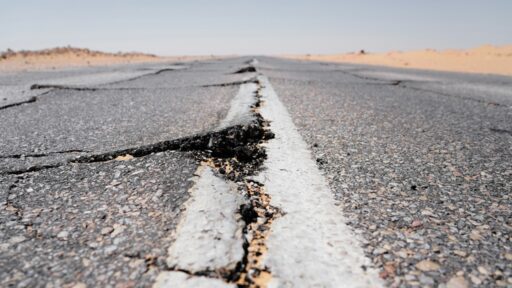
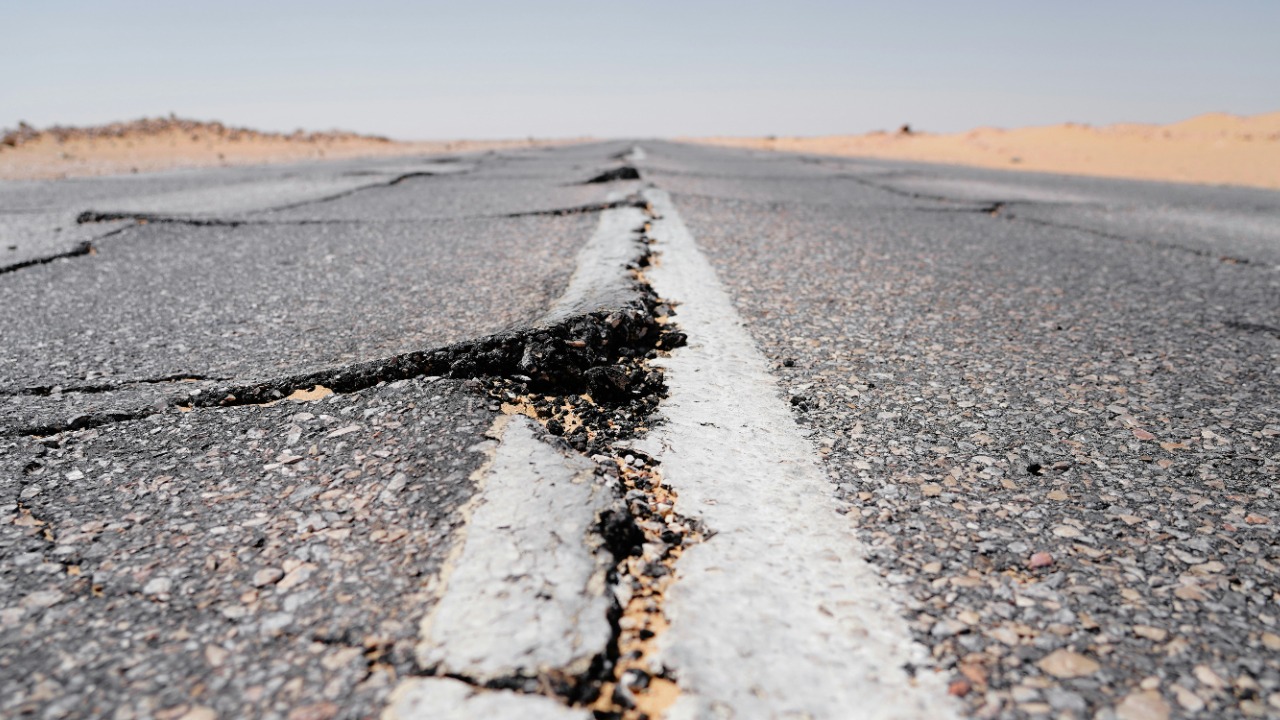

A magnitude 4.3 earthquake startled residents of a sparsely populated corner of central Nevada, shaking homes and nerves in and around the small community of Tonopah. The shallow quake struck in a remote stretch of desert, yet its sudden jolt was strong enough to be widely felt across Nye County and to revive questions about how prepared rural towns are for seismic surprises.
Preliminary readings classified the event as a moderate 4.3, powerful enough to rattle buildings and send people reaching for doorframes, but generally below the threshold that typically causes major structural damage. Early reports from the region indicated no immediate injuries or significant destruction, although locals described a sharp, abrupt motion that cut through the quiet of a weekend morning.
What seismologists know about the 4.3 Nevada quake
Seismologists traced the epicenter of the magnitude 4.3 quake to an area near Tonopah in central Nevada, a region that sits within the tectonically active Basin and Range province. Detailed event data show that the shock was recorded as a 4.3 M Magnitude Earthquake located 0.0 km from Tonopah, Nevada, United States, with the origin time listed in UTC. A separate seismological bulletin described the same event as a shallow magnitude 4.3 that occurred in the morning and noted that initial readings placed it northeast of Tonopah, consistent with the broader pattern of intraplate faulting that characterizes central Nevada.
One detailed analysis categorized the shock as a Moderate magnitude 4.3 event that struck 49 miles northeast of Tonopah, Nevada, United States, on a Sunday in Mar, with a reported origin time of 16:46 and a shallow depth of 46 kilometers. That location places the epicenter in a sparsely inhabited part of the high desert, where low population density limits the risk of widespread damage even when the ground moves abruptly. Regional maps show that this portion of Nevada is crisscrossed by faults that accommodate the slow stretching of the crust, helping explain why a town the size of Tonopah can still experience noticeable earthquakes despite its remote setting.
How residents in TONOPAH, Nev reacted to the sudden jolt
Residents in TONOPAH, Nev reported feeling a sharp, brief shock that rippled through homes and businesses, with many describing a single strong jolt rather than a long rolling motion. One account noted that Residents in Nye County, Nevada, were rattled by a magnitude 4.3 quake that struck near town, prompting people to check on neighbors and scan their walls for new cracks. The same report emphasized that the shaking was widely felt across the rural area, including in outlying properties where long drives separate ranch houses and mobile homes.
Early information from local monitoring networks indicated that the main 4.3 shock was followed later in the day by a smaller 3.1 M event located very close to Tonopah, suggesting that the crust was still adjusting after the initial rupture. Data from one catalog listed a 3.1 M Magnitude Earthquake 0.0 km from Tonopah, Nevada, United States, with the time again reported in UTC, a pattern consistent with minor aftershocks that often trail a moderate mainshock. For many locals, the combination of a clearly felt main event and a follow-up tremor reinforced the sense that the ground under this small town remains restless even when the skies are clear.
A rural region used to shaking, but still vulnerable
The Tonopah area sits in a part of Nevada that experiences regular low to moderate seismic activity, a reality that sometimes fades from daily conversation until a jolt like this 4.3 brings it back into focus. A broader seismic overview of Nevada shows that the state lies within a zone of distributed extension, where faults accommodate the slow widening of the Basin and Range, and where rural counties can experience clusters of earthquakes over time. While the latest Tonopah event did not appear on the global list of the most significant recent earthquakes, which is dominated by larger events such as a 6.453 km WNW of Port Olry, Vanuatu, and a 6.232 km SW of Ovalle, Chile, it still had a tangible local impact that statistics alone cannot capture.
Seismologists have also noted that the 4.3 near Tonopah occurred on the same day that other parts of the world felt the ground move, including a magnitude 5.8 in Japan and a magnitude 2.1 near Indi in California, according to a Report that tracked three earthquakes on Mar 1. That global context highlights how even a moderate 4.3 in a remote Nevada town fits into a wider pattern of ongoing tectonic activity, reminding residents that their quiet desert surroundings are part of a dynamic planet. For small communities like Tonopah, where emergency resources are limited and distances to major hospitals are long, even a modest quake becomes a test of local preparedness and communication.
What the 4.3 tells experts about Nevada’s seismic risk
From a scientific perspective, the Tonopah earthquake adds another data point to the growing catalog of events that help researchers refine hazard models for the interior West. The detailed event page for this shock, listed under ID nn00911469 in a Discovered seismic database, provides precise coordinates, depth estimates, and shaking intensity reports that feed into long term assessments of how often communities in Nevada can expect similar jolts. Those models are maintained within a broader earthquake-hazards program that evaluates risk nationwide, from the high profile faults of California to the quieter but still active structures that cut across the Great Basin.
Experts also compare events like the Tonopah 4.3 to larger quakes elsewhere to calibrate how magnitude translates into impact in different settings. A global list of significant earthquakes from earlier this year, which includes events such as a 6.453 km WNW of Port Olry, Vanuatu, and a 6.232 km SW of Ovalle, Chile, shows that much higher magnitudes are required to draw worldwide attention, yet local experience can be shaped as much by building type and distance from the epicenter as by the number on a seismograph. In Tonopah, where many structures are low rise and spread out, the 4.3 produced more anxiety than damage, but it also provided a live drill for how quickly residents can react when the shaking starts.
Preparedness lessons for a small desert town
For people in Tonopah, the 4.3 quake served as an unwelcome but useful reminder that earthquake readiness is not just an urban concern. Local coverage of earlier seismic activity in the state, including a separate 4.3 magnitude earthquake that shook parts of Nevada and was captured on regional television segments, has already prompted some communities to review their emergency procedures, as seen in archived footage of a 4.3 magnitude event that shook Nevada. In a town where many residents live in older homes or manufactured housing, simple steps such as securing water heaters, anchoring bookshelves, and keeping a go bag by the door can significantly reduce risk.
National guidance on earthquake safety also emphasizes the importance of public education, early warning systems where available, and clear communication channels between local authorities and residents. Programs that focus on earthquake-hazards stress that even moderate events like a 4.3 can disrupt power, crack roads, or trigger rockfalls, especially in mountainous or desert terrain. For Tonopah and other rural communities scattered across Nevada, the latest jolt may fade quickly from headlines, but the lessons it offers about preparation, awareness, and resilience are likely to linger far longer than the shaking itself.