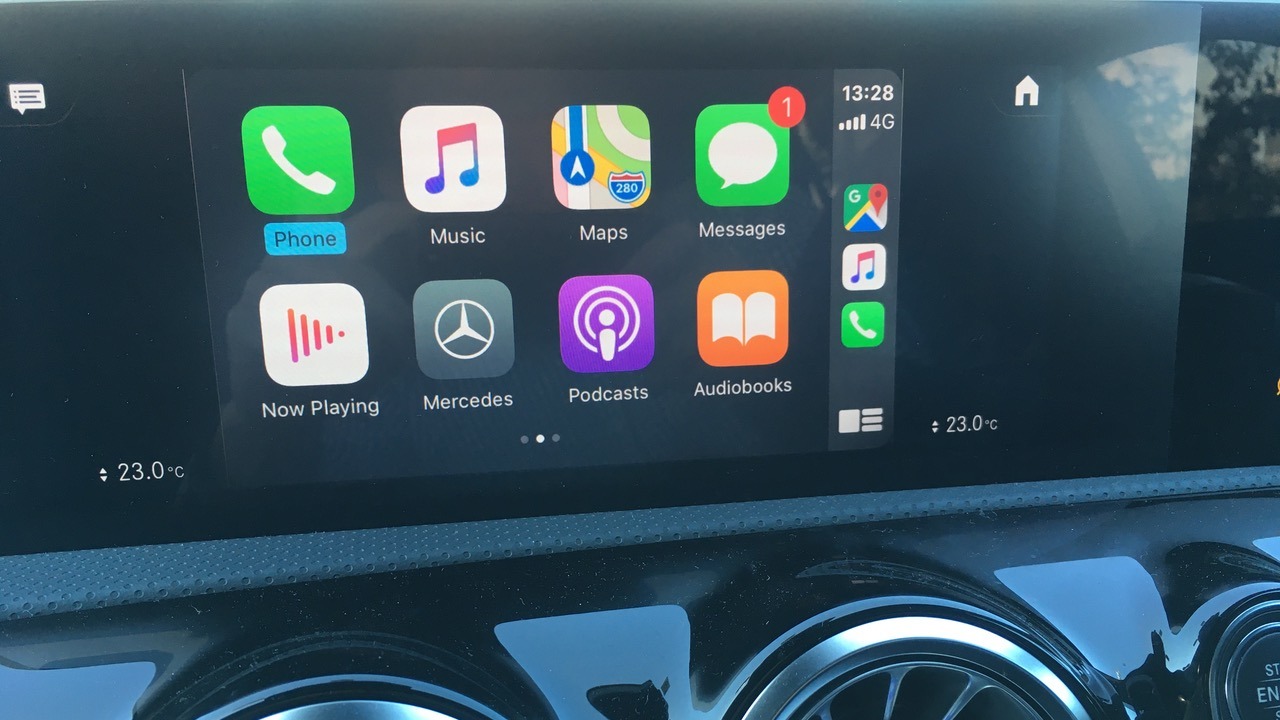

For a decade, Apple CarPlay and Android Auto have been selling points on dealer lots, promising to turn any dashboard into an extension of a smartphone. Now the tide is turning, not because drivers suddenly dislike mirroring, but because carmakers see a far richer prize in controlling the entire screen themselves. Behind the shift sits a projected 14 billion dollars in fresh infotainment revenue by 2030, plus a data stream that could reshape how cars are sold, insured, and serviced.
That financial and data upside is prompting automakers to rethink their once eager embrace of Big Tech in the cockpit. Rather than letting Apple and Google own the in-car experience, manufacturers are quietly building closed ecosystems that can sell subscriptions, harvest driving behavior, and feed a growing appetite for personalized services.
Why 14 billion dollars changes the CarPlay equation
Automakers are not turning away from CarPlay and Android Auto on a whim. A detailed forecast from consulting firm Oliver Wyman projects that in-car software and services will unlock 14 billion dollars in additional auto revenue by 2030, with Europe expected to capture 46 percent of that total and the United States following at 44 percent. That kind of money transforms infotainment from a nice-to-have feature into a core business line, one that executives are reluctant to outsource to Apple and Google when they could instead own the interface, the billing relationship, and the customer data through their own platforms linked to this projected Infotainment To Unlock Billion Dollars In Auto Revenue By 2030.
Industry reporting describes infotainment as a gateway to recurring revenue from navigation upgrades, connected safety features, streaming media, and even insurance products. A separate analysis of automaker plans notes that companies are increasingly treating the dashboard as a 14 billion dollar business in its own right, not just a hardware cost center. That shift in mindset helps explain why so many brands are exploring proprietary operating systems and app stores, and why they now have 14 billion reasons to make drivers stop using CarPlay and Android in favor of native software that they fully control.
GM’s high-profile break with Apple CarPlay and Android Auto
The clearest example of this strategic break comes from General Motors. The company has confirmed that it will remove Apple CarPlay and Android Auto smartphone projection from future vehicles as it rolls out a new generation of software-defined models. According to one detailed report, GM plans to drop Apple CarPlay and Android Auto from much of its future lineup, starting with portions of its electric vehicle range in North America, positioning an in-house infotainment platform as the primary interface and explicitly tying that move to tighter control over subscriptions and connected services, a decision explained as GM plans to remove Apple CarPlay and Android Auto from future vehicles.
Coverage of the rollout in specific models such as the Cadillac Optiq and other North American EVs describes a system built around embedded connectivity, integrated navigation, and direct links to GM accounts, rather than a phone projection layer. Commentators have framed this as a gamble that drivers will accept a GM-branded interface in exchange for tighter integration with vehicle features and promised enhancements over time. At the same time, polls of GM owners and enthusiasts highlight real concern that removing CarPlay and Android Auto from North American EVs could backfire if the company’s software falls short of the polished experience Apple and Google already deliver.
Data, control, and the fight over the driver relationship
Behind the revenue projections sits an even more sensitive asset: data. A detailed feature on the shift away from CarPlay and Android Auto argues that the prime reason GM and other automakers are moving in this direction is simple, they want the navigation entries, voice commands, and media choices to flow through their own servers rather than through Apple and Google. When drivers punch in a destination, search for a restaurant, or accept a route suggestion, that information becomes part of a behavioral profile that can inform everything from maintenance reminders to targeted offers, a trove that automakers are reluctant to hand over to external platforms according to this explanation of why automakers are ditching Apple CarPlay and Android Auto.
Separate reporting on connected cars and privacy shows how far this data push can go. Carmakers have explored driver tracking that feeds into insurance underwriting, using telematics to monitor braking, acceleration, and even where and when a vehicle is driven, then sharing that information with insurers. Privacy notices from large media and data companies illustrate how location information, app usage, and browsing behavior can be combined for advertising and analytics, and similar patterns are emerging in automotive terms of service. For automakers, keeping drivers inside a proprietary infotainment system instead of CarPlay or Android Auto means they can capture these data streams directly, bundle them into subscription offerings, and potentially sell them onward in ways that a smartphone projection layer would complicate.
How automakers justify the shift to drivers
Publicly, car companies rarely lead with talk of data monetization when explaining why they are sidelining CarPlay and Android Auto. Instead, they emphasize safety, reliability, and deeper integration with vehicle hardware. A widely cited analysis of GM’s move notes that the company has argued Apple CarPlay and Android Auto can contribute to driver distraction, since they encourage users to treat the car screen like a phone and can prompt fiddling with third party apps. GM executives have also highlighted the benefits of having a single, tightly integrated software stack that controls driver assistance, battery management, and cloud-based navigation, a message amplified in coverage that describes how GM drops Apple CarPlay and Android Auto in new vehicles while pitching its own system as safer and more consistent.
Other automakers make similar arguments. Commentators point out that if a car runs entirely on the manufacturer’s own platform, the company can push over-the-air updates, fix bugs, and add features without worrying about compatibility with Apple or Google protocols. Some brands also claim that native systems can better integrate advanced driver assistance, head-up displays, and instrument clusters in ways that CarPlay and Android Auto cannot fully match. However, consumer-focused coverage and polls suggest that many drivers still see CarPlay and Android Auto as more intuitive and familiar than most factory interfaces, which raises the risk that automakers could face backlash if their replacements feel slower, buggier, or more restrictive than the smartphone-centric experience they are displacing.
The next phase of the infotainment battle
What happens next will depend on whether automakers can deliver software that genuinely competes with Apple and Google on usability while quietly meeting their own revenue and data goals. Analysts who track the shift away from Android Auto and Apple CarPlay note that several brands are experimenting with hybrid approaches, such as limiting projection to secondary screens or offering it only on certain trims, while steering most users toward built-in navigation and media apps. A consumer tech explainer on why some cars have started getting rid of Android Auto describes how automakers are rethinking their strategies around Android Auto and Apple CarPlay, with some reserving full phone integration for higher-priced models and others tying it to subscription packages, a pattern that reflects how Automakers are recalibrating their approach to Android Auto and Apple CarPlay.
Industry coverage of the broader trend stresses that GM is not alone. A growing list of manufacturers are exploring their own operating systems, app partnerships, and subscription bundles that mirror the smartphone ecosystem but keep the keys in-house. At the same time, some analysts warn that heavy-handed restrictions on CarPlay and Android Auto could push tech-savvy buyers toward rival brands that still offer seamless phone mirroring. With infotainment now framed as a 14 billion dollar opportunity, the battle over who controls the dashboard is set to intensify, and the companies that strike the right balance between monetization and user experience are likely to define how drivers interact with their cars for years to come.