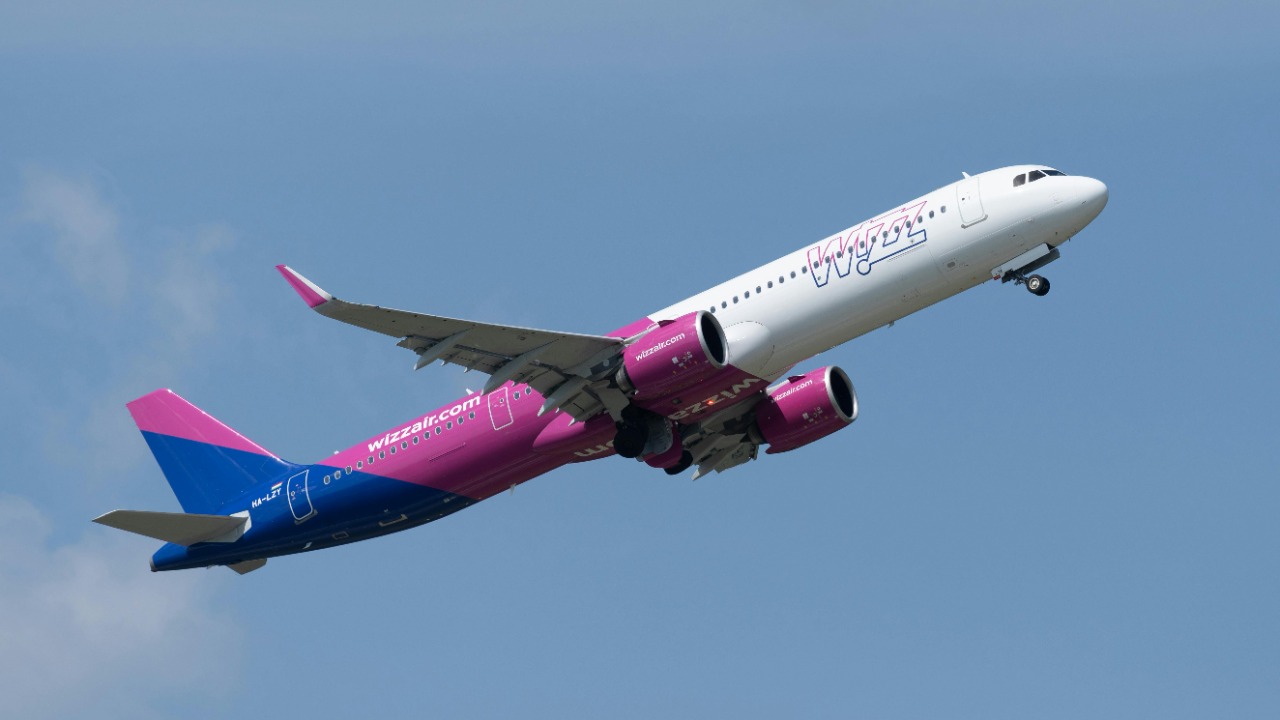

Wizz Air is planning to establish bases at TLV in Tel Aviv and ETM in Eilat as part of a broader growth strategy in Israel, signaling a deeper commitment to the country’s outbound and inbound travel markets. The carrier will also launch its first direct route between Israel and Budapest in March 2026, marking a significant expansion into the Hungarian capital from the Israeli market and reshaping low-cost connectivity between Central Europe and the Middle East.
Wizz Air’s Strategic Expansion in Israel
Wizz Air has confirmed that it is eyeing new bases at Tel Aviv’s TLV and Eilat’s ETM, positioning the two airports as cornerstones of its next phase of regional development. By focusing on both the country’s primary international gateway in Tel Aviv and the Red Sea resort city of Eilat, the airline is effectively stitching together leisure and business demand into a single Israeli strategy that builds on its prior presence in the wider region. The decision, detailed in reporting on how Wizz Air eyes TLV, ETM bases, to launch Israel-Budapest route in March 2026, underscores how management sees Israel as a market capable of supporting dedicated aircraft, local crews, and a more complex schedule than simple out-and-back rotations from existing European bases.
By tying the TLV and ETM plans to a concrete March 2026 milestone, Wizz Air is also drawing a line under earlier, more tentative ideas for Israeli connectivity that did not progress to full base status. Previous concepts for growth in the country were largely framed around opportunistic capacity additions, but the new timeline signals a shift toward embedded operations that can weather seasonal swings and geopolitical uncertainty. For stakeholders such as airport operators, tourism boards, and local suppliers, the prospect of permanent bases rather than ad hoc flights raises expectations of longer term investment, more predictable traffic flows, and a clearer framework for joint marketing and infrastructure planning.
Launch of the Israel-Budapest Route
The centrepiece of the strategy is the launch of Wizz Air’s first direct Israel-Budapest route, which will begin operating in March 2026 as the airline’s inaugural nonstop service between the two destinations. According to the same reporting on the Israel-Budapest launch, the carrier is framing this as a flagship connection that links Israel’s largest metropolitan area with the Hungarian capital, a city that already serves as a key hub in Wizz Air’s European network. By designating the service as its first direct route between Israel and Budapest, the airline is filling a gap in its own map and creating a new low-cost option for passengers who previously had to rely on indirect itineraries or higher-fare competitors.
The March 2026 start date is calibrated to capture growing demand for affordable travel between Central Europe and Israel, particularly as tourism and business links continue to recover and diversify. Operational details in the planning phase point to a schedule built around multiple weekly frequencies, using the same single aisle Airbus narrowbody family that underpins Wizz Air’s broader fleet, in order to keep unit costs low and fares competitive. For travelers, the combination of a predictable timetable and a low-cost model is likely to expand the addressable market on both sides, encouraging weekend city breaks from Budapest to Tel Aviv as well as outbound leisure trips from Israel to Hungary and beyond via Budapest’s connecting network.
Implications for TLV and ETM Bases
Once established, the TLV base is expected to function as the operational anchor for the Israel-Budapest route, with locally based aircraft and crews enabling early morning departures, late evening returns, and tighter turnarounds than would be possible from a purely foreign base. This hub role at Tel Aviv will not only support the Budapest flights but also create a platform for additional point to point routes into Central and Eastern Europe, leveraging Wizz Air’s existing presence in cities such as Warsaw, Bucharest, and Sofia. For Ben Gurion Airport, the shift from visiting aircraft to a resident fleet promises higher utilization of gates and services, as well as a more stable pipeline of passenger volumes that can justify investments in ground handling, security, and retail.
In parallel, the development of the ETM base in Eilat is designed to integrate the Red Sea resort city into Wizz Air’s broader Israeli network, rather than leaving it as a peripheral seasonal destination. By basing aircraft at ETM, the airline can schedule direct services that feed into its European network while also coordinating with TLV operations to balance capacity across the country’s north-south axis. The reporting on the accelerated focus on TLV and ETM indicates that timelines for these base establishments have effectively been pulled forward in response to regional recovery, a move that raises the stakes for local tourism operators and hospitality businesses that depend on consistent, year round air access.
Stakeholder Impacts and Market Changes
For Hungarian travelers, the new Budapest access from Israel starting in March 2026 opens a direct, low-cost bridge to one of the Middle East’s most dynamic tourism and technology markets. The Israel-Budapest route gives residents of Budapest and its catchment area a straightforward way to reach Tel Aviv’s beaches, nightlife, and cultural attractions, as well as Eilat’s Red Sea resorts via domestic or connecting services. This increased connectivity is likely to stimulate two way tourism flows, encourage short business trips tied to Hungary’s growing role in European manufacturing and services, and support diaspora and family travel that previously relied on more expensive or less convenient options.
Israeli airports such as TLV and ETM stand to gain from the additional competition and economic activity that Wizz Air’s expansion brings, particularly in the low-cost carrier segment where price sensitive travelers are most responsive to new capacity. As Wizz Air positions itself against rivals on the Israel-Budapest corridor, including both traditional network airlines and other budget operators, the pressure to offer attractive fares and reliable schedules is likely to intensify, benefiting consumers while challenging incumbents to refine their own strategies. For the broader market, the combination of new bases, a flagship route into Budapest, and a clear March 2026 timeline signals that Israel is moving higher on Wizz Air’s strategic agenda, with implications for job creation, airport revenues, and the competitive balance across Europe-Middle East air travel.