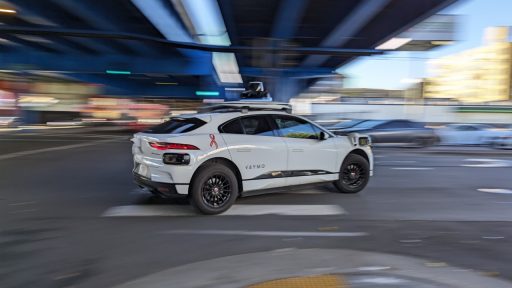
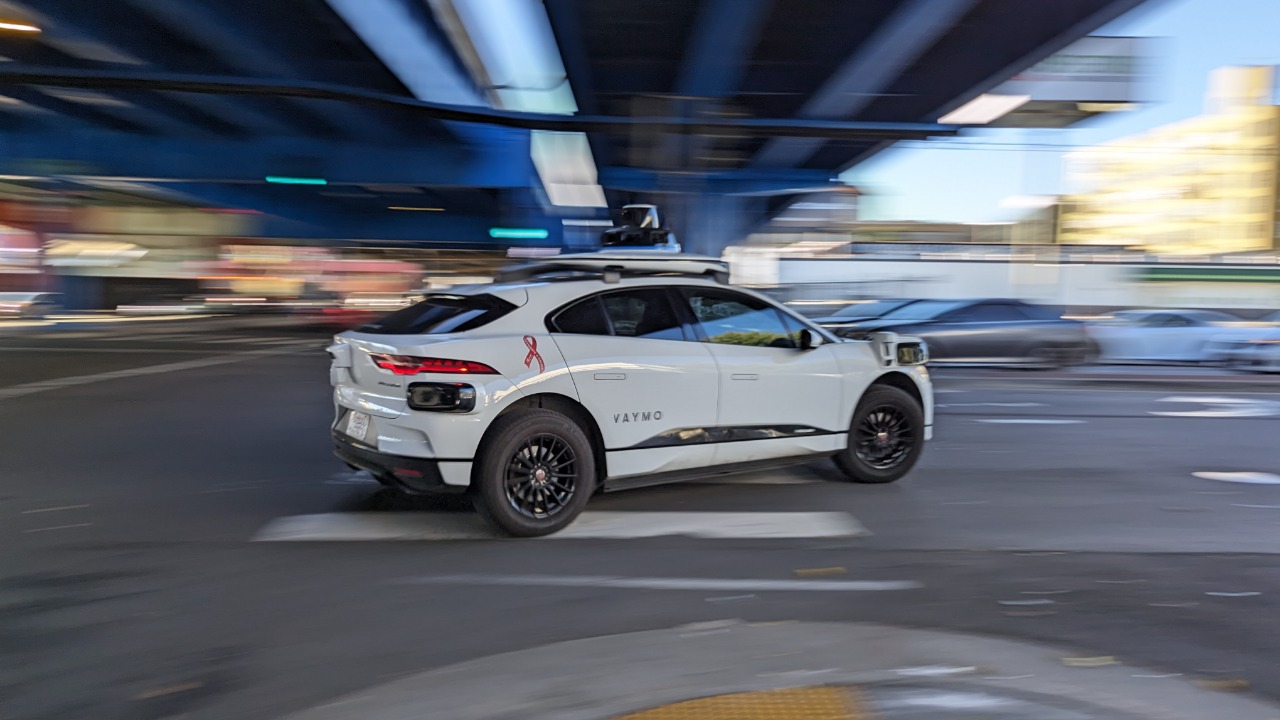

Alphabet unit Waymo has flipped the switch to run its robotaxis without human drivers in Nashville, turning a test market into a live showcase for fully autonomous ride hailing. The move puts self-driving cars into everyday traffic in the heart of Tennessee’s capital, from tourist-packed streets to commuter corridors, and signals that the technology is moving out of pilot mode and into regular service.
The decision to remove safety drivers from Waymo’s vehicles in Nashville follows months of preparation, regulatory coordination, and partnership building with local mobility players. It also positions the city, better known for country music and healthcare, as one of the first urban areas in the United States where residents can routinely book a driverless ride as easily as opening a rideshare app.
Waymo’s Nashville rollout hits full autonomy
Waymo has confirmed that it has gone fully autonomous in Nashville, with the company stating that its vehicles are now operating without human drivers on public streets in the city. The company, a unit of Alphabet that trades under the ticker GOOG, has framed the shift as a ramp-up of operations rather than a small-scale experiment. In earlier statements, Waymo described how its self-driving system would handle complex city environments, and Nashville’s mix of dense downtown streets and sprawling suburbs now serves as a real-world test of that promise.
The company’s announcement that it has gone fully autonomous in the city came after it had already signaled plans to expand its presence in Tennessee. Reporting on the move highlighted that Alphabet’s Waymo unit explicitly tied the decision to investor interest in autonomous technology and to the company’s broader strategy of scaling robotaxi services across multiple metropolitan areas. A related update on Waymo in Nashville underscored that the company sees the city as a key node in that network, not just a peripheral test site.
From test cars to a driverless taxi service
Waymo’s shift to full autonomy in Nashville did not happen overnight, and the company has been clear that it is launching a complete taxi service rather than a limited demo. Earlier coverage described how Waymo announced a fully autonomous taxi operation in the city, signaling that riders would be able to hail vehicles with no one behind the wheel using the same kind of smartphone interface that powers its services in other markets. That rollout, framed as a launch of a fully autonomous taxi service in Nashville, marked the point where the company moved from supervised testing to commercial rides.
Before that milestone, local residents had already seen Waymo’s white SUVs circulating with sensors spinning on their roofs as part of an autonomous testing program. Coverage from NASHVILLE, Tenn, carried by WZTV, noted that Waymo self-driving cars were expected to begin operating autonomously in the city, with specific attention to how the vehicles would obey school bus rules and other local traffic requirements. That earlier stage laid the groundwork for the current driverless taxi service, familiarizing both regulators and residents with the sight of autonomous vehicles sharing the road.
Partnerships with Lyft and Uber shape the market
Waymo’s Nashville strategy is not just about its own app, it is also about plugging into existing ride-hailing networks that already have millions of users. A joint announcement titled Lyft and Waymo Launch Partnership to Expand Autonomous Mobility to Nashville detailed how the two companies planned to bring autonomous rides to the city in 2026, positioning the collaboration as a way to fold Waymo’s driverless fleet into Lyft’s everyday commute and trip options. The release, which carried the heading Lyft and Waymo, emphasized that the goal was to expand autonomous mobility in Nashville and framed the effort in the context of About Lyft and its focus on making rides available whether a user is commuting or taking a one-off trip.
That partnership sits alongside Waymo’s broader pattern of working with multiple ride-hailing platforms in different markets. A discussion of the state of play in autonomous rides noted that Waymo also has a partnership with Uber in other cities, and that the companies now have a partnership in Nas, a reference to Nashville, as part of the 2026 expansion. The video commentary on Lyft and Waymo’s autonomous rides in Nashville in 2026 highlighted how these alliances are reshaping the competitive landscape, with Uber and Lyft both looking to integrate self-driving fleets rather than build the technology themselves.
How Nashville became a proving ground
Nashville’s selection as a fully autonomous market reflects more than just its growing population and tourism economy, it also speaks to the city’s transportation profile and regulatory posture. The metropolitan area, often branded as Nashville, has a mix of dense downtown streets, interstate connectors, and residential neighborhoods that give autonomous systems a wide range of driving scenarios to learn from. Local coverage from NASHVILLE, Tenn, via WZTV, described how officials expected Waymo’s self-driving vehicles to begin operating autonomously in the city and stressed that the autonomous Waymo cars would still be required to obey school bus rules and other state traffic laws, a reminder that the technology is being layered onto existing legal frameworks rather than replacing them.
From Waymo’s perspective, the city also offers a chance to demonstrate that driverless technology is not limited to coastal tech hubs. Reporting on the company’s decision to go fully autonomous in Nashville underscored rising investor interest in autonomous vehicles and framed the move as part of a broader push to prove the business case in a variety of American cities. By choosing a market that blends heavy tourism, a strong healthcare sector, and a growing tech presence, Waymo is effectively betting that if its service can handle the demands of Music City, it can be replicated in other mid-sized metros.
What full autonomy means for riders and the industry
For riders, the shift to fully autonomous service in Nashville changes both the experience inside the car and the economics behind each trip. Instead of a human driver, passengers are greeted by a vehicle that handles acceleration, braking, and navigation through a combination of sensors and software, with remote support available if needed. Earlier coverage of Waymo’s plans for the city explained that the autonomous cars would be expected to follow all local rules, including those around school buses, and that they would operate as part of a rideshare-style network that could be accessed through familiar apps. The WZTV report on NASHVILLE highlighted those safety expectations, which are central to public acceptance.
For the industry, Nashville’s fully autonomous operations serve as a bellwether for how quickly robotaxis can move from pilot projects to profitable businesses. The partnership materials that described how Lyft and Waymo would Expand Autonomous Mobility to Nashville framed the city as a key test of whether autonomous rides can be integrated into mainstream mobility platforms. Commentary on the broader state of play, including the note that Waymo has a partnership with Uber in different markets and now a partnership in Nas, suggests that the competitive lines between traditional ride-hailing and autonomous technology providers are blurring. If the Nashville deployment proves reliable and cost effective, it will strengthen the case for similar rollouts in other cities and accelerate the shift toward driverless urban transport.