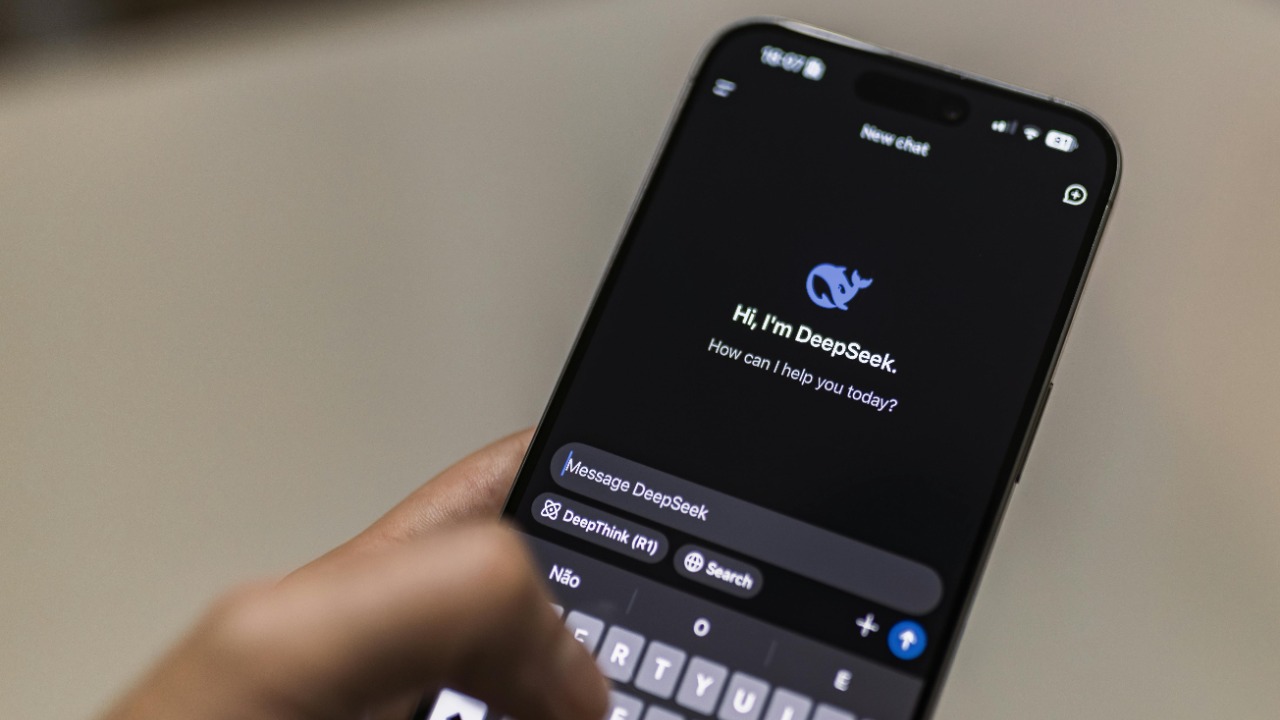

U.S. lawmakers are pressing the Pentagon to designate Chinese AI developer DeepSeek and electronics giant Xiaomi as firms that allegedly support China’s military, expanding a controversial list that can trigger U.S. investment and trade restrictions. The push reflects mounting concern in Washington that Chinese technology companies, including DeepSeek, could bolster Beijing’s defense capabilities and highlights renewed scrutiny of Xiaomi after it previously challenged a similar U.S. designation in court.
Lawmakers’ New Push on DeepSeek and Xiaomi
According to a group of U.S. lawmakers cited in a detailed request to the Defense Department, the Pentagon is being urged to add Chinese artificial intelligence firm DeepSeek to its list of companies alleged to have ties to the People’s Liberation Army. The lawmakers, whose letter is described in the report on US lawmakers urging the Pentagon to add DeepSeek and Xiaomi to the list of firms allegedly aiding the Chinese military, argue that DeepSeek’s AI models and research could be repurposed for military planning, targeting, or surveillance. Their appeal signals that congressional scrutiny is no longer confined to traditional defense contractors or hardware manufacturers, but is now zeroing in on software-centric firms that sit at the core of China’s AI ecosystem.
The same lawmakers are also pressing the Pentagon to add Xiaomi to the Defense Department list of companies accused of aiding the Chinese military, reviving a dispute that previously played out in U.S. courts. In their view, Xiaomi’s extensive global footprint in smartphones, connected devices, and cloud-linked services creates potential channels for data collection and technology transfer that could benefit China’s armed forces or security services. By pairing DeepSeek and Xiaomi in a single request, the lawmakers are effectively broadening the U.S. focus from legacy industrial and telecom players to a new generation of AI and consumer-tech brands, a shift that could reshape how multinational technology firms assess political and regulatory risk in the United States.
What the Pentagon List Means in Practice
The Defense Department list at the center of the lawmakers’ appeal is more than a symbolic roster, it is a gateway to a range of U.S. restrictions that can limit capital flows, technology exports, and business partnerships. If the Pentagon formally categorized DeepSeek as a company allegedly supporting China’s military, U.S. investors could face heightened pressure or outright prohibitions on funding its operations, and American chipmakers or cloud providers might be constrained from supplying the computing power that underpins its AI models. For DeepSeek, which depends on access to advanced semiconductors and global research collaboration, such a designation would not only threaten its growth prospects but also signal to partners worldwide that engagement with the firm carries significant geopolitical risk.
Xiaomi would confront a different but equally serious set of consequences if it were newly added to the Pentagon list, particularly given its history of contesting a prior U.S. designation. A renewed listing could complicate its access to U.S. capital markets, discourage institutional investors from holding its shares, and potentially disrupt relationships with American component suppliers that feed into its smartphones, wearables, and smart-home devices. The lawmakers’ appeal underscores how these designations have become a central tool in U.S. efforts to constrain Chinese military-linked technology development, turning the Pentagon list into a key lever for shaping global supply chains and investment patterns that touch both DeepSeek and Xiaomi.
DeepSeek’s Role in China’s AI and Defense Ecosystem
In their request, U.S. lawmakers describe DeepSeek as an artificial intelligence firm whose technology could be leveraged by China’s military or defense industry, even if its public-facing products are marketed for civilian uses. They point to the dual-use nature of large language models, computer vision systems, and autonomous decision-making tools, which can support everything from logistics optimization to battlefield situational awareness. By framing DeepSeek’s research as inherently capable of military application, the lawmakers are effectively arguing that the company sits within a broader Chinese strategy to harness AI for warfighting advantages, including faster targeting cycles and more sophisticated information operations.
The concerns raised in the lawmakers’ request center on the possibility that DeepSeek might contribute advanced AI capabilities to China’s armed forces or security apparatus, either directly through contracts or indirectly through state-directed technology transfer. They warn that AI models trained on vast datasets could be adapted for surveillance of domestic populations, analysis of foreign military movements, or cyber operations that exploit vulnerabilities in critical infrastructure. In my view, the push to list DeepSeek reflects a broader U.S. shift toward scrutinizing AI developers as potential enablers of Chinese military modernization, a shift that treats algorithmic innovation and data access as strategic resources on par with advanced missiles or stealth aircraft.
Renewed Scrutiny of Xiaomi
U.S. lawmakers are again targeting Xiaomi, urging the Pentagon to classify it as a firm allegedly aiding China’s military despite its global branding as a consumer electronics and smartphone maker. Their argument rests on the scale and reach of Xiaomi’s devices, which are embedded in daily life across Asia, Europe, and other regions through Android smartphones, Mi-branded smart TVs, and a wide array of Internet of Things gadgets. From the lawmakers’ perspective, a company that manages such a vast network of connected hardware and user data cannot be viewed solely as a commercial actor, particularly in a system where Chinese law can compel firms to cooperate with state security demands.
The call to list Xiaomi revives earlier U.S. concerns that its technology and data could be used to support Chinese military or security objectives, concerns that previously led to a designation that Xiaomi challenged in court and ultimately succeeded in overturning. Renewed pressure from Congress suggests that, despite that legal outcome, suspicion in Washington toward Chinese consumer-tech brands with large international footprints has not eased. For Xiaomi, a fresh Pentagon listing would not only reopen a contentious chapter in its relationship with U.S. regulators, it would also force global carriers, app developers, and component suppliers to reassess whether long-term partnerships with the company are compatible with tightening U.S. national security policy.
Escalating U.S.–China Tech and Security Tensions
The lawmakers’ appeal regarding DeepSeek fits into a broader pattern of U.S. actions aimed at curbing Chinese access to advanced semiconductors, AI tools, and defense-related technologies, a pattern that has included export controls on high-end chips and restrictions on cloud-computing services used to train large AI models. By seeking to place an AI developer like DeepSeek on the Pentagon list, members of Congress are signaling that they view algorithmic capabilities as a critical front in strategic competition with Beijing, not merely a commercial domain. The stakes extend beyond a single company, since any move to restrict DeepSeek’s access to U.S. technology would also send a warning to other Chinese AI firms that rely on American hardware, software frameworks, or research partnerships.
The push to add Xiaomi to the Pentagon list is similarly tied to ongoing U.S. efforts to separate American capital and supply chains from Chinese firms viewed as potential military partners, a process often described as “de-risking” rather than full decoupling. If the Defense Department accepts the lawmakers’ recommendations, investors, chip designers, and logistics providers that work with Xiaomi could face new compliance burdens or be forced to unwind existing relationships, accelerating a gradual reorientation of global tech supply chains away from Chinese brands. In my assessment, the move against DeepSeek and Xiaomi marks a fresh flashpoint in U.S.–China relations, underscoring how national security concerns are increasingly shaping global tech competition and leaving multinational companies to navigate a landscape where commercial strategy and geopolitics are tightly intertwined.