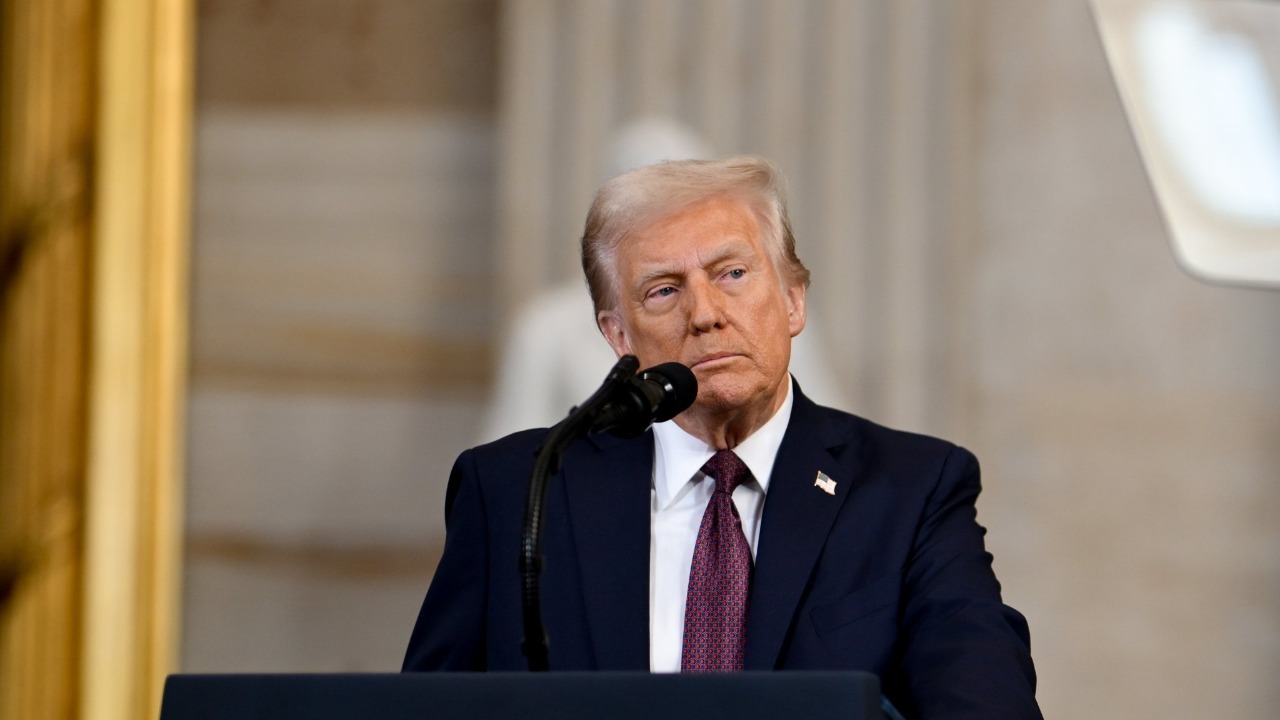

President Donald Trump has publicly threatened to terminate defense contracts with Raytheon, accusing the company of moving too slowly on critical military programs. His warning reflects mounting frustration inside his administration over delays in delivering advanced weaponry to the U.S. armed forces. The remarks signal a willingness to use the leverage of federal contracts to pressure one of the Pentagon’s largest suppliers.
Trump’s Public Remarks
President Donald Trump used pointed language in criticizing Raytheon, saying he was prepared to “end” or “rip up” existing defense deals if the company did not accelerate production on key systems. According to reporting on his comments, Trump framed the issue as a matter of military readiness, arguing that the U.S. cannot afford to wait while contractors work through backlogs on high‑priority weapons. By singling out Raytheon by name, he departed from the more general complaints about defense spending that have characterized some of his earlier clashes with the industry.
Trump’s threat, described in detail in an account of his remarks on Raytheon defense contracts, was tied to what he called an unacceptably slow pace of production on advanced missile and air defense programs. He linked the delays to specific operational needs, pointing to frontline units that he said were waiting on upgraded interceptors and radar systems. The timing of his comments, coming after a budget cycle in which major contractors were expected to ramp up deliveries, underscored a shift from setting long‑term expectations to threatening immediate contractual consequences.
Raytheon’s Production Challenges
Raytheon has faced reported delays on several defense programs, with production timelines for complex missile and radar systems stretching beyond initial schedules. Industry assessments cited by Trump’s aides have pointed to bottlenecks on high‑end munitions and integrated air and missile defense components, where intricate electronics and software integration have slowed throughput. These setbacks matter for the Pentagon because they affect the pace at which new capabilities can be fielded to units that are already operating at high tempo.
Company officials have acknowledged internal challenges, including supply chain constraints and the difficulty of scaling up manufacturing for sophisticated systems, although they have pushed back on the idea that Raytheon is uniquely at fault. Executives have argued that global shortages of specialized components and the complexity of modern guidance and sensor packages have affected multiple production lines across the sector. For the U.S. military, however, the distinction between industry‑wide headwinds and company‑specific issues is less important than the practical impact on delivery schedules and the risk that critical inventories will not keep pace with strategic demands.
Implications for Defense Contracts
Trump’s threat to terminate Raytheon contracts raises immediate questions about the fate of multibillion‑dollar agreements that underpin the company’s relationship with the U.S. government. Large missile, radar, and command‑and‑control programs represent a significant share of Raytheon’s revenue, and even the possibility of cancellation or restructuring could affect long‑term planning for both the contractor and the Pentagon. Contract termination for default is a severe remedy that can trigger financial penalties, re‑competition of programs, and legal disputes over responsibility for delays.
Beyond the balance sheet, the prospect of tearing up existing deals carries implications for national security, since shifting complex programs to alternative suppliers is rarely quick or straightforward. If the government were to move work away from Raytheon, it would need to ensure that other contractors have the capacity and technical expertise to absorb the projects without creating new bottlenecks. Historically, similar threats from Washington have sometimes led to accelerated production schedules or renegotiated terms that tighten performance milestones, suggesting that Trump’s warning could be used as leverage to secure firmer delivery commitments rather than as a prelude to an immediate break.
Stakeholder Reactions
Pentagon officials have responded cautiously to Trump’s comments, emphasizing the importance of maintaining continuity on critical programs while also insisting that contractors meet their obligations. Defense acquisition leaders typically prefer to work through schedule and performance issues using existing contractual tools, such as incentive fees and corrective action plans, rather than abrupt termination. Their concern is that sudden disruption to a prime contractor like Raytheon could ripple through the broader industrial base, affecting subcontractors and potentially slowing deliveries even further.
Lawmakers and defense industry analysts have also weighed in, with some members of Congress warning that aggressive public threats could unsettle a supply chain that is already under strain. Market observers noted that any perception of heightened political risk around Raytheon’s government portfolio could influence investor sentiment, particularly if Trump’s remarks are followed by formal reviews of major programs. Analysts have questioned how feasible it would be to reassign complex missile and radar work at scale, arguing that the administration’s leverage is real but constrained by the practical limits of the defense industrial base and the urgent need to keep advanced systems flowing to the field.