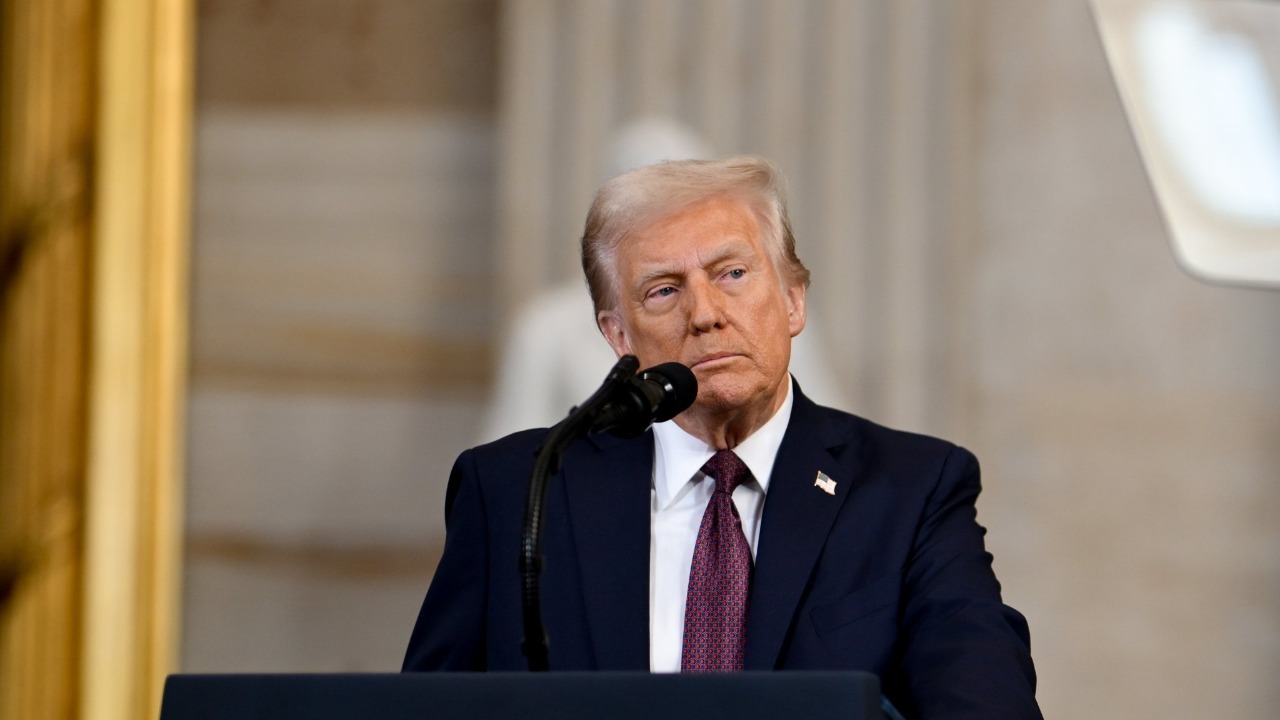

On November 20, 2025, President-elect Donald Trump announced plans to revive a controversial proposal originally pushed by Senator Ted Cruz that would withhold federal funding from states that enact their own regulations on artificial intelligence technologies. The move signals a potential escalation in the debate over AI governance at the state level, with particular focus on progressive-leaning states like California that have advanced local AI safety laws. Coming amid Trump’s transition to a second term, the revival of the unpopular Cruz blueprint marks a shift from stalled federal efforts toward punitive measures aimed at state-level initiatives.
Origins of the Ted Cruz Proposal
The plan that President-elect Trump is now embracing began as a 2023 proposal from Senator Ted Cruz, who framed it as a way to keep AI oversight firmly in federal hands by tying compliance to federal grants and infrastructure funding. According to reporting on the revived measure, Cruz’s original framework would have denied a wide range of federal support, including technology research grants and broadband buildout money, to states that adopted AI-specific rules on issues such as algorithmic transparency, automated decision-making in hiring, or mandatory impact assessments for high-risk systems, effectively using the federal purse to discourage state experimentation in AI lawmaking.
During debates in the 118th Congress, the Cruz proposal struggled to gain bipartisan traction, in part because lawmakers from both parties heard warnings from tech industry leaders that a punitive approach could deepen, rather than resolve, the fragmentation of AI policy. Executives from large cloud providers and AI startups argued that threatening to cut off infrastructure funding would inject uncertainty into long-term investments in data centers and research hubs, while civil society groups warned that the plan would chill state efforts to address algorithmic bias and surveillance. As detailed in coverage of how Trump has now revived the measure, the bill stalled in committee and effectively went dormant after failing to advance in the 118th Congress, leaving its sweeping funding penalties on the shelf until the current transition period brought them back into play.
Trump’s Announcement and Rationale
President-elect Trump used his November 20, 2025 statement to align himself explicitly with the Cruz framework, presenting the revived plan as a centerpiece of a broader agenda to centralize AI oversight at the federal level and to prioritize economic competitiveness. In his remarks, he argued that allowing states to set their own AI rules would create what he called a “regulatory minefield” for companies building systems that operate across state lines, and he pledged to use federal leverage to prevent what he described as “anti-business AI mandates” from undermining national growth. The announcement, which drew directly on the structure of the earlier Cruz bill, signaled that Trump intends to move quickly once in office to convert the concept into binding legislation or executive action that would condition federal technology and infrastructure funds on state compliance with a uniform federal AI framework.
Trump’s rationale focused heavily on states like California and New York, which have passed AI disclosure and bias mitigation laws since 2024 that require companies to explain when automated systems are used in areas such as credit scoring, tenant screening, and employment decisions. By reviving what one detailed report calls an “unpopular Ted Cruz plan to punish states that impose AI laws,” Trump is effectively targeting those state-level safeguards as examples of the “patchwork” he wants to preempt, arguing that only a single national standard can keep the United States ahead of rivals in AI research and deployment. The shift is notable when compared with his first term, when the federal government largely avoided substantive AI regulation and instead issued voluntary guidance, and it underscores a new willingness to use federal funding as a stick to override state experiments in AI governance.
Stakeholder Reactions and Criticisms
Democratic lawmakers responded within hours of Trump’s announcement, condemning the revived Cruz framework as an attack on state authority and on emerging protections against algorithmic harms. Members of Congress from California, New York, and Massachusetts argued that their states had stepped in only after federal inaction left gaps in areas such as automated hiring discrimination and AI-driven tenant screening, and they warned that conditioning broadband and research dollars on the repeal of those laws would amount to coercion. Civil rights organizations echoed those concerns, saying that the plan would punish states for trying to protect residents from opaque systems that can deny jobs, loans, or housing, and they framed the proposal as part of a broader pattern of using federal leverage to weaken local consumer and civil rights safeguards.
Tech advocacy groups that have pushed for responsible AI development also criticized the revived measure, with several organizations quoted in coverage of the plan describing it as a direct threat to innovation in safety and ethics. These groups argued that state-level rules on transparency, impact assessments, and bias audits have often served as early testing grounds for practices that later become industry norms, and they warned that stripping away those incentives would slow progress on building trustworthy AI. At the same time, conservative think tanks and policy institutes praised Trump’s move, portraying it as a necessary counter to what they call “overreach” by blue states that, in their view, risk driving AI companies and data center investments to more permissive jurisdictions; they contend that a strong federal preemption model will give developers clearer rules and reduce compliance costs, even if it means sidelining more aggressive state protections.
Potential Impacts on States and AI Policy
For states that have already enacted AI-specific laws, the financial stakes of Trump’s revived Cruz plan could be substantial, since the proposal is structured around withholding federal grants and infrastructure funding tied to AI-related projects. California, for example, has relied on federal broadband subsidies to support fiber deployments that serve as the backbone for data-intensive services, including AI-powered applications in education and telehealth, while New York has used federal research grants to expand university AI labs that collaborate with companies on areas such as autonomous vehicles and medical imaging. If those streams were curtailed because state lawmakers refused to roll back AI disclosure or bias mitigation statutes, budget officials warn that billions of dollars in planned investments in broadband, cloud infrastructure, and public sector AI pilots could be delayed or canceled, with ripple effects for local jobs and innovation ecosystems.
Beyond the immediate fiscal risks, the revived plan could reshape the national AI policy landscape by discouraging new state initiatives on transparency and accountability during the 2025 federal transition. Legislators in states that had been considering bills on algorithmic impact assessments for public agencies, or on mandatory disclosures when chatbots are used in customer service, may now hesitate if they believe that passing such measures could jeopardize federal funding for transportation, research, or digital inclusion programs. Legal scholars are already drawing parallels to past federal preemption battles over tech regulations, such as disputes over state net neutrality rules and privacy statutes, and they predict that if Congress enacts a version of the Cruz framework under Trump, states will challenge it in court on grounds that it exceeds the federal government’s spending power and improperly commandeers state policymaking. Those looming legal fights would add further uncertainty for companies trying to plan long-term AI deployments, since the rules governing where and how they must comply with transparency or bias requirements could shift again depending on how judges interpret the balance between federal authority and state police powers.