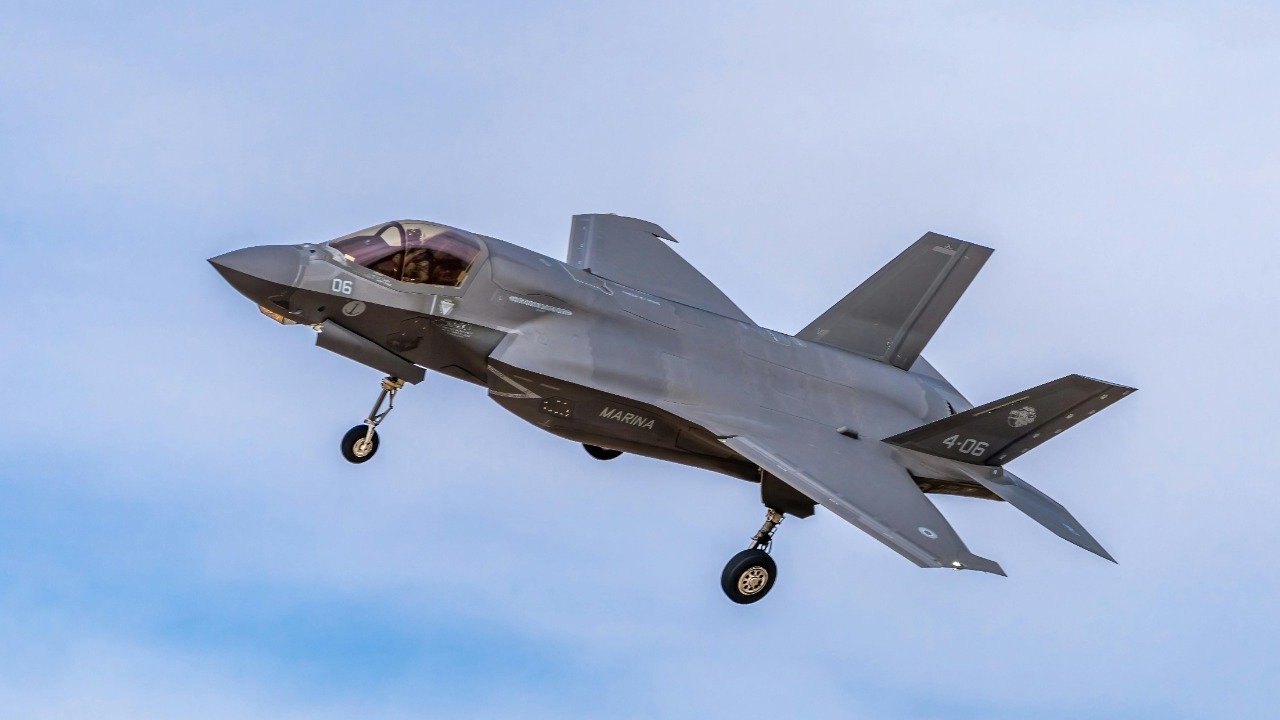

The Pentagon has awarded Lockheed Martin a $328.5 million contract to deliver 55 Legion Infrared Search and Track pods to the Taiwan Air Force, answering what U.S. officials describe as an urgent request tied to escalating Chinese military drills around the island. The deal is intended to strengthen Taiwan’s air defense posture by adding advanced passive infrared search and targeting capabilities to its fighter fleet. It also signals a fresh round of U.S. support for Taiwan’s deterrence strategy at a moment when regional tensions remain high.
Contract Award Announcement
The U.S. Department of Defense has confirmed that Lockheed Martin will receive a $328.5 million contract to supply Taiwan with infrared search and tracking systems, describing the package as a key military sale aimed at bolstering regional security as Chinese activity intensifies around the island. According to the Pentagon’s notification, the contract covers the production and delivery of Legion IRST pods and associated support, with officials framing the award as part of a broader effort to keep Taiwan’s air defenses aligned with evolving threats, a point underscored in the announcement that Pentagon awards Lockheed $328.5 million Taiwan IRST pod contract as China drills keep island on alert. By locking in a single, sizable award, Washington is signaling that it intends to move quickly on deliveries rather than stretching the procurement over multiple smaller tranches.
U.S. officials have also emphasized that the sale responds directly to Taiwan’s own request for enhanced air combat sensors, rather than being imposed from Washington, and they have tied the timing to a pattern of Chinese sorties and exercises that have kept Taiwan’s air force under sustained pressure. The Pentagon’s formal statement that Pentagon says Lockheed Martin gets $328.5 million Taiwan military sale contract on December 31, 2025, underscores how late-year approvals are being used to push through priority items before budget cycles reset, which matters for Taipei because it reduces the risk that political wrangling in Washington could delay critical equipment.
Details of the Legion IRST Pods
Lockheed Martin is set to deliver 55 Legion IRST pods specifically to the Taiwan Air Force, providing a passive infrared detection capability that can track airborne targets without emitting radar signals. Reporting on the deal notes that the pods are designed to give Taiwanese pilots improved situational awareness in contested airspace, with the manufacturer highlighting that Lockheed Martin is to deliver 55 Legion IRST pods to Taiwan Air Force as part of a tailored package for the island’s defense needs. For Taiwan, the number of pods is significant, since 55 units can equip a substantial portion of its frontline fighters, allowing multiple squadrons to operate with the new sensors rather than limiting the technology to a small elite subset.
The contract covers IR sensor pods that are intended to integrate with Taiwan’s fighter aircraft and focus on long-range threat identification without relying on radar emissions, a feature that is particularly relevant in an environment where adversaries deploy sophisticated electronic warfare and anti-radiation missiles. According to the U.S. award notice, the package is structured so that US awards Lockheed Martin $328.5m Taiwan sensor pod contract to support both production and integration, which means the pods are expected to be fielded as part of a complete operational capability rather than as stand-alone hardware. That approach matters for Taiwan’s planners because it reduces the risk of delays between delivery and frontline use, ensuring the pods can contribute to deterrence as soon as they arrive.
Shift Toward Autonomous Sensor Technologies
The $328.5 million allocation is being framed as more than a one-off hardware purchase, with U.S. defense officials and analysts describing it as part of a shift in Taiwan’s acquisitions toward more autonomous sensor technologies that can function even when traditional radar networks are degraded or jammed. Coverage of the award stresses that Pentagon awards $328.5 million Lockheed Martin contract for Taiwan defence in a way that prioritizes advanced sensing and tracking, rather than only adding more airframes or munitions. For Taiwan, this reflects a recognition that survivability in a high-end conflict will depend heavily on the ability to detect and classify threats without revealing one’s own position, a role that IRST pods are specifically designed to fill.
Analysts note that previous Taiwan arms packages have often focused on platforms such as fighter jets and surface-to-air missile systems, while the Legion IRST deal highlights a growing emphasis on the sensors that tie those platforms together into a resilient network. Reporting on the contract points out that Pentagon awards Lockheed $328.5 million Taiwan contract for IR sensor pods as China drills escalate, and that the pods are expected to operate as part of a broader kill chain that includes data links and command systems. This evolution matters for regional security because it suggests Taiwan is preparing for scenarios in which its forces must continue to operate effectively even if key radars or command centers are targeted early in a conflict.
Urgent Request and Accelerated Approval
U.S. officials have characterized Taiwan’s push for the Legion IRST pods as an urgent request, a designation that allowed the approval and contracting process to move faster than is typical for foreign military sales. Detailed accounts of the decision state that U.S. Approves Taiwan’s “Urgent” Request for 55 Infrared Search & Targeting Pods, a label that reflects both Taipei’s assessment of its immediate defense needs and Washington’s willingness to prioritize the order. For Taiwan’s air force, the accelerated timeline is critical, since it faces a sustained tempo of Chinese sorties that require constant interception and monitoring, putting strain on pilots and equipment that could be eased by more capable sensors.
The urgent designation also has implications for how quickly industry must respond, with Lockheed Martin expected to ramp up production and integration support to meet compressed delivery schedules. U.S. defense planners have indicated that the goal is to avoid the kind of multi-year lag that has affected some previous Taiwan arms packages, and the fact that Pentagon Awards $328.5 Million Lockheed Martin Contract to Boost Taiwan’s Air Defense in a single, clearly defined tranche is seen as a way to keep the program on track. For regional allies watching the process, the speed of the approval serves as a test case for whether the United States can adapt its export procedures to match the pace of security challenges in the Western Pacific.
Geopolitical Context and Timing
The timing of the IRST contract is closely linked to a pattern of Chinese military drills that have kept Taiwan’s armed forces on near-constant alert, with U.S. officials explicitly citing these activities as a factor in the decision to move ahead. Reports on the award note that China drills keep Taiwan on alert, prompting the urgent pod request as part of broader U.S. efforts to counter escalating military activities near the island, and that the IRST pods are intended to help Taiwanese pilots track and classify aircraft in crowded airspace where Chinese fighters, bombers, and surveillance planes operate frequently. For Beijing, the sale is likely to be viewed as another example of U.S. interference in what it considers an internal matter, while for Taipei it represents a tangible sign that Washington is backing its efforts to maintain a credible air defense.
The award also comes as Chinese exercises intensify in both scale and complexity, changing the strategic landscape by pushing the United States to streamline arms transfers that in the past might have been slowed by bureaucratic review. Analysts observing the deal point out that the award comes as Chinese exercises intensify, enabling faster U.S. arms transfers compared to previous delayed approvals, a shift that could set a precedent for future packages involving munitions, air defense systems, or maritime capabilities. For regional security, the combination of more frequent Chinese drills and quicker U.S. responses raises the stakes, as both sides adjust their posture in ways that could either strengthen deterrence or increase the risk of miscalculation depending on how crisis management channels are handled.