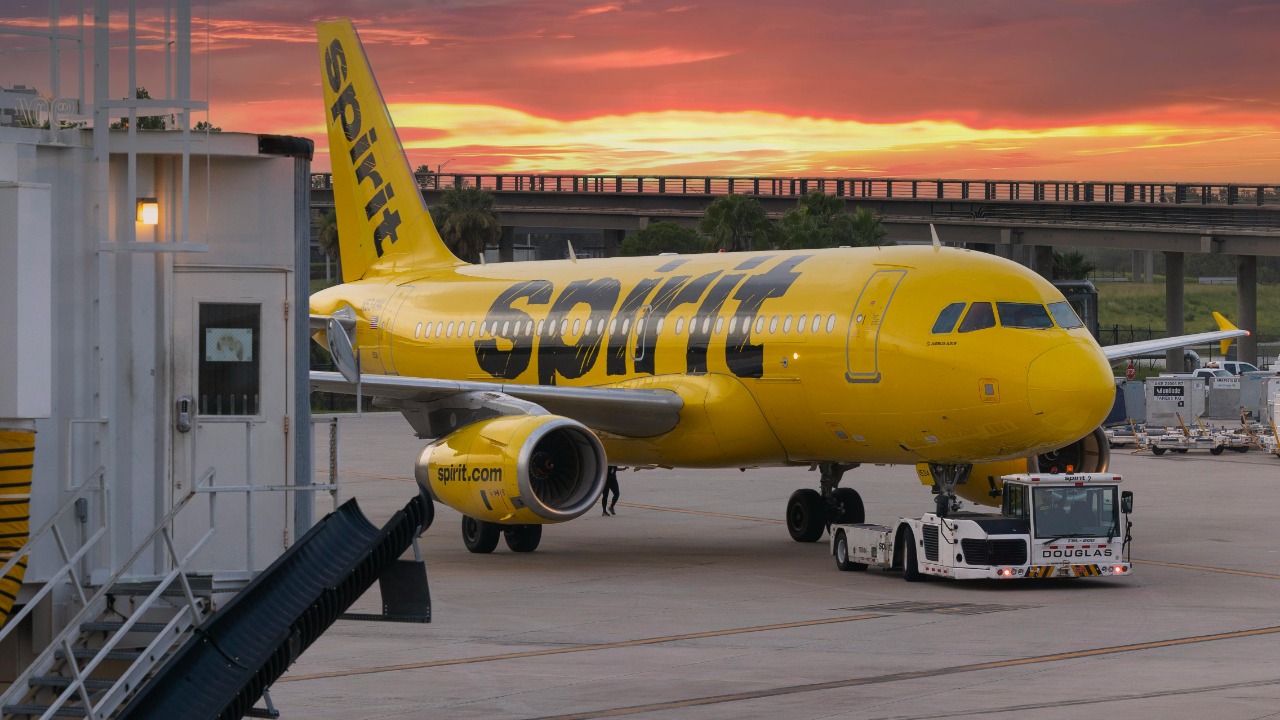

Spirit Airlines’ decision to part out a pair of nearly new Airbus A320neos has jolted the aviation world, turning what should have been long-lived assets into a case study in financial stress and supply chain distortion. Instead of flying passengers for two decades or more, these jets are being stripped to support other aircraft and to help balance a strained balance sheet.
The youngest A320neo airframes ever scheduled for teardown are moving from revenue service to a dismantling line in just a few years, a shift that says as much about global demand for parts as it does about Spirit Airlines’ own crisis. The story behind those airframes ties together aggressive fleet cuts, engine headaches, and a secondary market where components can be worth more than the aircraft that carry them.
How two nearly new A320neos became teardown candidates
The centerpiece of this story is a pair of Airbus A320neos that only entered service a few years ago, identified as MSN 10769 and MSN 10921 and previously registered with Spirit as N950NK and N959NK. Instead of maturing into midlife workhorses, these aircraft have been sold and are being positioned as what one buyer describes as the youngest A320neo airframes ever acquired for disassembly, a status that highlights just how far from normal this transaction is for modern narrowbodies. Reporting on the sale notes that the two airframes are already earmarked for part-out, with the focus on harvesting high-value components while the jets are still in their technical prime, rather than running them through a full operating life.
Detailed coverage shows that the aircraft were acquired by EirTrade Aviation in partnership with RESIDCO, with the buyer explicitly characterizing them as the youngest A320neo airframes ever to be torn down and confirming that the disassembly work will be carried out in Goodyear, Arizona. The project is framed as a way to feed demand for used serviceable material for Airbus narrowbodies, with components removed from the Spirit jets expected to support operators that are struggling with parts shortages and maintenance delays across the global fleet.
Inside the teardown program in Goodyear, Arizona
Once removed from Spirit’s operation, the two aircraft have been ferried to a facility in Goodyear, Arizona, where they are being methodically dismantled inside a hangar rather than left to weather in a desert storage yard. Visual accounts describe technicians working through the airframes only months after they were flying passengers, pulling engines, landing gear, avionics, and cabin equipment that will be recertified and resold. The process is designed to maximize the value of each assembly and to keep high-demand items flowing to airlines that cannot afford to have aircraft parked for lack of a single component.
Disassembly in Goodyear is also tied into a broader logistics chain, with removed parts routed through a hub in Dallas to support aircraft-on-ground requests from carriers across North and South America. The teardown program is being marketed as a way to offer components that are already built to the latest modification standards, and EirTrade Aviation has highlighted that the partnership with RESIDCO allows it to take on relatively young aircraft that still embody current-generation configurations, making them especially attractive sources of spares for other Airbus A320neo operators.
Spirit Airlines’ shrinking Airbus fleet and lease rejections
For Spirit Airlines, sending such young jets to be parted out is inseparable from a broader retrenchment in its Airbus fleet. Industry reporting shows that Spirit Airlines executed one of the largest single-year capacity reductions in the sector by cutting 73 Airbus aircraft from its fleet in 2025, a move that shrank the overall operation by roughly one third and hit both A320neo and A321neo variants. That scale of reduction would be extraordinary in any context, but it is especially striking for an ultra low cost carrier whose business model depends on high aircraft utilization and dense schedules.
The teardown of the two A320neos sits alongside Spirit Airlines’ push to reject leases on additional aircraft, including a request to end the leases of five A320neo and six A320ceo jets ahead of schedule. In filings and related reporting, Spirit Airlines has asked a court for permission to shed those Airbus A320 commitments in late 2025 or into 2026, signaling that the carrier is trying to reset its obligations even on relatively efficient models. Taken together, the 73-aircraft reduction and the targeted lease rejections point to a company that is not just trimming around the edges but structurally downsizing its Airbus narrowbody footprint.
Financial distress and the logic of parting out young jets
The economic logic behind tearing down three to four year old A320neos starts with Spirit Airlines’ financial distress. Commentators close to the situation have described Spirit Airlines’ crisis as having reached a point that few in the industry imagined, with lessors preparing to scrap aircraft rather than risk extended vacancies or further value erosion. In that environment, selling young airframes into a teardown program can generate immediate cash for owners or lessors and remove the uncertainty around finding another operator willing to take on the leases on acceptable terms.
At the same time, the secondary market for parts from Airbus A320neo family jets has heated up as airlines grapple with supply chain constraints and long lead times for new components. One widely shared analysis of these specific aircraft notes that the shortage of components has driven prices for individual assemblies to levels where the sum of the parts can exceed the market value of a complete aircraft of the same age. Social media posts about the Spirit jets have leaned into that point, describing them as only 3 to 4 years old yet already being stripped so that their engines, landing gear, and avionics can keep other A320neos in service, a reversal of the usual expectation that older aircraft are sacrificed to prolong the life of younger ones.
Engines, maintenance costs, and what this signals for the A320neo market
Beyond the balance sheet, Spirit Airlines has also had to manage technical and maintenance challenges that affect the economics of its A320neo fleet. Earlier coverage of the carrier’s operations detailed how Spirit had to ground 7 planes over an engine issue, with Spirit Airlines CEO Ted Christie calling the situation a disappointing development during a briefing on the impact of the problem. That grounding was tied to inspections and potential removals affecting certain RTX powerplants, and it added pressure to an airline that already runs tight schedules and depends heavily on high dispatch reliability for short and medium distance flights.
Industry analysis of the A320neo market points out that modern commercial aircraft are typically expected to remain in service for at least 20 to 25 years, yet Spirit Airlin is now associated with airframes that are being dismantled after only a fraction of that lifespan. Commentators examining why Spirit sent these Airbus A320neos to the scrapyard have linked the decision to a combination of high maintenance costs, engine related constraints, and the opportunity to monetize assets quickly in a hot parts market. One detailed report on the two Spirit Airbus jets being scrapped emphasizes that the teardown was announced in a press release submitted to Simple Flying and that the move aligns with a broader pattern in which lessors and traders use young airframes to unlock value from engines and major systems rather than waiting for traditional retirement ages.