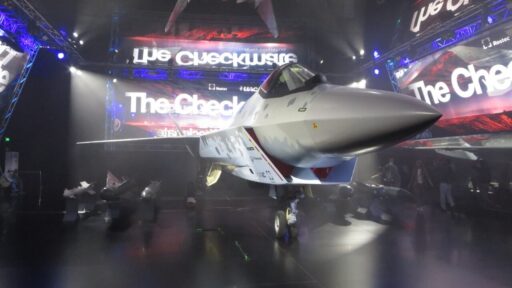
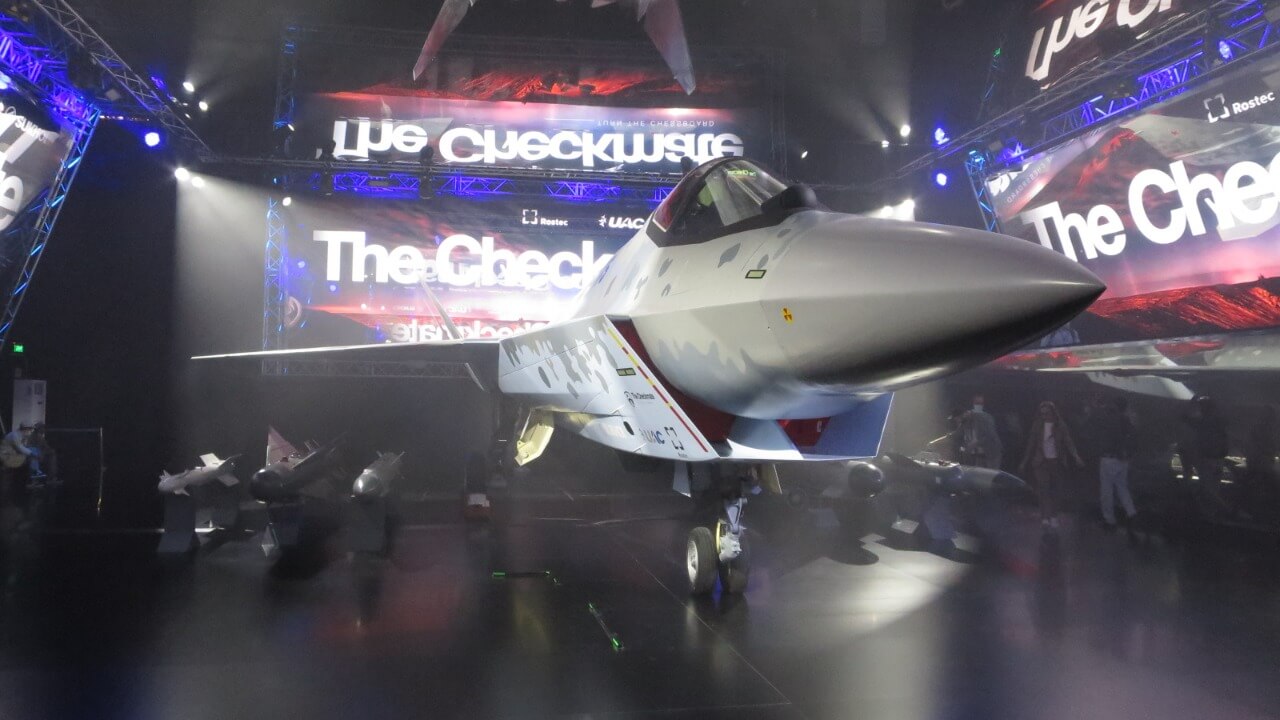

At the Dubai Airshow 2025, Russia is using the global spotlight to signal that its fifth-generation fighter, the Sukhoi Su-75 “Checkmate,” is nearing its first flight, marking a significant step forward in the program’s development. This message is landing as international aerospace gatherings intensify and as separate reporting indicates that the first flight of the new Russian fifth-generation fighter Sukhoi Su-75 “Checkmate” may already have a date, shifting the narrative from repeated delays to a more imminent test campaign.
Dubai Airshow 2025 Kickoff
The opening of the Dubai Airshow 2025 on 17 November has created a high-profile platform for governments, manufacturers and buyers to showcase their latest aerospace projects and to frame near-term priorities. Early coverage of the event, captured in the first reports from Dubai Airshow 2025 first news, underlines how the show is drawing a broad mix of civil and military stakeholders from Russia, the United States, Europe, the Gulf and Asia, each seeking attention for new aircraft, upgrades and technology demonstrators. For Russian industry, that environment offers a ready-made stage to reinforce messages about progress on advanced combat aircraft programs and to test international appetite for future exports.
Initial news from the airshow highlights how the 2025 edition is leaning into concrete hardware and near-term milestones rather than purely conceptual displays that dominated some earlier cycles. Organizers and exhibitors are using the show to accelerate time-sensitive updates, including flight-test schedules and production plans, which gives added weight to any signals about the Su-75 “Checkmate” moving closer to a first flight. For potential buyers and rival manufacturers, the tone of Dubai Airshow 2025 matters because it shapes expectations about which programs are genuinely advancing toward operational status and which remain largely aspirational.
Russia’s Su-75 Checkmate Reveal
Russian officials and industry representatives are positioning the Sukhoi Su-75 “Checkmate” as a centerpiece of their broader fighter narrative at Dubai, even though the available airshow reporting does not explicitly detail a formal Su-75 announcement on site. The aircraft is described in separate coverage as a new Russian fifth-generation fighter, intended to combine stealth shaping, advanced avionics and a single-engine configuration that could lower acquisition and operating costs for export customers. By aligning their messaging with the timing of Dubai Airshow 2025, Russian stakeholders are effectively using the event’s visibility to underscore that the Su-75 program is transitioning from mockups and static models toward a phase where first flight is presented as imminent.
That shift is significant because earlier public appearances of the Su-75 “Checkmate” focused heavily on full-scale mockups, computer renderings and marketing pitches rather than verifiable test milestones. The late-2025 framing, tied to the broader context of Dubai, now signals a change in emphasis toward operational readiness, with the aircraft being discussed as a near-term flight-test asset rather than a distant concept. For defense ministries and air forces evaluating fifth-generation options, this evolution in how Russia presents the Su-75 affects perceptions of risk, since a program that is close to first flight carries different credibility and bargaining power than one that exists only as a showroom prototype.
First Flight Timeline Updates
Outside the airshow’s official communications, a separate report indicates that the first flight of the new Russian fifth-generation fighter Sukhoi Su-75 “Checkmate” may already have a date, according to information published on 19 November 2025 and detailed in coverage of the first flight of the new Russian fifth-generation fighter Sukhoi Su-75 “Checkmate”. That reporting, which is not explicitly tied to the Dubai Airshow itself, points to internal Russian planning that has moved beyond vague projections and into a more specific scheduling window for the initial test sortie. While the exact date is not independently confirmed in the airshow news, the existence of a targeted timeframe alone marks a departure from earlier delays that repeatedly pushed the program’s debut to the right.
For stakeholders, the implication of a defined first flight date is that Russia appears ready to accelerate the Su-75’s testing phases compared with the slower pace that had been anticipated when the aircraft was still framed largely as a mockup. A scheduled first flight would unlock a sequence of structural, systems and envelope-expansion trials that are essential before any export or domestic production commitments can be honored. International observers will be watching closely to see whether the projected timing holds, because slippage would reinforce doubts about Russia’s capacity to deliver a new fifth-generation platform on schedule, while an on-time flight would strengthen its position in a crowded market of advanced fighters.
Impacts on Global Aerospace Dynamics
The convergence of Dubai Airshow 2025 and the emerging Su-75 “Checkmate” first flight timeline is already shaping conversations among potential international buyers who are looking for affordable fifth-generation options. Russia has consistently pitched the Su-75 as a cost-effective alternative to aircraft such as the Lockheed Martin F-35A, and the suggestion that first flight is close gives that pitch more substance, even if the exact schedule remains unverified by independent sources. For air forces with constrained budgets, especially in regions like the Middle East, Latin America and parts of Asia, a credible Russian single-engine stealth fighter could introduce new bargaining leverage in negotiations with Western suppliers and might prompt some to delay decisions while they assess whether the Su-75 can meet promised performance and delivery timelines.
At the strategic level, the proximity of first flight fits into a broader Russian aviation strategy that seeks to maintain relevance in the high-end fighter market despite sanctions, supply chain pressures and competing priorities at home. By signaling that the Su-75 is nearing a tangible test milestone in late 2025, Moscow is attempting to enhance its geopolitical leverage, using prospective exports as a tool to deepen defense ties with partners that are either unable or unwilling to procure Western fifth-generation jets. Rival programs, including ongoing upgrades to fourth-generation fleets and the development of other stealth designs without prior flight data, must now account for a scenario in which the Su-75 transitions from a paper competitor to a flying demonstrator that can be evaluated in real-world conditions.