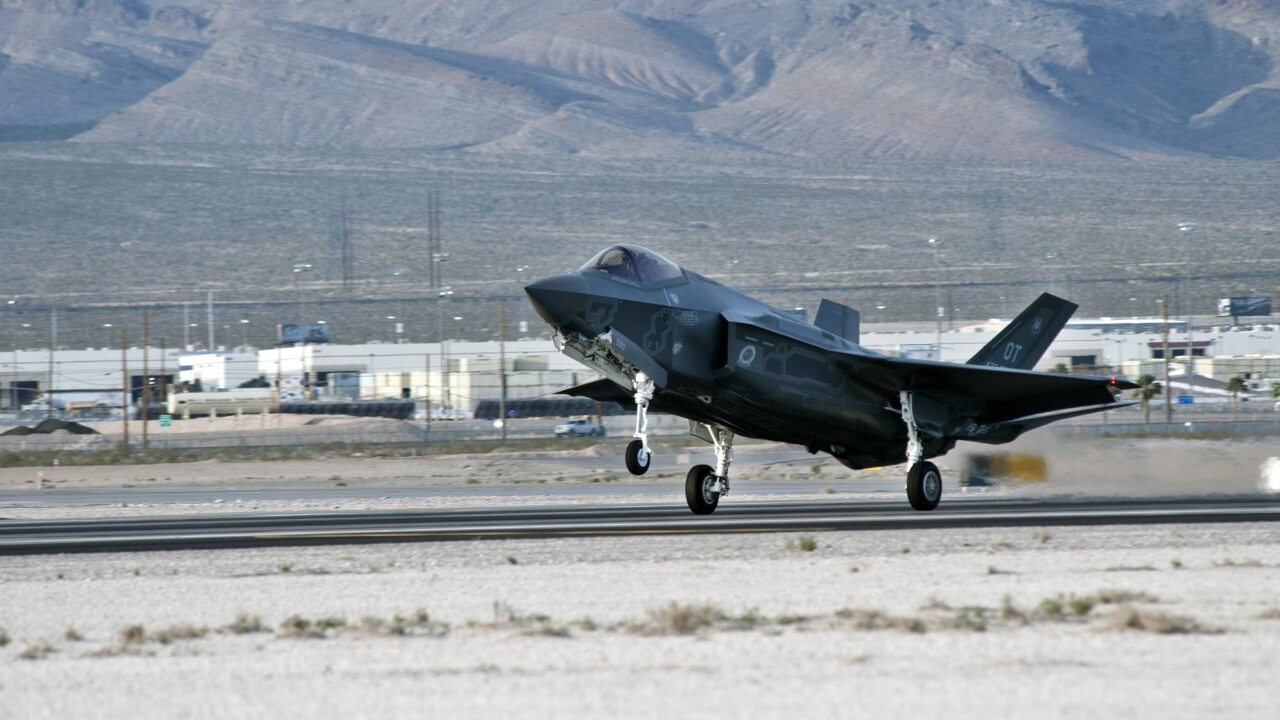

Lockheed Martin delivered a record 191 F-35 fighter jets in 2025, surpassing all previous annual totals for the stealth multirole aircraft and signaling a clear acceleration in production. The milestone reflects surging international demand and the jet’s sustained combat provenness in active operations, reinforcing the F-35’s status as a centerpiece of allied air power. It also underscores Lockheed Martin’s role as a critical defense supplier at a time of heightened geopolitical tension and rising defense budgets across multiple regions.
Announcement of 2025 Delivery Milestone
Lockheed Martin publicly confirmed that its F-35 program reached a new high in 2025, with company officials stating that total deliveries for the year climbed to 191 aircraft, the largest annual output since the program began. Reporting on the announcement highlighted that the 191 figure exceeded earlier internal targets and prior yearly totals, signaling that the company has moved into a higher production bracket for the fifth-generation fighter. According to coverage of the milestone, executives framed the result as a deliberate step up from earlier production rates, describing it as a sign that the F-35 line is now operating at a more mature and predictable tempo.
The company’s disclosure made clear that the 191 jets were not destined solely for U.S. forces, but were spread across a broad mix of allied customers participating in the F-35 program. Detailed accounts of the announcement noted that the deliveries included aircraft for multiple partner and foreign military sales nations, underscoring how the program has evolved from a primarily U.S.-focused effort into a global enterprise. In statements cited in one report, Lockheed Martin pointed to the record output as evidence that its supply chain and industrial base have remained resilient despite global disruptions, with the company emphasizing that suppliers were able to sustain parts flow and quality standards even as volumes increased, a key reassurance for governments planning long-term fleet acquisitions.
Drivers Behind Production Surge
Analysts and company representatives linked the jump to 191 F-35 deliveries directly to rising global demand, noting that air forces in Europe, the Asia-Pacific region and the Middle East have been expanding or initiating F-35 fleets in response to evolving threat environments. One detailed breakdown of the 2025 performance explained that new and follow-on orders from allied governments helped fill Lockheed Martin’s production slots, allowing the company to run its assembly lines at higher utilization rates throughout the year. As a result, the F-35 program’s backlog of contracted aircraft remained substantial even as deliveries hit a record, giving planners confidence that the elevated pace can be sustained rather than representing a one-off spike.
Coverage of the program’s commercial outlook stressed that fresh international contracts were a central driver of the surge, with several governments finalizing agreements that will add to the flow of aircraft in the second half of the decade. One analysis of Lockheed Martin’s new contracts and revenue prospects noted that the F-35 remains the company’s flagship growth engine, with multi-year deals helping to smooth production planning and support investments in tooling and workforce training. Reports on the 2025 performance also pointed to incremental efficiency gains at key facilities, including the main F-35 assembly plant, where process improvements and more experienced labor were credited with enabling higher throughput without a corresponding rise in reported delays, a dynamic that matters for defense ministries that have faced schedule slippages on other complex programs.
F-35’s Ongoing Combat Role
Alongside the production record, the F-35’s operational record in 2025 featured prominently in the reporting, with multiple accounts stressing that the aircraft continued to demonstrate effectiveness in real-world combat and high-intensity exercises. One detailed report on how the F-35 broke its delivery record while sustaining combat success described the jet as “combat proven,” citing its use in strike, intelligence and air defense suppression roles. Military officials quoted in that coverage argued that the aircraft’s stealth, sensor fusion and data-sharing capabilities have given operators a qualitative edge in contested environments, reinforcing the case for additional purchases among countries that have already fielded initial squadrons.
Operational integration with allied forces was another recurring theme, with reports noting that F-35 units from different nations conducted joint missions and exercises that showcased the platform’s multirole versatility. Accounts of these activities highlighted scenarios in which F-35s acted as both shooters and information nodes, passing targeting data to legacy fighters and ground-based systems, and enabling more coordinated responses to simulated threats. Analysts cited in the coverage argued that this kind of networked employment is central to the aircraft’s value proposition, and that its performance in active theaters has strengthened demand from governments seeking advanced air superiority and strike capabilities that can plug into broader alliance architectures.
Implications for Lockheed Martin’s Business
The record 191 deliveries in 2025 have significant implications for Lockheed Martin’s financial trajectory, with several reports framing the milestone as a foundation for profitable growth in the coming years. One assessment of the company’s outlook noted that the F-35 program remains a dominant contributor to revenue and cash flow, and that higher annual output should translate into improved economies of scale across the supply chain. Analysts quoted in coverage of the delivery record suggested that, as long as the company can maintain quality and schedule performance at the 191-aircraft level or higher, the program will continue to anchor Lockheed Martin’s defense portfolio and support shareholder returns through both earnings growth and potential share repurchases.
Reporting on the 2025 results also emphasized that sustained orders for the F-35 provide a measure of long-term stability for Lockheed Martin at a time when defense spending priorities are shifting in response to new technologies and geopolitical risks. One article on how Lockheed Martin delivered 191 F-35 fighter jets in 2025 noted that the company is leveraging the program’s momentum to pursue additional contracts in 2026 and beyond, including upgrades, sustainment packages and potential new customer entries. Another detailed account of the record deliveries, which described how demand lifted the F-35 production pace, argued that the milestone strengthens Lockheed Martin’s negotiating position with both suppliers and buyers, since the demonstrated ability to deliver at scale can support more favorable terms and reinforce customer confidence in long-term fleet planning.
Global Expansion of the F-35 Program
Beyond the raw delivery numbers, the 2025 record underscored how far the F-35 program has expanded globally, with multiple reports stressing that the aircraft is now central to the air power strategies of a growing list of allied nations. One detailed overview of how Lockheed Martin delivered a record number of F-35s in 2025 highlighted that the jets shipped during the year were configured for a variety of national requirements, including different variants tailored to conventional runways, short takeoff and vertical landing operations, and carrier-based missions. That diversity of customers and configurations, the report noted, has helped spread program costs while also deepening interoperability among operators who can train and fight together using a common platform.
Another analysis of the record, which described how Lockheed Martin set a new F-35 delivery record in 2025, pointed out that the program’s international footprint now extends across multiple continents, with new basing, training and maintenance infrastructure coming online to support the growing fleet. For host nations, these facilities bring industrial participation opportunities and skilled jobs, while for Lockheed Martin they represent long-term service and upgrade revenue streams that can extend well beyond the initial aircraft sale. As more countries integrate the F-35 into their force structures, the program’s scale and network effects are likely to reinforce its position in future procurement decisions, making the 191-jet milestone not just a production achievement but a marker of the aircraft’s entrenched role in allied defense planning.