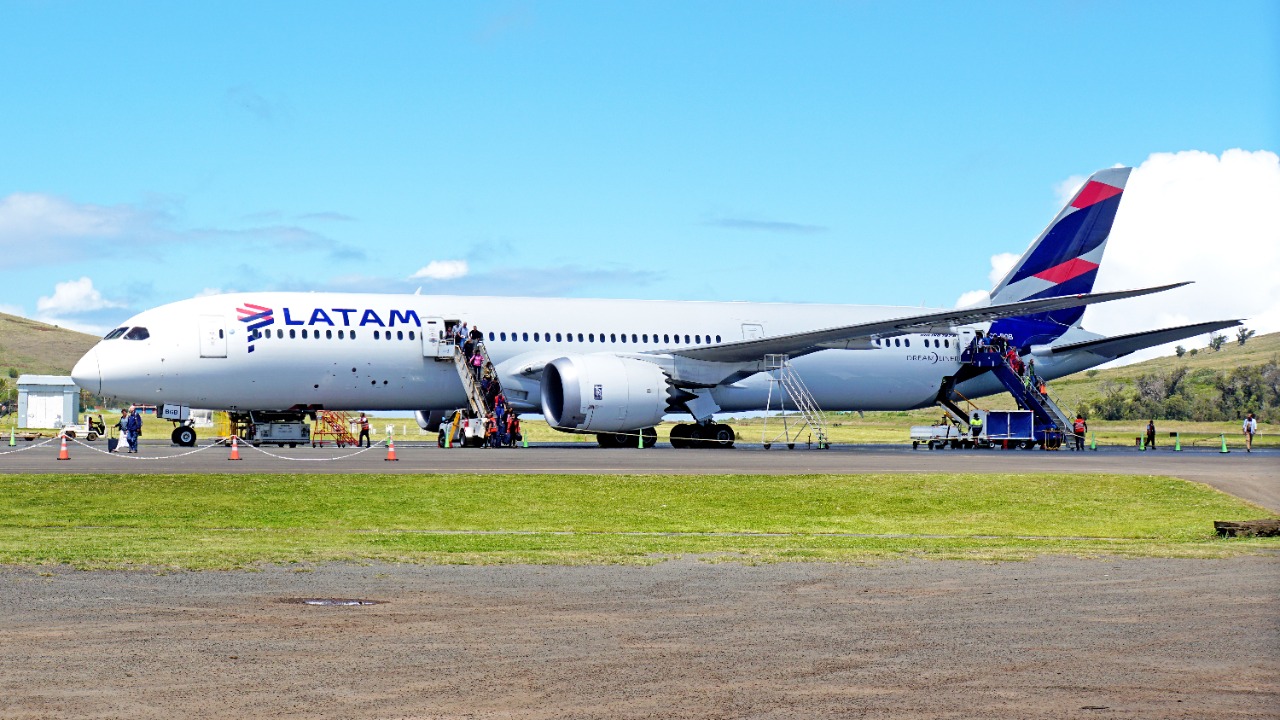

A LATAM flight from Lima, Peru, made a rough landing at Hartsfield-Jackson Atlanta International Airport when its rear tires blew out on touchdown, triggering an immediate emergency response on one of the world’s busiest airfields. Passengers on the international flight described a terrifying sequence as the aircraft shuddered and decelerated unevenly along the runway, before coming to a stop surrounded by fire trucks and airport vehicles. Although no injuries were reported, the incident briefly disrupted operations at the Atlanta hub while crews inspected the jet and secured the scene.
The Flight and Landing Incident
The aircraft involved was a LATAM Airlines service operating an international route from Lima, Peru, to Georgia, identified in reports as a flight from Lima, Peru, bound for Atlanta Airport. According to passengers and airport officials, the journey across the continent was largely uneventful until the final moments of descent into Hartsfield-Jackson Atlanta International Airport, when the jet lined up for landing on a runway that was busy with afternoon traffic. As the plane descended over the city and flared for touchdown, travelers said they were preparing for a standard arrival at the major U.S. gateway when the impact with the runway felt far more forceful than expected.
Video captured from inside the cabin and from the ground shows the moment the aircraft’s tires failed during the rough landing, with footage shared in a clip of the plane blowing its tires during a rough landing at Atlanta Airport highlighting the abrupt jolt as the wheels met the pavement. The Federal Aviation Administration later confirmed that the tires blew out after the aircraft had already made contact with the runway, indicating that the failure occurred during the high-speed rollout rather than in the air. That sequence left the jet decelerating on damaged rear tires, an event that can create intense vibration and noise inside the cabin and that requires pilots to maintain strict directional control to keep the aircraft tracking straight along the centerline.
Passenger Experiences During the Event
Travelers seated over the wings and near the rear of the LATAM jet reported feeling the most severe shaking as the tires failed, describing the landing as “terrifying” and “uncomfortable” in accounts shared after the incident. Several passengers told reporters that the aircraft seemed to bounce slightly before settling, followed by a harsh vibration that made it clear something had gone wrong with the landing gear. One passenger who spoke to reporters about the LATAM flight from Peru that made a rough landing after its rear tires blew out said people around them gripped armrests and braced for a possible evacuation, underscoring how quickly a routine arrival can feel like an emergency from inside the cabin.
Once the aircraft came to a stop, passengers began documenting the aftermath through windows and from the cabin aisle, sharing images that showed the extent of the damage to the rear wheels. Photos and clips circulated online of the busted tires, including footage highlighted in coverage where passengers recounted the terrifying landing and showed the busted tires sitting shredded beneath the aircraft. Those visuals, combined with the emotional testimony of travelers who described a dramatic end to their journey from Peru, illustrate how even an incident that results in no injuries can leave a lasting psychological impact and raise fresh questions about perceived safety in commercial aviation.
Emergency Response and On-Site Actions
As soon as the pilots reported the tire failure and brought the aircraft to a controlled stop, emergency crews at Hartsfield-Jackson mobilized to the runway, surrounding the jet with fire engines, airport operations vehicles, and medical units. Video of the response shows a line of flashing lights converging on the aircraft, consistent with standard procedures for any landing gear or tire incident that could pose a fire risk. Coverage of the scene described how emergency crews swarmed the plane after the dramatic landing at Atlanta’s airport, underscoring the seriousness with which airport authorities treat any anomaly involving high-speed landings at a major hub.
First responders coordinated with the flight crew to assess the condition of the landing gear and verify that there was no fuel leak or smoke before allowing passengers to deplane, a process that unfolded without any reported injuries. According to accounts from the airfield, the aircraft remained on the runway or a nearby taxiway while teams inspected the damaged tires and determined how to safely tow the jet away from active traffic. Reporting on the incident noted that the plane’s tires blew after landing at Atlanta airport, prompting temporary disruptions as controllers rerouted other arrivals and departures, a reminder of how a single mechanical issue can ripple through schedules at a high-volume facility.
Official Updates from Authorities
Federal regulators quickly acknowledged the incident, with the Federal Aviation Administration stating that the tires of the plane blew out after landing at Hartsfield-Jackson Atlanta International Airport. In its initial summary, the agency emphasized that the failure occurred after touchdown, aligning with passenger accounts of a hard landing followed by intense vibration during rollout. That confirmation, reflected in reporting that the tires of the plane blew out after landing at Hartsfield-Jackson airport, according to the FAA, frames the event as a landing gear and tire performance issue rather than an in-flight emergency, which has implications for how investigators will examine maintenance records, runway conditions, and braking actions.
LATAM Airlines and airport officials have focused their public comments on passenger safety and the absence of injuries, while acknowledging the rough nature of the landing and the visible damage to the rear tires. In statements summarized in coverage of the blown tires that caused a rough landing at Atlanta Airport, representatives indicated that the airline is cooperating with authorities to determine what led to the tire failure and to verify that all relevant inspection and maintenance protocols were followed. Early reporting has stressed that all passengers were able to leave the aircraft safely and that there were no further complications beyond the tire blowout, but the evolving details will be closely watched by travelers and regulators who view such incidents as critical data points in ongoing efforts to refine safety standards and operational procedures.