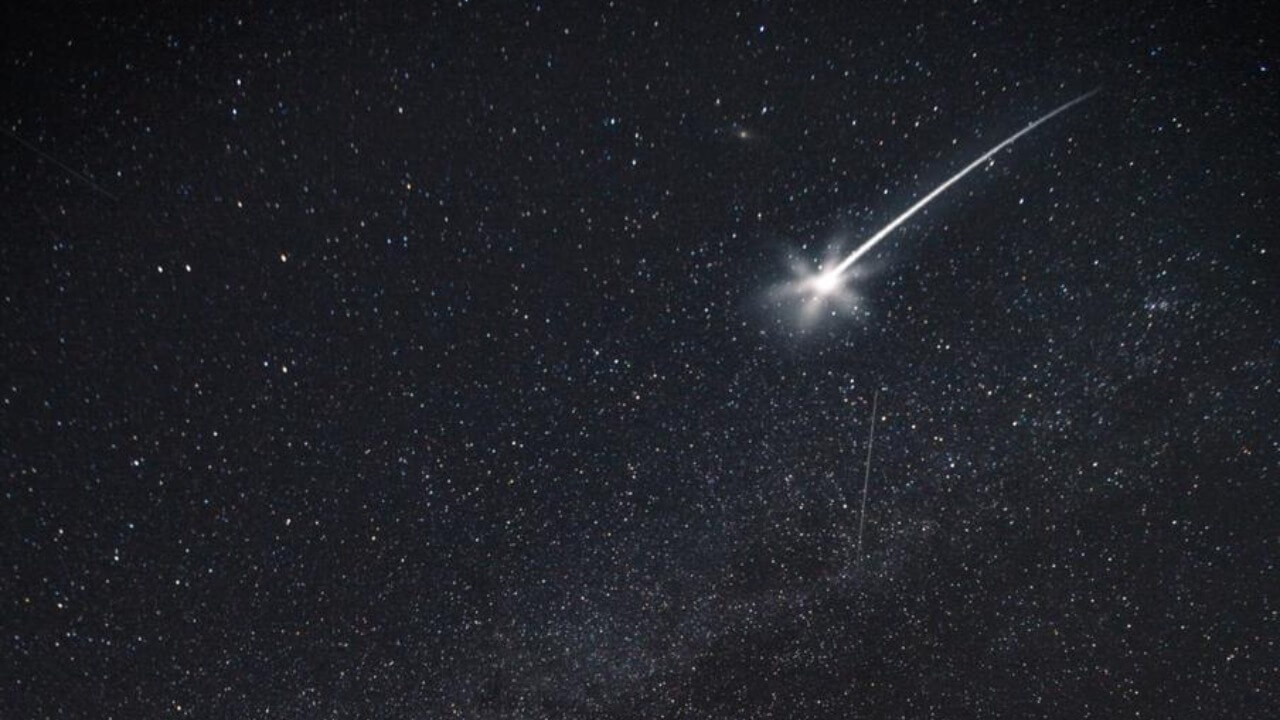

NASA’s Mars spacecraft have captured remarkable new images of the interstellar comet 3I/ATLAS, offering a unique vantage point from the Red Planet as the object passes through our solar system. These high-resolution views reveal the Manhattan-sized interstellar object in astonishing detail, highlighting its rare origin from beyond our solar system and marking a major advancement over prior ground-based observations during the comet’s closest approach to the inner planets.
Background on Interstellar Comet 3I/ATLAS
The comet 3I/ATLAS has been identified as an interstellar visitor because its trajectory cannot be bound to the Sun, a path that signals it arrived from outside the solar system before swinging through the inner regions and heading back into deep space. Early tracking of its hyperbolic orbit, described in coverage of new images of interstellar visitor 3I/ATLAS, placed it in the same rare category as previous interstellar objects, with its speed and incoming direction pointing to an origin in another stellar neighborhood. For planetary scientists, each such detection is a crucial test of how well current surveys can spot fast, faint objects that appear with little warning and will never return.
Size estimates have quickly become a focal point, with recent reporting describing 3I/ATLAS as a Manhattan-sized interstellar object to convey its extraordinary scale compared with many typical comets. Coverage of NASA’s high-resolution release notes that the nucleus spans a region comparable to the length of the New York City borough, a detail that has been widely cited in stories such as the report that NASA releases new high-res images of Manhattan-sized interstellar object 3I/ATLAS. That kind of comparison helps non-specialists grasp why the object matters, since a body on that scale carries a large inventory of pristine material from another star system and offers a rare laboratory for testing theories of how planets and comets form around distant suns.
Capture of Images by Mars Missions
NASA’s Mars missions were not originally designed to chase interstellar comets, yet mission teams reoriented their instruments to target 3I/ATLAS as it swept past the orbit of Mars. According to the agency’s account in NASA’s Mars Spacecraft Capture Images of Comet 3I/ATLAS, cameras and spectrometers that usually monitor Martian weather and surface changes were carefully retasked to follow the fast-moving object during a narrow observing window. That decision reflects a broader trend in planetary exploration, where existing spacecraft are increasingly used as opportunistic observatories to study transient phenomena that would otherwise be missed.
The timing of the observations coincided with a favorable orbital alignment that placed Mars, its spacecraft, and the comet in a geometry that minimized glare from the Sun and maximized the apparent size of 3I/ATLAS on the detectors. Reporting on how NASA caught a view of the comet from Mars, detailed in an analysis of NASA’s new images of 3I/ATLAS from Mars, explains that this vantage point allowed the Mars assets to see the comet from the side rather than head-on, improving contrast in the coma and tail. For scientists and mission planners, that geometry is not just a photographic advantage, it also determines what kinds of physical properties, such as jet structure and dust distribution, can be extracted from the data.
Release and Initial Public Sharing of New Images
NASA began releasing the new images of 3I/ATLAS as part of its solar system updates, presenting the first public views captured by Mars-based spacecraft during the comet’s close passage. The agency’s initial publication, described in detail in the announcement that an astonishing interstellar comet was captured in new images by NASA Mars missions, showcased a series of frames that resolved the bright nucleus and the surrounding halo of dust and gas. Those early releases immediately raised the profile of the comet, signaling to observatories on Earth that a rare opportunity for coordinated follow-up had arrived.
Subsequent updates expanded the visual catalog with higher resolution versions and processed composites that sharpened fine structures in the tail, a progression highlighted in coverage that NASA shares new images of interstellar visitor 3I/ATLAS. As those enhanced images circulated on social platforms and in mainstream outlets, public interest surged, with many readers encountering the term “interstellar comet” for the first time. For NASA and its partners, that wave of attention has practical implications, since visible successes in capturing such fleeting targets can influence future funding decisions and encourage international agencies to keep spacecraft flexible enough to pivot toward unexpected discoveries.
Scientific Insights from the High-Res Images
The high-resolution views from Mars are already reshaping scientific discussion of what 3I/ATLAS is made of and how it behaves as it approaches the Sun. Analysts examining the detailed structure of the coma and tail, as described in the report that NASA releases new high-res images of Manhattan-sized interstellar object 3I/ATLAS, point to variations in brightness that may trace jets of gas erupting from discrete regions on the surface. If those patterns can be linked to rotation and surface topography, researchers will gain a clearer picture of how an object formed around another star responds to solar heating, a key test of whether cometary activity is universal or shaped by local stellar environments.
Comparisons with earlier interstellar visitors, particularly the elongated object known as ’Oumuamua, are central to the scientific stakes of the new dataset. Coverage of how NASA caught a view of 3I/ATLAS from Mars, summarized in the feature on NASA’s new images of 3I/ATLAS and the debate over aliens, notes that the comet’s more conventional appearance, with a visible coma and tail, contrasts sharply with the puzzling behavior of ’Oumuamua, which lacked a clear dust envelope. That contrast gives planetary scientists a chance to test whether interstellar objects span a wide spectrum of shapes and compositions or whether observational biases have skewed the sample so far, a question that directly affects how search programs prioritize future candidates.
The same reporting also acknowledges that any unusual interstellar visitor tends to spark speculation about alien technology, a narrative that intensified when the Mars images revealed sharp, geometric-looking features that some viewers interpreted as artificial. Analysts quoted in the discussion of astonishing new images of comet 3I/ATLAS from NASA’s Mars missions emphasize that such impressions are almost certainly artifacts of lighting and image processing, not evidence of engineering. By addressing those claims directly, mission scientists aim to keep public curiosity aligned with the actual data, reinforcing the idea that natural processes can produce striking and sometimes counterintuitive patterns without invoking non-natural explanations.
Future Observations and Ongoing Monitoring
With the Mars flyby phase now documented in detail, attention is shifting to how 3I/ATLAS will be tracked as it continues its trajectory through the inner solar system and back into interstellar space. Articles that describe how NASA shares new images of interstellar visitor 3I/ATLAS note that Earth-based telescopes are preparing for additional observing windows in late 2025, when the comet’s position and brightness will favor deep imaging and spectroscopy from large ground observatories. Those campaigns are expected to refine measurements of the object’s composition and rotation, giving researchers a more complete physical model before the comet fades beyond reach, and they also provide a proving ground for coordination among national facilities that must respond quickly to transient targets.
NASA’s own plans, as outlined in the agency’s description of how Mars spacecraft capture images of comet 3I/ATLAS, include continued monitoring with both Mars-based instruments and assets closer to Earth, using the initial high-resolution images as a baseline for tracking changes in activity over time. That strategy is already prompting discussions of broader international collaboration, since agencies in Europe and Asia operate complementary spacecraft and telescopes that could fill gaps in coverage as the comet recedes. For stakeholders across the scientific community, the coordinated response to 3I/ATLAS is a template for how future interstellar visitors might be studied, showing that even without a dedicated mission, a network of adaptable observatories can extract a remarkable amount of information from a brief and unrepeatable encounter.