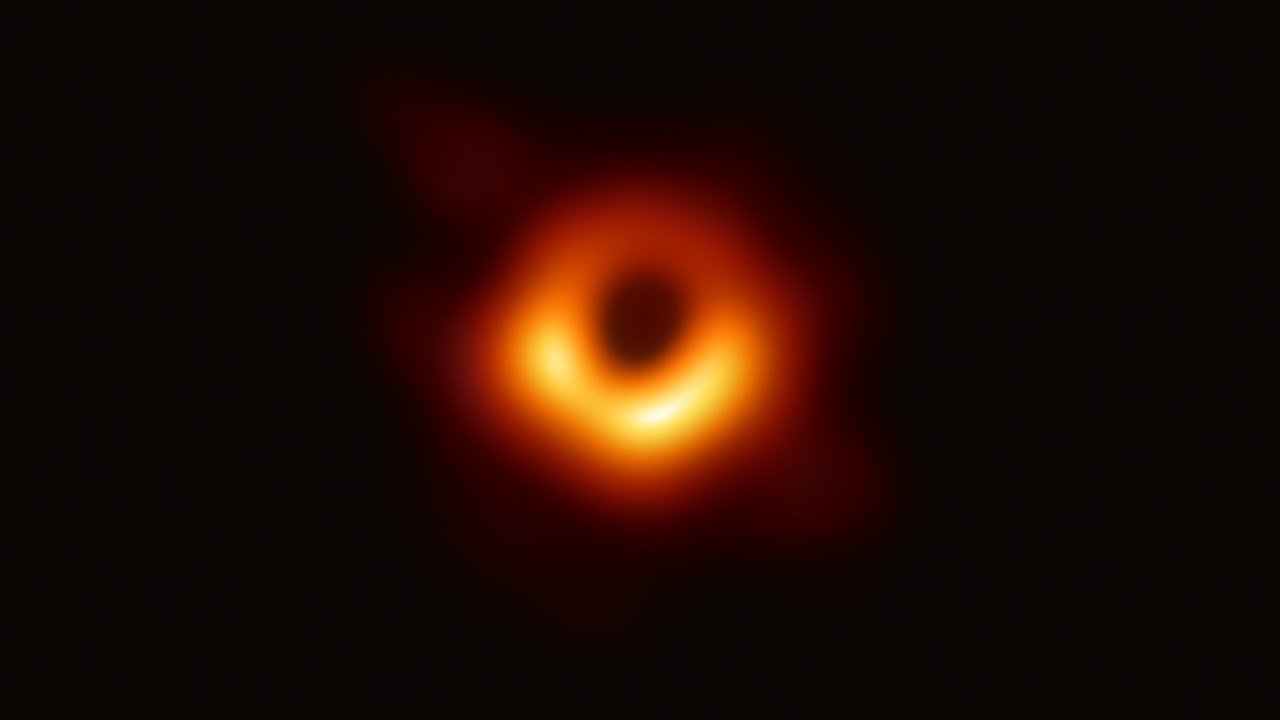

The supermassive black hole at the center of the Milky Way has long looked strangely quiet, a dim gravitational anchor in a galaxy full of brighter monsters. New X-ray observations now reveal that this apparent calm hides a far more violent recent past, with powerful outbursts that lit up surrounding gas and reshaped how astronomers think about our own galactic core. Together, these findings turn the Milky Way’s central black hole from a sleepy curiosity into a dynamic laboratory for extreme physics.
At the heart of the story is a NASA-led X-ray mission that has effectively turned nearby gas clouds into time capsules, preserving echoes of ancient flares. By decoding those echoes, researchers are reconstructing a centuries scale history of eruptions, shocks and rapid flickering that contradicts the black hole’s reputation as one of the faintest of its kind.
The quiet giant that was not so quiet
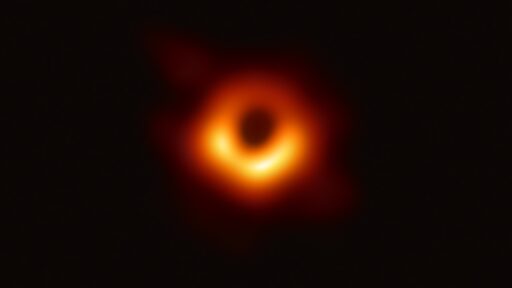
For years, Sagittarius A*, the supermassive black hole at the center of the Milky Way, has been described as unusually dim compared with similar objects in other galaxies. Earlier work with NASA’s Imaging X-ray Polarimetry Explorer showed that Sagittarius A* “woke up” roughly 200 years ago, producing a flare bright enough that its X-rays are still bouncing off giant molecular clouds near the galactic center. That reflection effect, seen as delayed X-ray echoes, already hinted that the black hole’s current faintness is a recent development rather than a permanent state.
New work goes further by showing that Our galaxy’s supermassive black hole, long considered one of the dimmest in the universe, has in fact unleashed explosive activity that left a lasting imprint on its surroundings. Researchers analyzing X-ray data now argue that Milky Way’s black has cycled through phases of intense feeding and near dormancy, with the most recent major outburst powerful enough to transform nearby gas clouds into glowing mirrors. That picture reframes the galactic center as a changing environment, not a static oddball.
XRISM’s forensic X-ray view of a past flare
The turning point came when a team led by Jan DiKerby pointed the new X-ray Imaging and Spectroscopy Mission, known as XRISM, at a giant cloud of gas close to the galactic center. Instead of a simple glow, they found a detailed spectrum that could only be explained if the cloud were reflecting high energy radiation emitted by past Sgr A* flares. By treating the cloud as a cosmic mirror, the team reconstructed the brightness and timing of those eruptions, revealing a shockingly turbulent history that had not been apparent from present day observations alone.
Jan DiKerby and colleagues were candid about how unexpected the result was, with one X-ray astronomer saying that nothing in their professional training had prepared them for the level of violence implied by the data. The XRISM spectra showed that the black hole’s output had spiked dramatically, then declined, in a pattern that left even seasoned experts shocked by the. In effect, XRISM has turned X-ray astronomy into a kind of forensic science, reading the scars in surrounding gas to reconstruct events that no human telescope directly witnessed.
Light echoes, explosive past and a restless present
The XRISM results dovetail with independent evidence that Our galaxy’s supermassive black hole was far more active in the recent past than it appears today. Observations of nearby gas clouds show a distinct X-ray glow that matches what scientists expect from a light echo of, confirming that the radiation we see now is a delayed reflection of a much brighter event. Earlier work on these molecular clouds concluded that Our work presents the missing piece of evidence that X-rays from the giant molecular clouds are due to reflection of a past outburst, tying the echoes directly to a powerful flare from Sagittarius A*.
Researchers now describe a black hole that is both faint and fundamentally explosive, a central engine whose history is written into the X-ray sky around it. One group notes that Black hole at the center of the Milky Way hides explosive past, arguing that the new data reveal a much more dramatic history of our than astronomers had assumed. Another analysis emphasizes that Our galaxy’s supermassive black hole is among the faintest known, yet evidence from a new space mission shows it was far more active in the past, a shift that scientists describe as a game changer for X-ray astronomy.
A flickering future for the Milky Way’s core
The story is not only about centuries old fireworks. Over the past few years, astronomers using NASA’s James Webb Space Telescope have watched the galactic center in unprecedented detail, catching a rapid-fire sequence of infrared flares from Sagittarius A*. One summary of recent work notes that The Milky Way’s supermassive black hole was noisier than usual back in January 2025, when astronomers used the JWST to track its mid infrared variability. That behavior suggests the black hole is still actively gulping down clumps of gas and dust, even if it is not currently producing the kind of giant flare that lit up the surrounding clouds two centuries ago.
Video shared by NASA collaborators shows a rapid-fire light show from the Milky Way’s central black hole using the James Webb Space, with a team of astrophysicists gaining the longest and most detailed glimpse yet of its short term flickering. When I put that restless present alongside the explosive past revealed by XRISM and IXPE, I see a black hole that behaves less like a dormant engine and more like a variable star on steroids, cycling through quiet spells and violent outbursts that leave long lasting marks on the Milky Way.