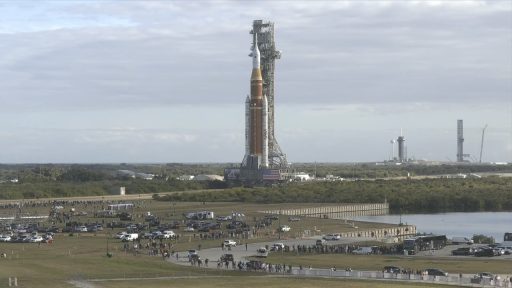
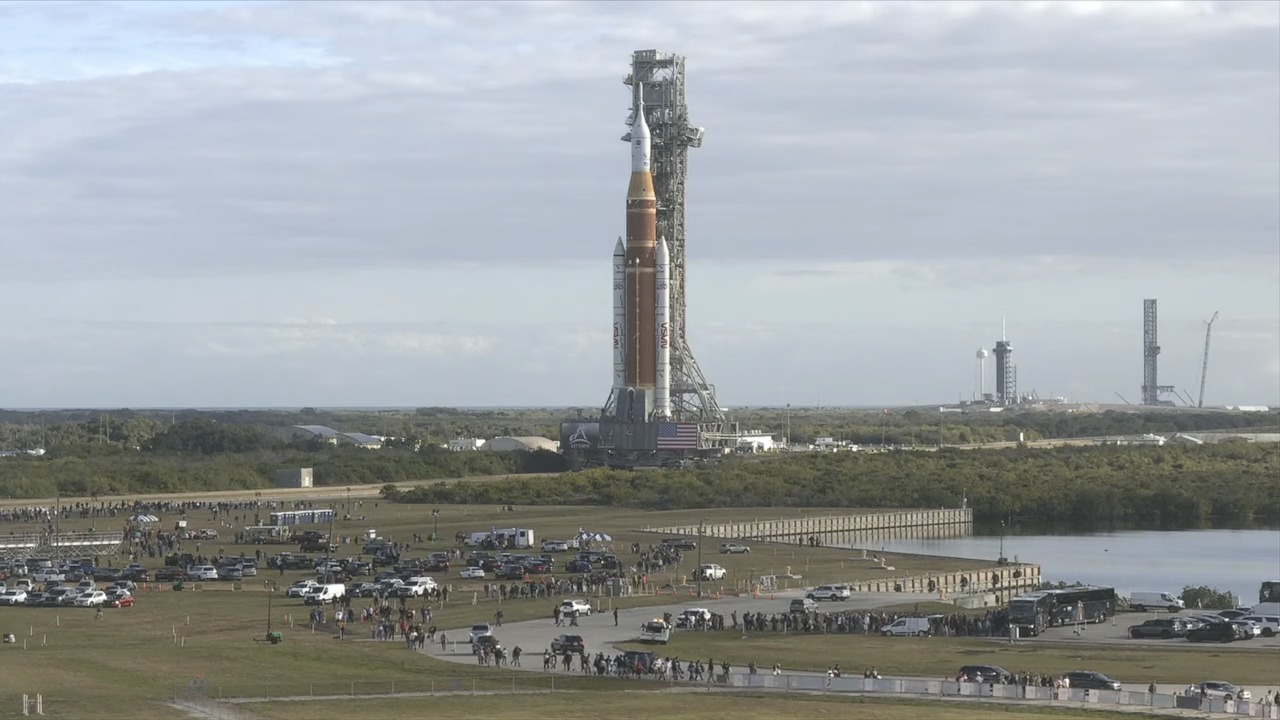

The Artemis 2 Space Launch System is finally moving from concept art and rollout photos into the unforgiving reality of cryogenic propellant. As the countdown clock ticks toward a full fueling rehearsal, NASA is treating this wet dress as the last major gate before committing a crew to a loop around the Moon and back. The agency has already demonstrated that it can load the giant rocket, but the coming run through the terminal countdown will decide whether that performance is repeatable on demand.
The stakes are clear: the February launch window is tight, the hardware is complex, and the lessons of Artemis 1 still loom over every valve and sensor. With the countdown already underway at Kennedy Space Center in Florida, the Artemis 2 team is trying to prove that the SLS can be tanked, detanked, and held at the brink of liftoff without the kind of leaks and scrubs that dogged the first mission.
The countdown that turns a stacked rocket into a flight article
NASA has formally started the clock for the Artemis II wet dress rehearsal at the agency’s Kennedy Space Center in Florida, turning a static stack into an active launch campaign. The agency describes a structured sequence in which the countdown clock begins, then holds and built-in pauses are used to verify systems as the team works toward tanking and terminal operations for Artemis II. That process is not just a dress rehearsal for launch day choreography, it is also a stress test for the ground infrastructure at pad 39B and the software that ties Kennedy Space Center, Mission Control in Houston, and other centers into a single decision loop.
Earlier this week, NASA confirmed that it is targeting Monday, Feb, identified as the tanking day, for the fueling portion of the Artemis II wet dress rehearsal at the Kennedy Space launch complex. The agency’s own planning notes that the test will begin with a call to stations, proceed through power up of the core stage, and culminate in a hold near the end of the countdown, with teams using the opportunity to validate procedures that will be reused when astronauts climb aboard for the real flight Monday, Feb.
Fueling rehearsal: from power-up at L-39 to fully loaded tanks
On the hardware side, the wet dress is already delivering concrete milestones. NASA reports that the Artemis 2 moon rocket has been fully fueled, with teams successfully filling the liquid hydrogen and liquid oxygen tanks on the Space Launch System core stage and upper stage during the latest run. That achievement, which required carefully chilling and flowing propellant into the vehicle while monitoring for leaks, shows that the massive cryogenic plumbing can perform as designed when the Artemis 2 moon is treated like it is hours from launch.
The sequence starts long before the first drop of liquid hydrogen moves. NASA notes that, Early this morning, at approximately L minus 39 hours and 30 minutes, teams powered up the rocket’s core stage, a key step that transitions the SLS from a dormant stack into an integrated launch vehicle ready to accept propellant. That early activation, which includes avionics checks and communications tests, is part of a carefully scripted lead-up that will eventually see the tanks filled, pressurized, and conditioned for engine start as part of the 39 hour timeline.
Cold weather, fuel leaks, and the legacy of Artemis 1
The path to this week’s rehearsal has not been smooth, and the environment has been as much of a player as the hardware. NASA has already delayed the Wet Dress Rehearsal, or WDR, because of frigid conditions that raised concerns about ice and thermal shock on the vehicle, a move that officials acknowledged could ripple into other missions such as Crew-12 if the schedule compression persists. The agency’s own update notes that the WDR test was postponed due to cold temperatures that could affect the rocket during fueling, a reminder that even in Florida, weather can dictate when a Wet Dress Rehearsal can safely proceed.
When the countdown did resume, the hardware quickly showed why this test is essential. During the SLS rocket test, NASA detected a fuel leak that triggered troubleshooting and raised questions about whether the February launch window can still be held. The incident, described under the banner Fuel Leak During Artemis II Rehearsal, underscores how the agency now battles issues for the February launch window in real time, applying lessons from Artemis 1 to refine seals, valves, and procedures so that a leak in the Fuel Leak During does not become a showstopper on launch day.
Adapting procedures with Artemis 1 lessons and detailed countdown choreography
NASA has been explicit that it is not approaching this wet dress as a blank slate. In an update, the agency said it is utilizing troubleshooting procedures put in place as a result of Artemis 1 to address the current fueling issues, particularly around the handling of LH2 and liquid oxygen propellants. That means the team is leaning on refined leak checks, slower chilldown rates, and more conservative pressure limits that were developed after the first SLS campaign, integrating those into the way NASA now runs the Artemis 2 tanking sequence.
The choreography of the rehearsal itself is also evolving. During the rehearsal, the team will execute a detailed countdown sequence and then pause at T minus 1 minute and 30 seconds for up to several minutes, using that hold to collect data and practice decision making at the edge of launch. NASA notes that During the run, controllers will simulate holds, recycle points, and potential aborts so that They can validate both the hardware and the human responses before committing to a real countdown, a level of fidelity that reflects how seriously the agency takes the During the final minutes.
Launch windows, February constraints, and what success would unlock
All of this effort is aimed at a narrow set of launch opportunities that are already under pressure. NASA has outlined that the February window had consisted of three possible remaining dates, Feb. 8, Feb. 10 and Feb. 11, each shaped by lighting, trajectory, and recovery constraints for the crewed mission. After the latest issues, officials now say Artemis 2 will launch no earlier than those dates, effectively tying the success of the wet dress to whether the agency can still exploit The February options that remain in the The February window.
Independent analyses of the trajectory note that NASA’s Artemis II mission to send astronauts round the Moon and back could launch as early as this February, but that the exact dates are constrained by the alignment of the Moon and the need to meet orbital constraints for the return. That means the wet dress is not just a technical hurdle, it is a calendar gate that will determine whether Artemis II can still be a February mission to the Moon and beyond, or whether the agency must stand down and wait for a later alignment that satisfies the Artemis II trajectory rules.