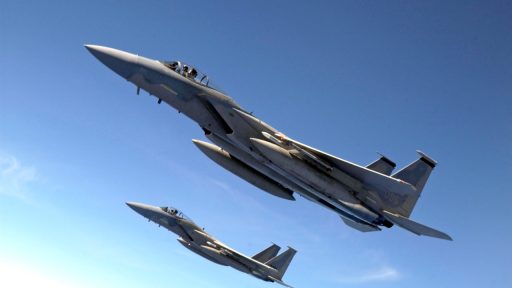
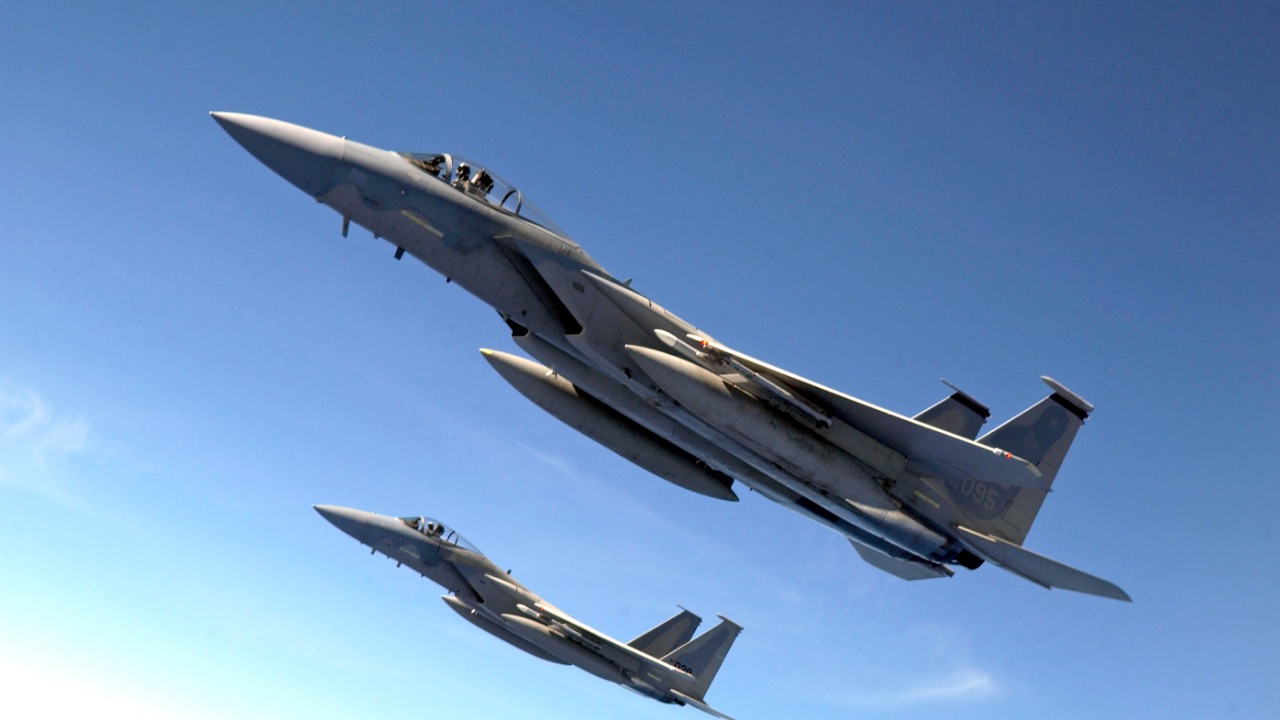

NASA has quietly taken a major step toward the next era of high speed flight by adding two F-15 fighter jets to its supersonic research fleet. The retired U.S. Air Force aircraft will serve as flexible, hard working testbeds that can chase, measure, and help refine the agency’s emerging generation of quiet supersonic designs. Their arrival signals that NASA’s push to tame the sonic boom is moving from concept into sustained, operational testing.
Rather than being museum pieces, these F-15s are being pulled straight into a demanding schedule of experiments that link military proven hardware with civilian focused research goals. They will fly from NASA’s desert hub in California, support the X-59 quiet supersonic program, and give engineers a way to probe the edge of the envelope at high altitude and high Mach without waiting for every new idea to be built into a bespoke experimental aircraft.
Why NASA wanted Air Force F-15s in its fleet
NASA has expanded its supersonic research capabilities by adding two retired U.S. Air Force F-15 Eagle jets to its fleet at the Armstrong Flight Research Center, a move that instantly boosts the agency’s ability to work in the same high speed, high altitude regime where future commercial supersonic transports would operate. The Air Force pedigree of these Eagles means NASA is inheriting aircraft with decades of operational experience in precisely the conditions its researchers want to study. For an agency that must stretch every research dollar, repurposing proven fighters is far more efficient than designing a clean sheet supersonic platform for every new experiment.
The decision fits a longer pattern in which NASA, working with the Air Force, turns former front line jets into flying laboratories that can carry experimental hardware, sensors, and pods. The agency notes that the F-15s allow NASA to operate in high speed, high altitude flight testing environments and that the aircraft can be modified to support a wide range of flight research tasks, from aerodynamics to propulsion and structural loads, according to NASA.
Armstrong’s growing role in quiet supersonic testing
The new jets are joining NASA’s flight research fleet at the Armstrong Flight Research Center in California, which has become the focal point for high speed atmospheric testing. Two retired US Air Force F-15 fighter aircraft have been inducted into NASA’s flight research fleet at Armstrong Flight Research Center, reinforcing high altitude supersonic flight testing as the X-59 program moves toward a more demanding phase, according to Two retired aircraft reports. The desert airspace around Armstrong offers a rare combination of controlled conditions and room to maneuver, which is essential when one aircraft is chasing another at supersonic speeds while gathering precision data.
Armstrong has already been using F-15s to support the Quiet SuperSonic Technology effort, and NASA has conducted a series of F-15 test flights to support the Quiet SuperSonic Technology Mission, with those flights helping refine how to reduce a sonic boom to a thump, according to NASA Conducts Series test flights. Bringing in two more Eagles deepens that bench, giving mission planners more flexibility to schedule complex formations, chase missions, and envelope expansion work as the X-59 moves from initial flights into community overflight campaigns.
How the F-15s will support the X-59 and Quesst
The X-59 is the centerpiece of NASA’s Quesst mission, a program intended to advance supersonic flight research, particularly in the area of quiet overland flight, and the new F-15s are being tailored to support that goal. NASA to modify two F-15 fighter jets to support development of silent supersonic X-59, with the aircraft expected to enable detailed measurements of shock waves and acoustic signatures as the experimental jet flies, according to NASA to modify reports. By flying in formation with the X-59, the F-15s can carry specialized sensors that map how pressure waves evolve around the aircraft and down to the ground.
NASA has emphasized that the X-59 is a Quesst mission asset, and earlier F-15 flights have already been used to simulate aspects of its acoustic footprint. Retired USAF F-15s give NASA a proven edge as X-59 quiet supersonic testing approaches, with the fighters acting as both pathfinders and escorts as the X-59 programme advances, according to Retired USAF coverage. In practice, that means the Eagles will help validate flight corridors, communications, and chase profiles before the one of a kind X plane commits to each new phase.
From sonic booms to “quiet” supersonic flight
At the heart of this effort is a deceptively simple question: can supersonic aircraft fly over land without the disruptive crack of a traditional sonic boom. NASA has conducted a series of F-15 test flights to support the Quiet SuperSonic Technology Mission, using those flights to understand how to shape shock waves so that people on the ground hear something closer to a distant rumble than a window rattling blast, according to Support the Quiet technology mission reports. The new F-15s will extend that work by flying repeated profiles at different altitudes and speeds, giving researchers a library of real world data to compare with their computational models.
NASA to modify two F-15 fighter jets to support development of silent supersonic X-59, and those modifications will likely include mounting instrumentation that can capture the fine structure of shock waves as they peel off the X-59’s fuselage and wings, according to NASA focused reporting. Retired USAF F-15s give NASA a proven edge as X-59 quiet supersonic testing approaches, because the fighters can fly repeatable, precisely controlled trajectories that make it easier to isolate the effects of design tweaks on the resulting acoustic signature, according to Photo documentation.
What the new jets mean for future supersonic travel
NASA has framed the arrival of these aircraft as part of a broader push to give regulators and industry hard data on how quiet supersonic designs behave in the real world. NASA Adds Two F-15 Aircraft to Support Supersonic Flight Research, and the agency notes that two retired U.S. Air Force F-15 jets have joined the flight research fleet to help generate knowledge that can be shared with both Department of Defense and commercial aviation companies, according to Support Supersonic Flight details. If the X-59 and its support fleet can demonstrate that overland supersonic flight can be made acceptable to communities, it could eventually open the door to new airliner concepts that cut transcontinental travel times without triggering noise bans.
For now, the focus is squarely on research rather than revenue flights. NASA has expanded its supersonic research capabilities by adding two retired U.S. Air Force F-15 Eagle jets to its fleet at the Armstrong Flight Research Center, and that expansion is about building a robust toolkit of aircraft, sensors, and procedures that can be used across multiple programs, according to NASA has expanded posts. The F-15s allow NASA to operate in high speed, high altitude flight testing environments, and because the aircraft can be modified to support flight research, they are likely to remain central players in whatever supersonic concepts come next, according to The F-15s technical notes.