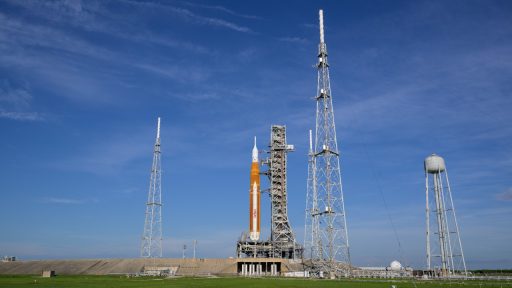
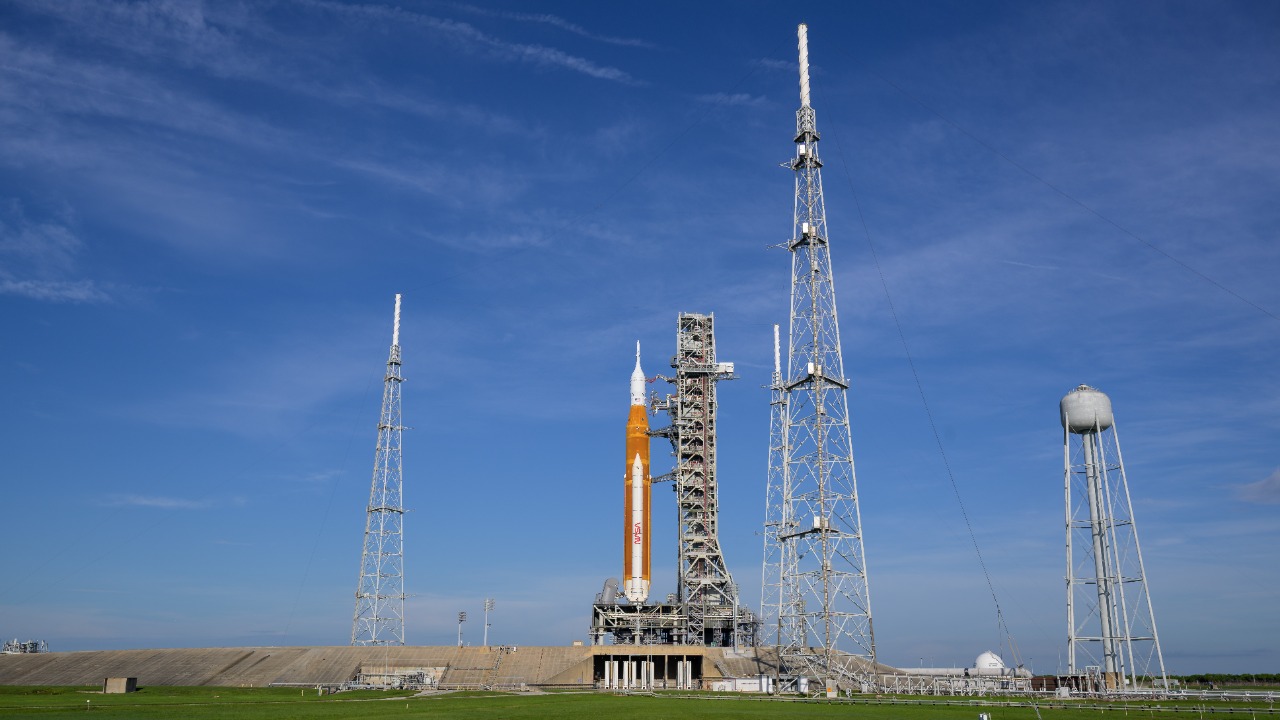

The Space Launch System was supposed to be NASA’s unstoppable Moon rocket, a symbol of American return to deep space. Instead, it has become a slow, spectacularly expensive vehicle that even its strongest institutional backers now struggle to justify. After years of upbeat talking points, NASA is finally conceding in public what critics have said all along: the SLS flight rate and cost structure do not match the ambitions being loaded onto it.
That shift is not happening in a vacuum. President Trump’s latest budget plans, congressional appropriations signals, and a string of technical hiccups on Artemis II are converging into a moment of reckoning for the giant booster. The awkward truth is that the SLS is no longer just a rocket, it is a policy problem, and NASA is being pushed to admit that something fundamental has to change.
The “elephant in the room” NASA can no longer ignore
For more than a decade, NASA treated the Space Launch System as the non‑negotiable backbone of its human exploration program, even as launch cadence slipped and costs climbed. That posture cracked in Feb, when senior officials finally acknowledged that the SLS flight rate, on the order of one mission every three years, is an “elephant in the room” for any serious plan to sustain operations around the Moon and beyond, a concern laid out bluntly in recent analysis. Until this week, NASA had largely sidestepped that basic math, focusing instead on the success of Artemis I and the promise of future crewed flights.
The admission matters because it reframes SLS from a proud flagship into a constraint that shapes everything else. A rocket that can fly only every few years cannot support a robust lunar presence, let alone a stepping‑stone campaign to Mars, no matter how powerful it is. That reality is now colliding with the administration’s broader exploration agenda, which is laid out in President Trump’s fiscal plans and is explicitly tied to beating rivals back to the Moon and on to Mars.
Trump’s budget priorities collide with SLS reality
The White House has been clear that human exploration is not a nostalgia project but a geopolitical contest. In its own words, the administration describes its approach as “Consistent with the administration’s priority of returning to the Moon before China and putting an American on Mars,” a framing that appears in the official budget messaging. That same language, repeated in a detailed justification that stresses the Moon, China and an American presence on Mars, underscores how tightly exploration timelines are now linked to national competition, not just scientific curiosity.
Those priorities are sharpened further in the fiscal 2026 request, where The Budget explicitly starts to pivot away from legacy architectures that cannot scale. In that document, officials stress that the push to the Moon and Mars must be “Consistent” with the need to modernize hardware and operations, a point spelled out in the section on the Moon and Mars campaign. The subtext is hard to miss: a rocket that flies rarely and costs billions per shot is a poor fit for a race that values tempo as much as raw capability.
Budget knives: phasing out SLS and Orion on paper
The clearest sign that patience with SLS is thinning came when the White House floated a plan to wind down the program altogether. In a proposal described as a White House budget proposal that would phase out SLS and Orion and scale back ISS operations, officials signaled that The Space Launch System and its companion Orion capsule might not be the long‑term workhorses once envisioned, a shift captured in reporting on the White House plan. That same proposal tied the phase‑out to a broader reshaping of ISS support, making clear that exploration dollars are finite and must be reprioritized.
The fiscal 2026 request sharpened the critique with a blunt cost figure. In the administration’s own justification, officials state that “SLS alone costs $4 billion per launch and is 140 percent over budget,” and that The Budget funds a program to replace SLS and Orion flights with more sustainable alternatives, language laid out in a detailed summary. When a presidential budget labels a flagship rocket “140 percent” over budget in black and white, it is not just an accounting note, it is a political signal that the program has lost its aura of inevitability.
Congress, appropriations, and the fight to keep the rocket alive
Congress, however, is not ready to let SLS fade quietly. In Jan, House and Senate appropriators released a joint report that was widely read as “great news for NASA,” highlighting generous top‑line numbers and specific boosts for exploration systems, as reflected in a detailed appropriations breakdown. The figures called out in the table are those the committees want to highlight, and while the numbers in the first column do not match the total for the International Space Station, the message is that lawmakers still see value in big, visible programs that anchor jobs and industrial capacity.
That political protection is reinforced by the broader narrative around the administration’s fiscal outline. Coverage of the proposed 2026 budget, including a televised segment noting how some agencies are bracing for cuts as the Trump administration releases its outline for the 2026 fiscal year budget, has emphasized that not every legacy program will survive intact, but that Trump himself remains closely associated with high‑profile exploration goals, as seen in reporting that foregrounds Trump. The result is a tug‑of‑war: the executive branch is openly questioning SLS affordability, while key members of Congress continue to treat it as a strategic asset that should be shielded from the axe.
Artemis II delays expose technical and schedule fragility
Even as the budget fight plays out, the rocket itself is struggling to stay on schedule. NASA’s next crewed mission, Artemis II, has already slipped after a critical fueling test uncovered a liquid hydrogen leak. NASA officials confirmed that Artemis II will now launch in March 2026 at the earliest, after a problem with the Artemis II Space Launch System and Orion stack inside the Vehicle Assembly Building forced teams to pause and reassess, a sequence described in detail in coverage of the fuel leak. The slip may be only a month on paper, but for a program already criticized for its glacial pace, every delay reinforces doubts about whether SLS can support the tempo the White House wants.
The human stakes are equally clear. A crew of four Moon‑bound astronauts will remain on the ground for at least a month after NASA delayed the launch of the Artemis II mission to allow engineers to complete a full test and understand the leak, a decision described in detail by NASA. Administrator Jared Isaacman has framed the move as a necessary expression of caution, stressing that with more than three years of work invested in Artemis II, the agency will not rush past unresolved issues, a point he made explicit when he addressed the delay as Administrator Jared Isaacman.