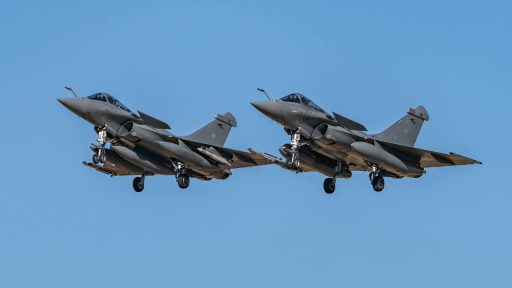
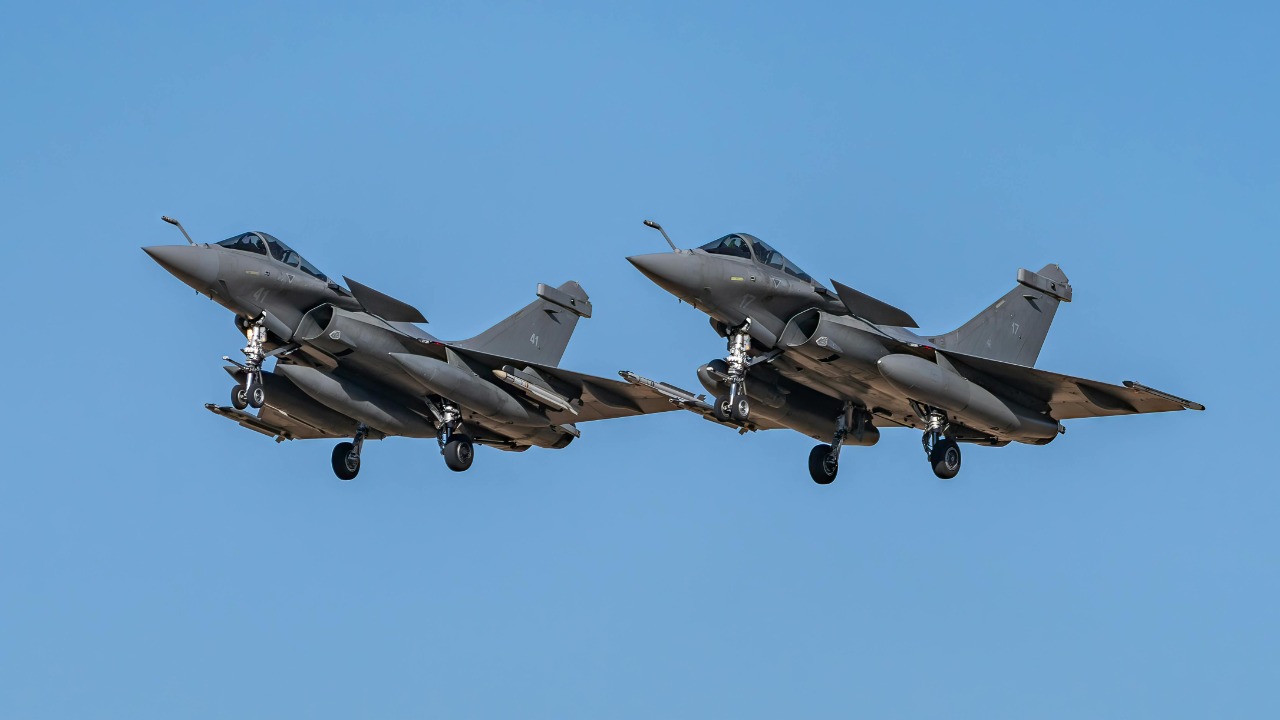

Saudi Arabia has opened its skies to one of the most ambitious multinational air drills in the region, using Spears of Victory 2026 to showcase both its own capabilities and its role as a hub for coalition air power. The exercise, staged in the kingdom’s Eastern Region, brings together advanced fighter jets, support aircraft, and command elements from across the Gulf and beyond in a bid to sharpen combat readiness and joint planning.
Running from mid January into early Febru, the drills are designed to stress test everything from air defense and electronic warfare to complex strike packages, reflecting how Riyadh and its partners expect to fight in a contested air environment. I see the structure and scale of Spears of Victory 2026 as a clear signal that regional air forces are moving from symbolic flypasts to realistic, integrated combat training.
Saudi Arabia’s Air Warfare Centre steps onto the main stage
At the heart of Spears of Victory 2026 is The Air Warfare Center in Saudi Arabia’s Eastern Region, which has evolved into a sophisticated training ecosystem rather than a simple range complex. The multinational air force exercise is being conducted at this Air Warfare Centre, where participating forces can rehearse missions that mirror real-world contingencies at the Gulf Cooperation Council (GCC) level. By hosting the drills in the Eastern Region, close to key energy infrastructure and maritime chokepoints, Saudi planners are implicitly tying training scenarios to the defense of critical national and regional assets.
The facility’s importance is underscored by the way it anchors a broader multinational framework that includes advanced fighters, integrated command and control, and an emphasis on electronic warfare. Reporting on the exercise notes that the Air Warfare Center in Saudi Arabia’s Eastern Region offers a technologically sophisticated environment that enables realistic mission planning and execution for deeply integrated multinational operational frameworks. I read that as a deliberate attempt to position the kingdom’s training infrastructure alongside established Western complexes, turning Spears of Victory into a recurring proving ground for coalition tactics.
Scope, timeline and the exercise’s evolving concept
Spears of Victory 2026 is not a short, symbolic event but a sustained campaign of sorties and command-post work that runs from January 18 to February 5, giving aircrews and planners time to cycle through multiple mission sets. Saudi officials in Riyadh have framed the exercise as a venue to address modern air threats, conduct joint planning, and carry out detailed evaluation of combat capabilities across the participating forces, with the drills explicitly scheduled from January 18 to early Febru. That duration allows for a progression from basic familiarization flights to complex composite air operations that stress logistics, maintenance, and command chains as much as pilots.
The concept has been maturing over several iterations, and earlier drills provide useful context for what is happening in 2026. In 2025, Spears of Victory brought together 15 nations to strengthen interoperability, with United States and regional partners in the Middle East using the exercise to reinforce their shared commitment to regional security, according to Spears of Victory 2025 reporting. That continuity suggests Spears of Victory 2026 is less a one-off show of force and more a building block in a multi year effort to standardize tactics and communications across a broad coalition.
Royal Saudi Air Force leadership and the “Red Flag” ambition
Spears of Victory 2026 is Led by the Royal Saudi Air Force, which is using the event to cement its status as both host and lead planner for complex multinational air operations. Official statements describe how participating forces will execute joint air operations in an advanced electronic warfare environment, with the Royal Saudi Air Force orchestrating missions that combine fighters, support aircraft, and ground-based systems in a single scenario. That level of complexity requires robust planning cells and data links, and it highlights how far the service has come in managing coalition air campaigns.
The ambition behind Spears of Victory has been explicit for several years, with Saudi officers describing the series as their answer to high end Western air exercises. Earlier coverage of the drills characterized them as Saudi Arabia’s “Red Flag,” noting that on the final day of a previous iteration, the Chief of the RSAF, General Staff Lt General Prince Turki bin Bandar Al S, praised the exercise as a huge success and signaled plans to expand it further in the future, according to Looking to the future commentary. I see Spears of Victory 2026 as the latest step in that trajectory, with the Royal Saudi Air Force moving from participant to architect of a regional training brand that aspires to match the complexity of long running Western exercises.
Pakistan Air Force and the multinational fighter mix
Among the most closely watched participants this year is the Pakistan Air Force, which has deployed F-16 Block 52+ fighters and associated crews to Saudi Arabia for the drills. A Pakistan Air Force contingent comprising F-16 Block 52 fighter aircraft, along with dedicated air and ground crew, arrived in the kingdom to take part in the multinational aerial combat Exercise Spears of Victory 2026, as confirmed in an official Block focused announcement. For Islamabad, sending some of its most capable fighters, including the “52” standard, is both a signal of political alignment with Riyadh and a practical opportunity to test its aircraft and crews in a demanding multinational setting.
The Pakistan Air Force has framed its participation as a chance to validate its combat readiness and refine tactics alongside regional and extra regional partners. Local reporting notes that PAF will Participate in Spears Of Victory 2026 Multinational Combat Drill in Saudi Arabia, with the service emphasizing that the deployment is meant to enhance interoperability and validate its combat readiness. Additional coverage underscores that the Pakistan Air Force F-16s have arrived in Saudi Arabia for Spears of Victory, with the PAF contingent described as an active participant in the multinational drills rather than a token presence, according to Pakistan Air Force focused reporting.
Coalition dynamics, objectives and what comes next
Spears of Victory 2026 is notable not only for its hardware but for the breadth of its coalition, which includes regional Gulf partners and international air forces operating side by side. A video overview of the drills highlights that Exercise Spears of Victory 2026 is witnessing the participation of fighter jets and combat support elements from Sau, the Kingdom and the United States of America, underscoring the presence of U.S. assets alongside Saudi and other regional aircraft in the Exercise Spears of. Separate footage and social media posts confirm that the Spears of Victory 2026 exercise has officially commenced in Saudi Arabia, with a total of 15 countries involved and the Pakistan Air Force highlighted as an active participant in the Spears of Victory drills. That mix of Gulf, Pakistani, and American air power reflects a web of defense relationships that extends well beyond bilateral ties.
Saudi officials have been explicit about the strategic objectives behind hosting such a broad coalition. Statements from Riyadh describe Spears of Victory 2026 as a platform for promoting joint operational strategies and enhancing coordination of military action among participating forces, with the exercise framed as a way to deepen cooperation and improve the ability to respond collectively to regional threats, according to Saudi Arabia to host documentation. A related briefing from Riyadh’s Asharq Al Awsat notes that Saudi Arabia to Host Multinational ‘Spears of Victory 2026’ Military drills with a focus on enhancing combat capabilities and promoting joint operational strategies, reinforcing the idea that the kingdom sees itself as a convening power for Asharq Al Awsat style coalition training.