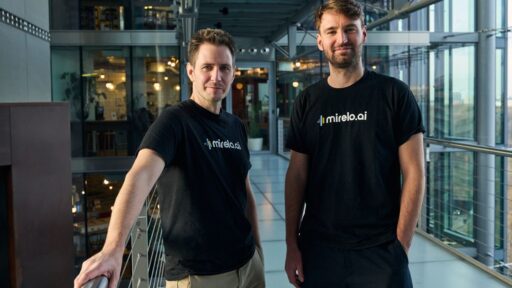
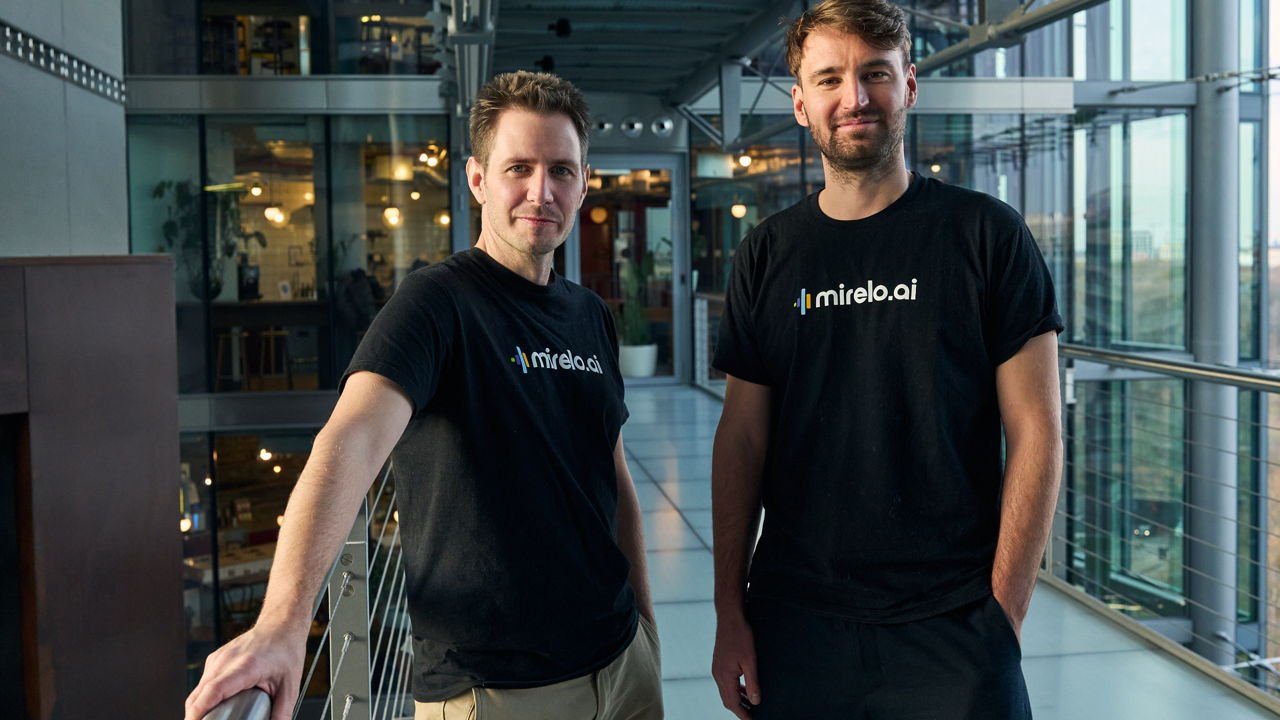

Mirelo has raised $41 million in new funding to tackle what it calls AI video’s “silent problem,” positioning itself as a specialist in high-quality audio for synthetic media. The round, led by Index Ventures and Andreessen Horowitz (a16z), signals that investors now see sound as the next major frontier in AI-native video experiences.
What Mirelo is building and the “silent problem” it targets
Mirelo describes AI video’s “silent problem” as a widening gap between increasingly realistic visuals and lagging, low-fidelity or missing audio that breaks immersion. While text-to-video models can now generate convincing scenes, the company argues that speech, ambient sound, and sound effects often feel like an afterthought, leaving creators to manually patch in voiceovers or stock audio that rarely matches the on-screen action. That disconnect limits how useful AI video can be for applications like advertising, education, or entertainment, where viewers expect the polish of a professionally mixed soundtrack and precise lip-sync.
To close that gap, Mirelo’s core product focuses on tightly integrating generated visuals with synchronized, natural-sounding audio rather than trying to compete as a general-purpose video generator. The company frames itself as an audio-first infrastructure layer that can sit underneath or alongside existing video models, generating speech, sound design, and timing that are aware of what is happening in each frame. By defining its mission around solving AI video’s “silent problem,” Mirelo is betting that specialized audio infrastructure will become as critical to synthetic video as rendering engines are to modern games, with direct implications for studios, platforms, and independent creators that want cinematic quality without traditional production budgets.
Details of the $41M round and lead backers
The company’s latest funding round, in which Mirelo raises $41M, is explicitly aimed at accelerating development of its AI audio technology for video. That capital gives Mirelo the runway to train larger models, refine its synchronization stack, and build the infrastructure needed to serve audio at scale for partners that may be generating millions of clips. For customers, a well-funded specialist in AI sound could mean faster iteration on features like multilingual dubbing, character-specific voices, and adaptive soundtracks that respond to scene changes in real time.
Index Ventures is a lead investor in the round, a role that underscores mainstream venture confidence in AI-native media tools that focus on infrastructure rather than consumer-facing apps alone. Andreessen Horowitz (a16z) is also a lead investor, signaling strong backing from a major Silicon Valley firm that has made AI infrastructure a central theme of its portfolio. Their combined participation not only validates Mirelo’s thesis that audio is a distinct layer in the AI stack, it also gives the startup access to networks of portfolio companies, technical advisors, and potential enterprise customers that could accelerate adoption of its audio-first platform.
Why this funding is timely for the AI video ecosystem
The $41 million raise for Mirelo comes at a moment when AI video tools are rapidly improving visual fidelity but still struggle with convincing speech, sound design, and lip-sync. Models that can generate photorealistic faces or complex camera moves often output clips without any sound at all, or with generic audio that fails to match character emotions, mouth movements, or environmental cues. That mismatch is more than a cosmetic flaw, since brands, educators, and filmmakers rely on audio to convey nuance, build trust, and guide attention, and they are reluctant to deploy AI video at scale if the sound undercuts the message.
The round led by Index Ventures and a16z reflects investor belief that audio quality is now a critical bottleneck for commercial AI video adoption rather than a secondary feature. As companies experiment with AI-generated explainers, product demos, and localized content, they are discovering that viewers quickly notice robotic voices, poor timing, or misaligned lip movements, which can erode credibility and engagement. Fresh capital positions Mirelo to move quickly into that gap while larger model providers focus primarily on video frames, giving it an opportunity to become the default audio layer that others plug into when they need production-grade sound without building it themselves.
How Mirelo’s approach could reshape AI video products
By centering its technology on AI video’s “silent problem,” Mirelo is positioning itself as a plug-in layer for existing AI video generators, streaming platforms, and creative tools rather than a standalone destination app. In practice, that could mean video model providers calling Mirelo’s services to generate synchronized dialogue and soundscapes as part of their rendering pipeline, or streaming platforms using Mirelo to automatically add localized voice tracks and accessibility features like descriptive audio. For creators working in tools such as Adobe Premiere Pro or DaVinci Resolve, a Mirelo integration could surface as an option to auto-generate voiceovers and sound design that are tightly aligned with the edit, reducing the need for separate recording sessions or manual sound libraries.
The $41 million raise opens up several product directions, including APIs or SDKs that let partners embed Mirelo-powered audio directly into their AI video workflows. With robust developer tools, a game engine like Unity could tap Mirelo to generate character dialogue that matches procedurally generated cutscenes, while a social video app could offer users instant voice cloning and language translation that stay in sync with their on-screen avatars. Backing from Index Ventures and a16z could also help Mirelo integrate with portfolio companies that are already building AI-native media applications, creating a network effect in which each new integration improves the platform’s data, performance, and visibility across the ecosystem.
Competitive landscape and what changes next
Within the broader AI video and audio space, Mirelo stands out by explicitly targeting the “silent problem” rather than trying to win the race for the most photorealistic or longest-duration video clips. Many rivals prioritize visuals or text-only generation, focusing on frame rate, resolution, and scene complexity while leaving audio to generic text-to-speech engines or manual post-production. Mirelo’s audio-first positioning allows it to specialize in challenges like expressive prosody, cross-lingual lip-sync, and scene-aware sound design, which are difficult to solve as side projects inside teams that are already stretched on video model research.
A $41 million war chest gives Mirelo room to differentiate through research, hiring, and partnerships at a time when other startups are chasing general-purpose video models that may require far more capital to compete. With dedicated funding, Mirelo can recruit specialists in speech synthesis, psychoacoustics, and audio engineering, invest in proprietary datasets that capture nuanced human expression, and structure partnerships with studios and platforms that want to experiment with AI sound without overhauling their entire video stack. The involvement of Index Ventures and Andreessen Horowitz may also influence competitive dynamics by validating audio-centric AI as an investable category on its own, encouraging more founders and investors to treat sound as a first-class problem in synthetic media rather than a feature that can be bolted on later.