
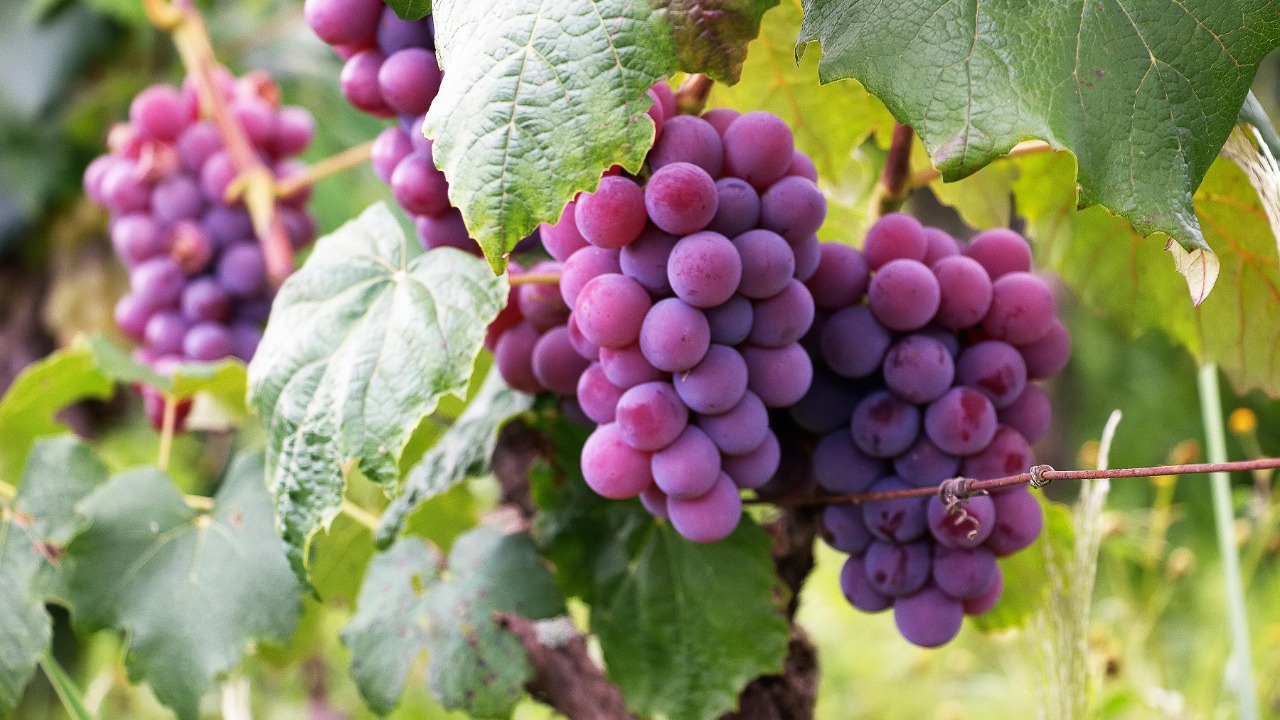

Microwaving grapes does not just risk a sticky mess; it can briefly turn an ordinary kitchen into a tiny plasma laboratory. Slice or pair grapes and hit “start,” and you create the right conditions for intense electromagnetic hotspots that rip electrons from atoms and produce flickering fireballs of ionized gas.
What began as an internet party trick has become a carefully studied physics problem linking fruit, household appliances, and cutting-edge photonics research. By tracing how microwaves concentrate inside grape-sized spheres of water and sugar, researchers have uncovered a surprisingly elegant explanation for those bright sparks and glowing plumes.
From viral stunt to serious physics puzzle
Most of us first encounter grape plasma as a dare: cut a grape in half, balance the two pieces so they still touch, then watch them erupt in light. Videos of this setup, and of whole grapes placed side by side, show sudden flares, sizzling sounds, and tiny jets of flame that seem wildly out of proportion to such a small snack. The spectacle raised an obvious question for physicists: how can a piece of fruit, with no metal and no visible circuitry, create something that looks like a miniature lightning bolt?
To answer that, a team working in Canada treated the grape trick as a controlled experiment rather than a curiosity. They placed grapes, hydrogel beads, and other water-filled spheres in a standard microwave and measured how the electromagnetic field behaved at the point where two pieces touched. Their peer-reviewed work, published in the Proceedings of the National Academy of Sciences, linked the fireballs to specific microwave resonances that form inside grape-sized objects and concentrate energy at the contact point.
How a grape becomes a microwave antenna
At the heart of the phenomenon is the way microwaves interact with small, water-rich spheres. A single grape behaves a bit like a tiny antenna and cavity combined, trapping and recycling the microwave radiation that passes through it. When two grapes, or two grape hemispheres, are placed close together, their internal fields couple and create a shared hotspot where the fruit pieces nearly touch. That hotspot can ramp the local energy density up far beyond what the rest of the oven experiences.
Researchers showed that the effect does not depend on grape skin or sugar but on size, shape, and water content. By swapping grapes for synthetic beads with similar dimensions, they reproduced the same intense focusing of energy and the same bursts of light. The key is that the grape diameter happens to be comparable to the wavelength inside the fruit, which lets the microwaves resonate and build up. As one analysis of grape plasma explains, two whole grapes bumped together trap radiation inside and funnel it into that narrow bridge region until the air there breaks down into plasma.
Plasma fireballs and the role of the “bridge”
Once the hotspot forms, the next step is turning air into plasma, the same ionized state of matter we see in lightning and fluorescent lamps. At the contact point between the grapes, the electric field becomes strong enough to strip electrons off molecules in the thin film of juice and air that connects them. That avalanche of charged particles produces the bright, flickering plume that so many viral clips celebrate. In some cases, the bridge of skin or pulp that links the two halves acts like a launchpad, briefly sustaining the arc before it sputters out.
Early on, many people assumed the thin strip of skin left between grape halves was the main culprit, as if it worked like a tiny wire. Detailed imaging and simulations have since shown that the real driver is the concentrated field in the gap, with the bridge simply helping to localize and stabilize the discharge. One technical report described this central heat spot and the way it forms even when the physical connection between grapes is minimal, as long as the separation stays within a few millimeters.
What experiments in Canada revealed
The most detailed work on this kitchen plasma came from a group of physicists in Canada who approached the problem with cameras, sensors, and computer models. One account of their research even opened with the wry line that “it is a truth universally acknowledged that a pair of grape hemispheres exposed to intense microwave radiation will spark,” a nod to how familiar the trick had become online. The team used infrared imaging to watch the temperature spike at the contact point and mapped the electromagnetic field that built up inside each fruit.
By varying the fruit size, swapping grapes for quail eggs or water-filled beads, and changing the spacing between objects, they confirmed that the effect depends on geometry and dielectric properties rather than some quirky chemistry. Their experiments in Canada showed that when two spheres of the right size sit within a fraction of a wavelength of each other, the microwave field locks into a shared mode that pumps energy into the gap. Once that mode forms, the grapes do not just warm up; they act like a tiny resonant cavity that supercharges the air until it ionizes.
Why science outlets keep warning us not to try it
As entertaining as the footage can be, those sparks are a sign of electrical stress inside an appliance that was not designed for arcing. The same concentrated fields that turn air into plasma can also pit the metal interior, damage the protective coating, or in extreme cases harm the magnetron that generates the microwaves. Several explainers on the topic have repeated the same plea: please do not sacrifice your own oven just to watch a grape flare for a second or two. One detailed guide to the physics even opened with the reassurance that “no kitchen appliances were harmed” during the experiments, precisely because the team used controlled conditions rather than casual home setups, as described in a technical explainer.
Safety concerns go beyond the oven itself. When the plasma forms, it can char the fruit, release hot steam, and in some cases ignite nearby material if the setup is careless. Consumer-oriented coverage has stressed that while the grape does not exactly explode, the combination of superheated juice and electrical discharge is unpredictable in a cramped, enclosed space. One widely shared warning piece framed the advice bluntly: if we have ever thought about balancing grape halves in the microwave just to see what happens, we should not, because the glow we get is not worth the risk of a damaged appliance or a kitchen fire, as highlighted in a consumer warning.