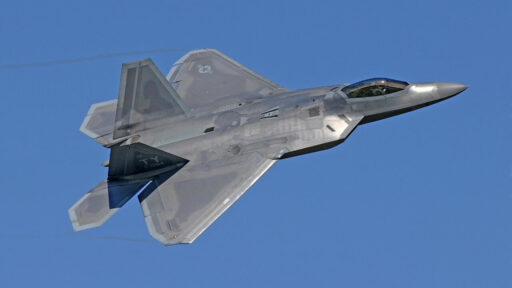
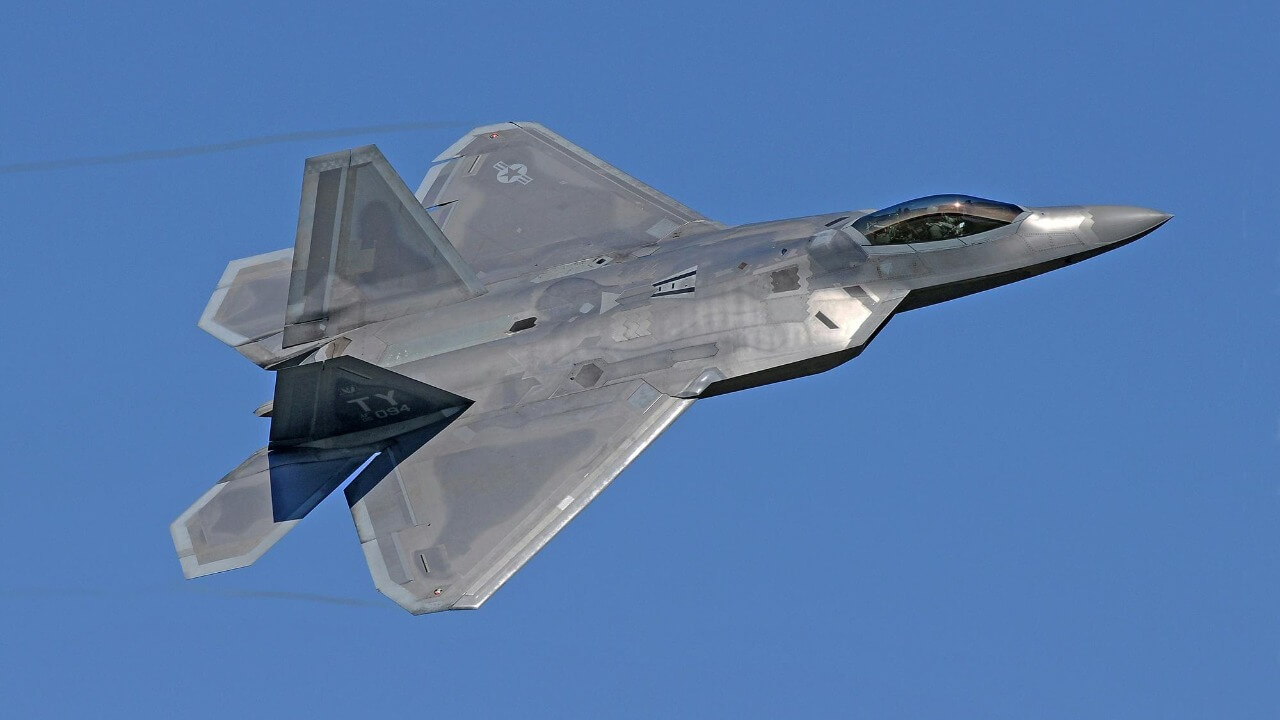

Lockheed Martin has completed a flight test in which an F-22 Raptor acted as an in-flight controller for an autonomous MQ-20 unmanned aerial system, moving crewed-uncrewed teaming from the lab into the air. Working with General Atomics Aeronautical Systems Inc. (GA-ASI) and L3Harris, the company used the fifth-generation fighter to command the drone during live operations, signaling a new phase in integrating advanced fighters with autonomous platforms for operational synergy.
The demonstration, reported in mid-November 2025, builds on earlier simulations and ground-based experiments to show that a frontline combat aircraft can direct an autonomous UAS in real time. For defense planners and industry, the test underscores Lockheed Martin’s push to turn teaming technology into a practical tool for complex missions rather than a future concept.
Demonstration Overview
Lockheed Martin’s latest trial centered on the F-22 Raptor serving as the primary in-flight controller for an MQ-20 drone, with the fighter issuing commands to the autonomous UAS while both aircraft were airborne. Reporting on the event describes how the F-22 used its onboard systems to manage the drone’s actions, demonstrating that a fifth-generation fighter can orchestrate an uncrewed asset in a live environment rather than relying on a ground station, a shift highlighted in coverage of how the F-22 commands drone in flight as Lockheed Martin advances teaming technology. For operators, that kind of direct control from the cockpit is significant because it compresses decision timelines and allows a pilot to adapt drone behavior instantly as conditions change.
In the crewed-uncrewed teaming concept executed during the test, the F-22 directed the MQ-20’s operations to simulate collaborative mission profiles, such as having the drone act as an extended sensor, a stand-in for a weapons truck, or a decoy in contested airspace. The key achievement, according to detailed accounts of how Lockheed Martin used a fifth-generation fighter to command a drone in flight, is that the aircraft achieved full aerial integration, with the fighter and UAS operating as a coordinated formation rather than as separate assets, a result that reporting on Lockheed Martin using a 5th Gen fighter to command a drone in flight frames as a step toward more flexible and survivable airpower. For air forces, that level of integration promises to expand the reach and resilience of high-value fighters by pairing them with lower-cost, risk-tolerant drones.
Key Collaborators and Roles
General Atomics Aeronautical Systems Inc. provided the MQ-20 drone that served as the uncrewed platform in the teaming demonstration with the F-22, extending the company’s portfolio of UAS that can work alongside crewed aircraft. Coverage of the event notes that GA-ASI’s MQ-20 was selected as the teaming partner for the F-22, with the drone acting as the autonomous node that could receive and execute commands from the fighter, a role described in detail in reporting on how GA-ASI, Lockheed, and L3Harris demonstrated crewed-uncrewed teaming of the F-22 fighter jet and MQ-20 drone. For GA-ASI, participation in this test reinforces the MQ-20’s relevance in future combat architectures that rely on distributed, networked platforms.
L3Harris contributed to the integration layer that allowed the F-22 and MQ-20 to share data and commands, supporting the crewed-uncrewed teaming link between the fighter and the drone during the flight test. Reporting on the multi-company effort emphasizes that L3Harris helped enable the communications and control pathways that made it possible for the F-22 to act as an in-flight controller, a role that aligns with the company’s broader focus on resilient, secure connectivity in contested environments, as reflected in accounts of how General Atomics, Lockheed Martin and L3Harris demonstrate crewed-uncrewed teaming in F-22 and MQ-20. For militaries planning future networks, that kind of integration expertise is central to ensuring that crewed and uncrewed assets can cooperate even when adversaries attempt to disrupt communications.
Timeline of the Test
The sequence of demonstrations unfolded over several days, beginning when General Atomics, Lockheed Martin and L3Harris first showcased crewed-uncrewed teaming in the F-22 and MQ-20. Reporting on that initial milestone explains that the companies demonstrated the basic teaming concept, with the fighter and drone operating in a coordinated fashion to validate that the architecture could support shared missions, a development captured in coverage of how General Atomics, Lockheed Martin and L3Harris demonstrate crewed-uncrewed teaming in F-22 and MQ-20. For observers, that first step signaled that the partners had moved beyond isolated lab tests and into integrated field trials.
Subsequent reporting describes how GA-ASI, Lockheed and L3Harris then demonstrated the F-22 fighter jet and MQ-20 drone teaming in a more structured flight scenario, refining the roles and interactions between the crewed and uncrewed platforms. Accounts of that phase note that the companies used the structured scenario to stress the command-and-control links and to explore how the F-22 could manage the MQ-20 during realistic mission profiles, a progression detailed in coverage of how GA-ASI, Lockheed, L3Harris demonstrate crewed-uncrewed teaming of F-22 fighter jet and MQ-20 drone. For defense stakeholders, the move to structured scenarios indicated that the technology was maturing toward operational relevance rather than remaining a one-off demonstration.
The latest updates describe Lockheed Martin flying the fifth-generation F-22 as an in-flight controller for the autonomous UAS, marking the culmination of the multi-day test phase. Reporting on the company’s announcement explains that Lockheed Martin, which trades as Lockheed Martin (NYSE: LMT), used the F-22 to command the drone in flight and highlighted the achievement as a milestone in its broader teaming roadmap, a point underscored in coverage of how Lockheed Martin (NYSE: LMT) flies 5th Gen F-22 as in-flight controller for autonomous UAS. For program managers and acquisition officials, that final step in the sequence provides evidence that the architecture can support real-time control from a frontline fighter, a prerequisite for future operational deployment.
Strategic Implications
Lockheed Martin’s F-22 and MQ-20 teaming test advances the company’s teaming technology by enabling more dynamic autonomous operations than earlier isolated drone flights or ground-controlled experiments. Reporting on the event stresses that the F-22’s ability to command the drone in flight allows the autonomous UAS to adjust its behavior based on the fighter pilot’s intent, rather than following a fixed preplanned route, a capability highlighted in coverage of how the F-22 commands drone in flight as Lockheed Martin advances teaming technology. For air forces, that shift from static autonomy to responsive teaming could enable drones to act as true partners that can be retasked on the fly to exploit fleeting targets or avoid emerging threats.
The demonstration also affects how fifth-generation fighters like the F-22 might be used in future operations, with the fighter’s role as controller for UAS such as the MQ-20 enhancing mission flexibility and potentially reducing pilot workload in contested environments. Reporting on Lockheed Martin’s use of a fifth-generation fighter to command a drone in flight notes that the company views this capability as a way to extend the F-22’s reach and survivability by delegating high-risk tasks to uncrewed systems, a perspective reflected in accounts of how Lockheed Martin uses 5th Gen fighter to command drone in flight. For policymakers and planners, the test signals a broader shift toward integrated crewed-uncrewed formations that can distribute risk, complicate adversary targeting and support evolving defense requirements as of late 2025.