
China’s LandSpace is targeting a $1 billion IPO to fuel its advancements in reusable rocket technology, a move that signals how aggressively the private launch firm intends to scale in a market long dominated by state-backed players. The planned listing comes as Beijing pushes domestic champions to rival global leaders like SpaceX by cutting the cost of access to orbit through reusable systems. By seeking such a large raise, LandSpace is positioning itself to capture a bigger share of the commercial launch and satellite services market that China views as strategically vital.
LandSpace’s Rise in China’s Space Sector
LandSpace emerged as one of China’s earliest private launch startups, founded to develop liquid-fueled orbital rockets at a time when the country’s commercial space ecosystem was only beginning to open up. From its first small launchers to more capable vehicles, the company has focused on mastering liquid oxygen and methane propulsion, a technology path that aligns with global trends toward cleaner, more efficient engines that can be reused. Those early milestones, including initial test flights and engine firings, helped establish LandSpace as a key player among Chinese private firms competing for contracts to place small satellites and experimental payloads into orbit.
Unlike the large state-owned enterprises that dominate China’s traditional space program, LandSpace has framed its strategy around commercial viability and rapid iteration, aiming to shorten development cycles and respond quickly to customer demand. Previous funding rounds, backed by domestic investors who see launch services as a growth industry, have supported the construction of test stands, manufacturing lines and early reusable prototypes. That capital base, combined with partnerships for satellite deployment and data services, has allowed the company to move from concept to flight hardware in a relatively compressed timeframe, which is critical for investors and customers who want to see tangible progress rather than long, state-driven development timelines.
The $1 Billion IPO Announcement
The company’s latest move, targeting a $1 billion initial public offering, marks a turning point in its evolution from a venture-backed startup to a publicly traded aerospace manufacturer. According to reporting on China’s LandSpace targets $1 billion IPO in reusable rocket tech push, the firm is seeking a valuation that would give it the financial firepower to expand research and development, scale up production facilities and invest in more capable reusable launch systems. By explicitly tying the IPO proceeds to reusable rocket technology, LandSpace is signaling to investors that its growth story hinges on lowering per-launch costs and increasing flight cadence, rather than relying solely on one-off government contracts.
The timing of the IPO push indicates that LandSpace is moving from a phase dominated by prototype testing into one focused on commercial deployment and recurring revenue. Management is reported to be weighing listing venues such as Hong Kong or Shanghai, choices that would keep the company under Chinese regulatory oversight while still courting international capital that is eager for exposure to Asia’s space economy. Regulatory approvals will be crucial, not only for the listing itself but also for export controls, technology transfer rules and national security reviews that shape which foreign investors can participate. For stakeholders, the listing venue and regulatory framework will influence liquidity, governance standards and the degree of geopolitical risk embedded in the stock.
Focus on Reusable Rocket Innovations
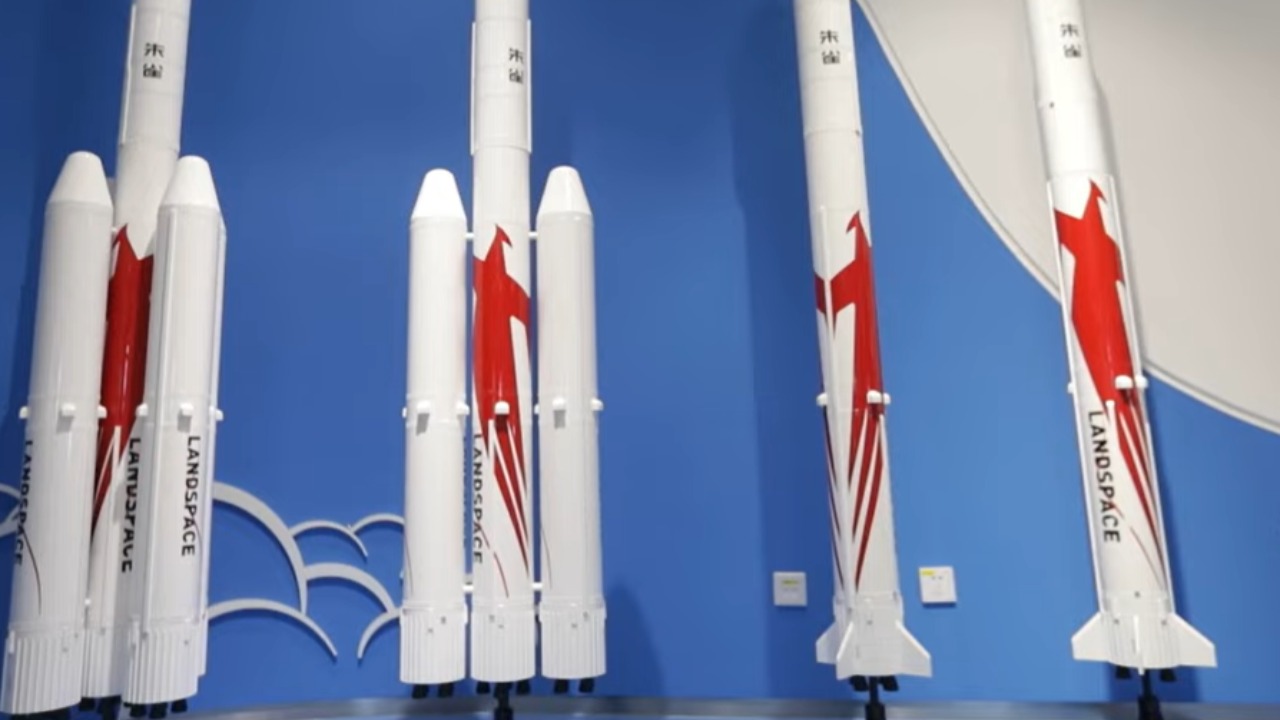
At the core of LandSpace’s investment pitch is its Zhuque series of rockets, which are engineered for partial reusability to reduce launch costs compared with fully expendable models. The Zhuque line uses liquid-fueled engines designed to survive the stresses of ascent and controlled descent, enabling the company to recover and refurbish key stages rather than discarding them after a single flight. By pursuing this architecture, LandSpace is aligning itself with the global shift toward reusable first stages, a model that has already reshaped pricing and reliability expectations in the commercial launch market.
Reporting on the company’s technology roadmap highlights successful milestones such as a 2023 ignition test of a reusable engine, a critical step in validating the thrust control and restart capabilities needed for vertical landing. That test, which demonstrated stable combustion and throttle control, gave engineers confidence that the Zhuque series could eventually perform powered descents similar in concept to those used by leading Western launch providers. For China’s broader space ambitions, each incremental advance in reusable propulsion and guidance directly supports national goals for more frequent and affordable access to orbit, enabling denser satellite constellations and more resilient space-based infrastructure.
Implications for Global Space Competition
The planned $1 billion IPO has implications that extend well beyond LandSpace’s own balance sheet, potentially accelerating competition in the global launch market. With fresh capital, the company could ramp up production of Zhuque rockets, compress launch timelines and offer more aggressive pricing for satellite operators that are currently reliant on a handful of international providers. If LandSpace succeeds in flying reusable missions at scale, it could pressure incumbents to cut prices or differentiate through higher reliability and specialized services, reshaping the economics of putting telecom, earth observation and navigation payloads into orbit.
For investors, the offering represents a rare opportunity to gain direct exposure to China’s commercial space sector at a moment when demand for launch capacity is rising alongside plans for new satellite constellations. At the same time, geopolitical tensions and export control regimes introduce real risks, including potential restrictions on foreign ownership, technology sharing and cross-border data flows tied to space-based services. Satellite operators, component suppliers and downstream application developers will all be watching how regulators treat LandSpace’s listing and subsequent operations, since those decisions will influence everything from insurance costs to the feasibility of joint ventures that rely on Chinese launch capacity.