
A JetBlue flight packed with holiday travelers over the Caribbean came far closer to a U.S. military aircraft than passengers ever knew, forcing its crew into abrupt evasive action to avoid what the captain later called a potential midair collision. The near miss has now drawn a formal response from the Air Force and renewed scrutiny of how military operations intersect with busy civilian corridors.
I see this episode as more than a one-off scare. It exposes a structural tension between secretive defense missions and the transparent, rules-bound world of commercial aviation, and it is already prompting questions about how the Pentagon manages risk in skies that are increasingly crowded.
Inside JetBlue Flight 1112’s “outrageous” close call
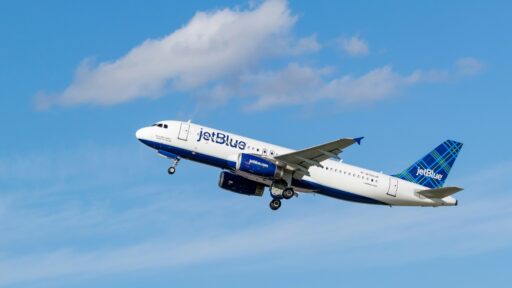
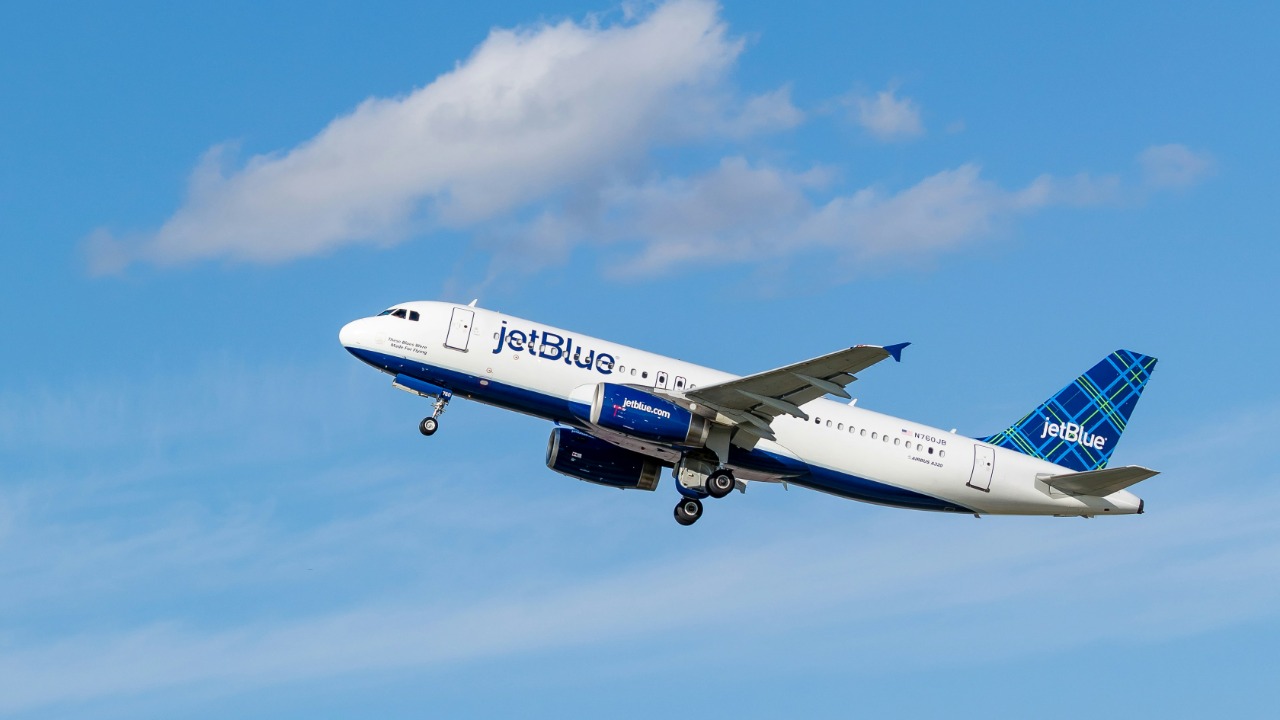
The incident unfolded as JetBlue Flight 1112, an Airbus A320 operating as B61112 from Curaçao (CUR) to New York’s JFK Airport, climbed through high-altitude airspace north of Venezuela on a routine route. According to cockpit audio and pilot reports, the crew suddenly spotted a U.S. Air Force tanker crossing their path at nearly the same altitude, close enough that the captain later told controllers, “We almost had a midair collision,” and described the encounter as “outrageous” because the other aircraft was effectively invisible on their instruments. Detailed accounts of the geometry of the pass and the crew’s shock have been compiled from the JetBlue A320’s perspective, including the description of an “Invisible” U.S. Air Force jet that came too close for comfort on a Friday in Dec as the airliner departed Cura for New York, a sequence laid out in one reconstruction of the near mid‑air collision.
From what I can piece together, the JetBlue crew relied on their traffic-collision avoidance system to spot and react to the threat, but the tanker did not appear as it should have, leaving the pilots to depend on a last‑moment visual. That is why the captain’s complaint focused on the apparent lack of an active transponder, which would normally “squawk” a code to air traffic control and to nearby aircraft. One detailed explanation of how “One way transponders do that” and how the JetBlue A320 crew were “startled by encounter with unseen military tanker north of Venezuela” underscores how the absence of a clear electronic signature can erase a large aircraft from the cockpit’s situational awareness, a point backed up by reporting on the unseen military tanker.
What the Air Force says happened, and why it matters
Once JetBlue reported the incident to federal authorities, the U.S. military acknowledged the encounter and said it was reviewing what happened. U.S. Southern Command, which oversees operations in the region, confirmed that an Air Force tanker was involved and that it is examining whether its crew complied with all procedures as it flew near Venezuela, a stance reflected in the military’s statement that it is “reviewing the matter” after the airline flagged the near miss with an Air Force plane. JetBlue, for its part, has said it reported the matter to federal authorities and will cooperate fully with any investigation, a position echoed in Caribbean coverage that noted the carrier’s decision to elevate the case and the Pentagon’s initial refusal to comment in detail on the near collision over the Caribbean.
What makes this more than a single frightening episode is that it appears to be part of a pattern of risky encounters between U.S. military aircraft and civilian jets in the Caribbean. Analysts have pointed to “reckless” U.S. ops in the region that have led to near misses with passenger planes even though the U.S. has no hostilities with the countries whose airspace is nearby, a critique laid out in a broader look at how military aircraft operate in Caribbean corridors where, as one account notes, “Dec 19, 2025” marked a moment when Washington was already under pressure for another accident and yet “the U.S. has no hostilities with” the states whose skies are being used, a concern captured in a review of military aircraft in the Caribbean.
Patterns, second scares, and the push for safer skies
In the days around Flight 1112’s scare, a second near midair collision involving a U.S. Air Force tanker was reported near Venezuela, suggesting that the JetBlue case was not an isolated fluke. Aviation reports describe another civilian aircraft encountering a tanker at approximately 26,000 feet in the same general region, with the second near miss coming just one day after JetBlue Flight 1112 from Cura to New York’s JFK Airport was forced to take evasive action, a sequence laid out in coverage of the second near miss near Venezuela. Another detailed account notes that a JetBlue A320 crew was “startled by encounter with unseen military tanker north of Venezuela,” reinforcing that the core hazard was a large refueling aircraft, identified as an Air Force KC‑135 tanker, crossing a commercial flight path without being clearly visible on collision‑avoidance systems, a point supported by safety reporting on the JetBlue A320 crew.
I find the pilot’s own words especially revealing about how close this came to disaster and why he considered the conduct “Outrageous.” In radio transmissions and later descriptions, he said “We had to stop our climb” as the Air Force plane then headed into Venezuelan air space, and he stressed that “We almost had a midair collision” and that if the tanker’s transponder was not turned on “it’s outrageous,” language captured in detailed political and aviation coverage of the JetBlue encounter near Venezuelan airspace and in a separate account of how a JetBlue plane narrowly avoided a midair collision with a U.S. Air Force jet near Venezuela on a Friday in Dec, when the tanker crossed the flight path in a way that “cannot be detected on radar” if certain systems are off, as described in a report on the JetBlue pilot’s outrage.
Other aviation specialists have zeroed in on the technical and regulatory backdrop, including the rules for Reduced Vertical Separation Minimum (RVSM) airspace and how military aircraft can sometimes waive certain requirements. One technical breakdown of the “JetBlue #1112 Incident over Curacao 12 Dec 2025” notes that “This requirement can be waved by the military. that a military aircraft can operate an RVSM airspace without their tra…” and walks through how that flexibility can create blind spots when a tanker flies near a commercial jet, a discussion available in a video analysis of the JetBlue #1112 incident and RVSM rules. Aviation outlets have also chronicled how a JetBlue flight narrowly avoided a midair collision with a U.S. Air Force KC‑135 tanker near Venezuela, with the airliner’s traffic‑collision avoidance systems playing a crucial role and the captain repeating that “We almost had a midair collision” and that if the transponder was not turned on “it’s outrageous,” a narrative laid out in coverage of the Air Force KC‑135 near miss. One detailed travel feature framed the pilot’s account under the banner “Outrageous,” quoting his description of the near collision with an Air Force plane off Venezuela and his insistence that such operations must not put passengers at risk, a perspective captured in the “Outrageous” pilot account. Aviation‑focused outlets have similarly described the episode as a “Flight Near Miss Air Force Aircraft Near” Venezuela and noted that “On Friday” the JetBlue crew took decisive action and later pledged to cooperate in any investigation that follows, a framing reflected in coverage of the Flight Near Miss Air Force Aircraft Near Venezuela. Finally, broader news analysis has highlighted how the U.S. military reacted after JetBlue reported the near miss with an Air Force plane, noting that the response followed an Associated Press account and that officials are now weighing whether changes are needed to prevent another “Media Error” moment in which a civilian crew is left guessing about a nearby tanker’s intentions, a concern summarized in coverage of how the U.S. military reacts to the near collision.