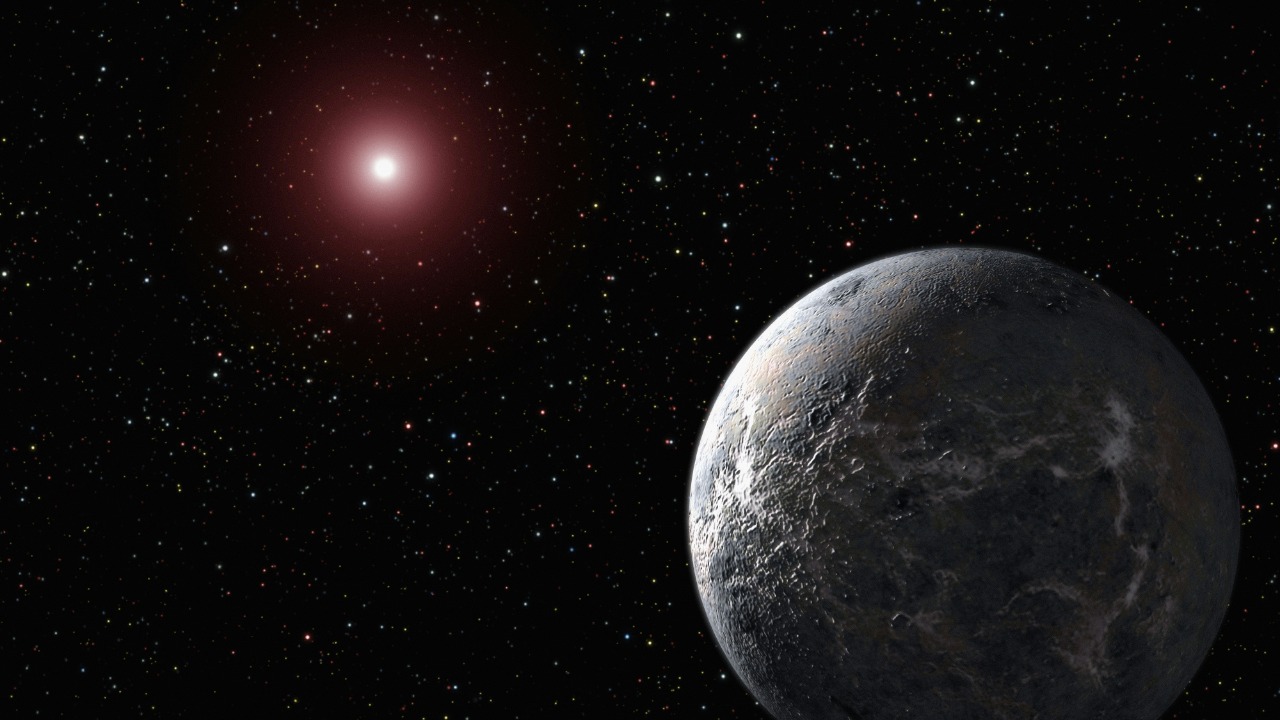

Signals from a distant world have pushed the James Webb Space Telescope to the edge of what it can tell us about life beyond Earth. In the atmosphere of the exoplanet K2-18b, astronomers see chemical fingerprints that could be consistent with biology, yet every new analysis reminds them how easily nature and noise can masquerade as microbes. I see the K2-18b debate less as a yes-or-no verdict on aliens and more as a stress test of how we will interpret the first truly ambiguous hints of life.
What Webb is really seeing on K2-18b
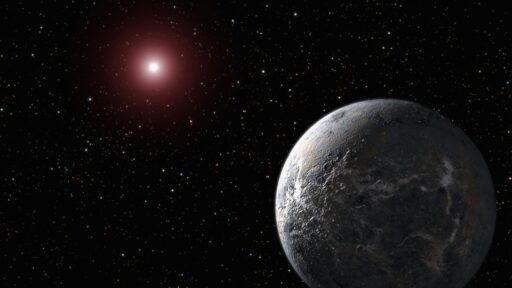
K2-18b orbits a small red dwarf star about 124 light years away, in a region where starlight could allow liquid water to exist. The planet is Classified as a so-called Hycean world, a type of exoplanet that may host a deep ocean beneath a hydrogen rich atmosphere, a configuration that some researchers argue could be friendly to life. Using the James Webb Space Telescope, a team reported that starlight filtering through this atmosphere carries signatures of carbon bearing molecules and a possible whiff of dimethyl sulfide, a gas on Earth strongly associated with marine phytoplankton and other microbial life.
The potential biosignature claim rests on subtle patterns in Webb’s spectra that hint at a chemical cocktail hard to explain with simple geology. A team of astronomers described what they called the most promising signs so far of a possible biosignature, pointing to spectral features that might match dimethyl sulfide produced by microbial life, typically marine phytoplankton, in K2-18b’s skies, as reported in one Apr account. Another group framed the same Webb data as perhaps the strongest evidence so far of life on an exoplanet, while still stressing caution, noting that JWST May Have Found Strongest Evidence of Life on Exoplanet K2-18b only in the sense of a small but intriguing spectral bump that could be consistent with biology, as summarized in an Apr report.
A planet on the edge of habitability and certainty
To understand why K2-18b has become such a lightning rod, I look first at its basic environment. The planet resides in the habitable zone of its star, where temperatures could allow liquid water, and its Hycean classification suggests a thick hydrogen envelope over a deep global ocean, a configuration that might support microorganisms akin to Earth’s phytoplankton if other conditions line up. Coverage earlier in Apr asked Could life thrive on K2-18b and What to know about the distant exoplanet, emphasizing that any putative biosphere would likely be microbial and ocean based rather than anything resembling complex animals, as laid out in one Apr explainer.
Webb’s infrared instruments are exquisitely tuned to sniff out such atmospheres, but they are still working at the edge of detectability. Using the James Webb Space Telescope, researchers examined Other worlds like K2-18b, a Hycean candidate orbiting a red dwarf star, and argued that certain combinations of gases could represent signs of biological activity if they appear in the right ratios. That same work, described in an Apr analysis, underscored how thin the line is between a suggestive chemical fingerprint and a false positive produced by clouds, hazes, or unexpected atmospheric chemistry.
From “strongest evidence” to scientific whiplash
As soon as the first K2-18b results circulated, the backlash began, and I think that tension is healthy. Critics, including some of the same teams that celebrated the initial signal, argued that the Webb spectra are noisy and that the apparent dimethyl sulfide feature could vanish under slightly different assumptions about the atmosphere. One detailed discussion from the University of Cambridge community asked what JWST really saw on K2-18b and stressed that the putative biosignature might be buried in noise, a reminder that possibility is not proof, as reflected in a Recently published critique.
Other researchers stepped back to ask whether Webb can ever truly confirm life on a distant world. One group argued that the tentative detection of DMS and related molecules such as DMDS fails key criteria for a robust biosignature, warning that the evidence so far does not clear the bar for ruling out non biological explanations. According to their assessment, the telescope’s limited spectral coverage and the complexity of exoplanet atmospheres mean that Webb may never be able to find definitive evidence of life on another world, a sobering conclusion laid out in an According piece that has shaped much of the current debate.
Even within the original discovery team, the messaging has grown more cautious. Nikku Madhusudhan, the lead author of both Cambridge studies on K2-18b, has stressed that no actual life has been detected and that the current evidence is the equivalent of a faint hint, not a smoking gun. In one Apr interview, Nikku Madhusudhan from Cambridge compared the situation to hearing a distant sound in a noisy room and trying to decide whether it is a voice or just static, a metaphor that captures the entire field’s dilemma.
Independent teams have now reprocessed the same Webb data and reached more skeptical conclusions. A New analysis by Astronomers found that the supposed biosignatures on K2-18b weaken or disappear when different statistical methods are applied, suggesting that the original signal may be an artifact of how the spectra were modeled. That work, described in an Apr report, emphasized that Astronomers have been poring over the data and still cannot agree on whether there is any statistically solid detection of gas molecules of any kind beyond the more mundane components.
Other specialists have tried to put the controversy in context for a broader audience. One detailed Apr explainer framed the K2-18b signal as a possible sign of life but stressed that the researchers themselves see it as a chemical clue, not a declaration of aliens, and urged readers to remember how earlier claims about exoplanet atmospheres have evaporated under closer scrutiny, advice echoed in a Apr discussion of how to avoid this kind of mistake. Another Apr feature asked whether signs of life on a distant planet should be taken at face value and quoted multiple scientists who argued that the K2-18b evidence is far from proof of alien life, a theme developed in Here in Nature under the blunt subheading What happens when a high profile claim meets hard scrutiny.
For its part, NASA has tried to balance excitement with restraint. A New NASA led study revisited the K2-18b data and concluded that the evidence for a tantalizing life signal remains inconclusive, while still calling the planet a valuable test case for the search for life beyond Earth and a reminder of the challenges of interpreting such signals, as summarized in a Jul overview. Another Apr report on possible signs of alien life found on a nearby exoplanet noted that JWST’s observations are consistent with, but do not require, biological activity and that the excitement was tempered by the preliminary nature of the find, a nuance captured in an Apr summary.
In my view, the most honest framing is that Webb has spotted a world that keeps refusing to give a simple answer. Signals from K2-18b have already forced Astronomers to refine their tools, sharpen their skepticism, and confront how they will talk about life when the data are messy. That alone makes the planet a milestone, even if the supposed biosignature ultimately dissolves into noise.