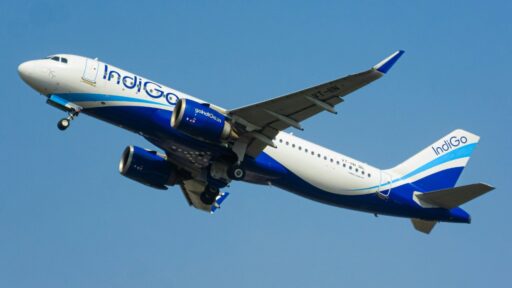
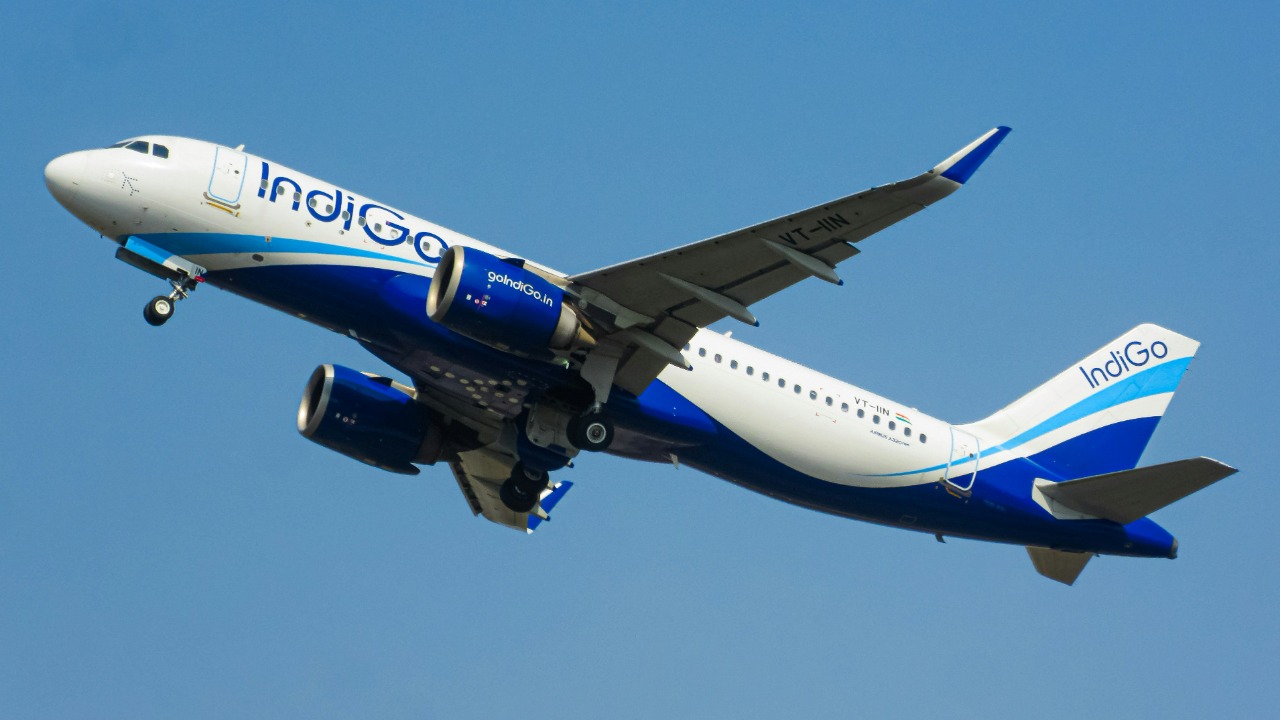

India’s aviation regulator has delivered its sharpest rebuke yet to IndiGo, hitting the country’s largest carrier with a record financial penalty and a formal warning to its top brass after a December meltdown that upended travel plans across the country. The move signals that the watchdog is no longer willing to treat mass cancellations and delays as an inevitable side effect of rapid growth in the skies.
By singling out both the airline’s systems and its senior leadership, regulators are trying to turn a chaotic episode into a turning point for how Indian carriers plan capacity, manage staff and protect passengers when things go wrong.
The December breakdown and record fine
The December crisis unfolded as IndiGo cancelled and delayed flights on a scale rarely seen in India’s domestic market, leaving terminals packed with stranded families and business travellers. Over several days in early Dec 2025, more than 300,000 passengers were stuck at airports across India as the airline struggled to operate its schedule, turning what should have been a peak travel period into a nationwide test of patience. The disruption was compounded by the scrapping of about 4,500 flights in the first weeks of the month, a scale that overwhelmed airport infrastructure and customer service channels.
In response, the Directorate General of Civil Aviation, or DGCA, concluded that IndiGo had failed to anticipate and manage the strain on its operations. The regulator has now imposed a penalty of Rs 22.20 crore, describing the episode as a large-scale failure of planning that triggered widespread delays and cancellations in Dec 2025. Regulators framed the fine as a direct response to the general disruption episode that took place, arguing that a financial hit of this size is necessary to push airlines to invest more heavily in resilience and contingency planning.
Regulator’s findings and warning to top management
Beyond the money, the DGCA’s most pointed message is aimed at IndiGo’s leadership. The watchdog has formally cautioned the airline’s CEO, citing inadequate oversight and crisis management as the December problems escalated. In its assessment, the regulator said IndiGo failed to properly identify gaps in manpower planning and roster management, allowing a predictable surge in demand and operational strain to snowball into a full-blown breakdown. That criticism goes to the heart of how the airline is run, not just how it handled one bad week.
The warning extends to the airline’s accountable manager, referred to in regulatory documents as the Acc, underscoring that the DGCA expects senior executives to personally ensure that staffing, maintenance and scheduling systems can withstand stress. In a separate assessment, regulators in India noted that IndiGo, which operates under the stock symbol INGL and holds 65% of the domestic market, did not adequately identify planning gaps or maintain sufficient buffers, a serious charge for a carrier that dominates the country’s skies.
Passenger fallout and pilots’ backlash
For passengers, the December chaos translated into missed weddings, lost business deals and nights spent on airport floors as they waited for information that often came late or not at all. The DGCA’s enforcement order acknowledges that the disruption affected Dec travel across the network, with knock-on effects that rippled through connecting flights and rival carriers. The regulator’s findings suggest that IndiGo’s customer care and contingency arrangements were not scaled to handle a crisis of this magnitude, leaving travellers to navigate cancellations and rebookings with limited support.
The airline’s own pilots have added a sharp internal critique to the public backlash. A pilots’ association has argued that the Rs 22.20 crore penalty is inadequate, contending that the fine does not fully reflect the scale of passenger hardship or address what they see as deeper structural issues in scheduling and staffing. In their view, the disruptions were rooted in chronic underestimation of crew requirements and aggressive rostering practices, concerns that mirror the DGCA’s focus on manpower planning. That internal dissent suggests that fixing the problems exposed in December will require more than a cheque to the regulator, it will demand a reset in how IndiGo balances growth targets with operational safety margins.
Market reaction and investor calculus
Despite the regulatory blow, financial markets have taken a strikingly relaxed view of IndiGo’s predicament. On the first trading session after the penalty was announced, Shares of Indian IndiGo rose, with investors effectively shrugging off the regulatory fine and focusing instead on the carrier’s dominant market share and relatively strong balance sheet. Analysts pointed to IndiGo’s ability to absorb a one-off hit of $2.45 million without jeopardising its fleet expansion or route plans, a sign that the market sees the episode as a reputational challenge rather than a financial crisis.
That optimism is echoed in commentary noting that shares of Indian Airline IndiGo Jump, Shrugging Off Regulatory Fine, as investors bet that management has already begun to implement reforms to prevent a repeat of December’s chaos. From an investor’s perspective, the DGCA’s action may even reduce long-term risk if it forces IndiGo to strengthen systems that had been stretched thin by years of rapid growth. The gap between market confidence and passenger frustration, however, highlights a recurring tension in aviation: financial resilience does not automatically translate into operational reliability.
What the IndiGo case means for Indian aviation
The IndiGo penalty is being closely watched across the sector as a test of how far Indian regulators are willing to go to enforce accountability in a booming but fragile market. By levying Rs 22.20 crore and explicitly linking it to Dec 2025 flight disruptions, the DGCA has set a benchmark that other carriers will study carefully as they plan schedules and staffing for future peak seasons. The regulator’s language around manpower planning and roster management sends a clear signal that airlines will be judged not only on safety metrics but also on their ability to deliver a stable, predictable service to passengers.
At the same time, the case underscores the growing pains of a market where a single airline, IndiGo, controls Indian skies to an unprecedented degree. When a carrier with Over half the domestic market stumbles, the impact is systemic, affecting airports, tourism and business travel across India. I see the DGCA’s decision to warn top managers, including the DGCA-named CEO Pieter Elbers for what regulators described as inadequate oversight, as part of a broader effort to align corporate incentives with the public interest in a reliable, resilient aviation system.