
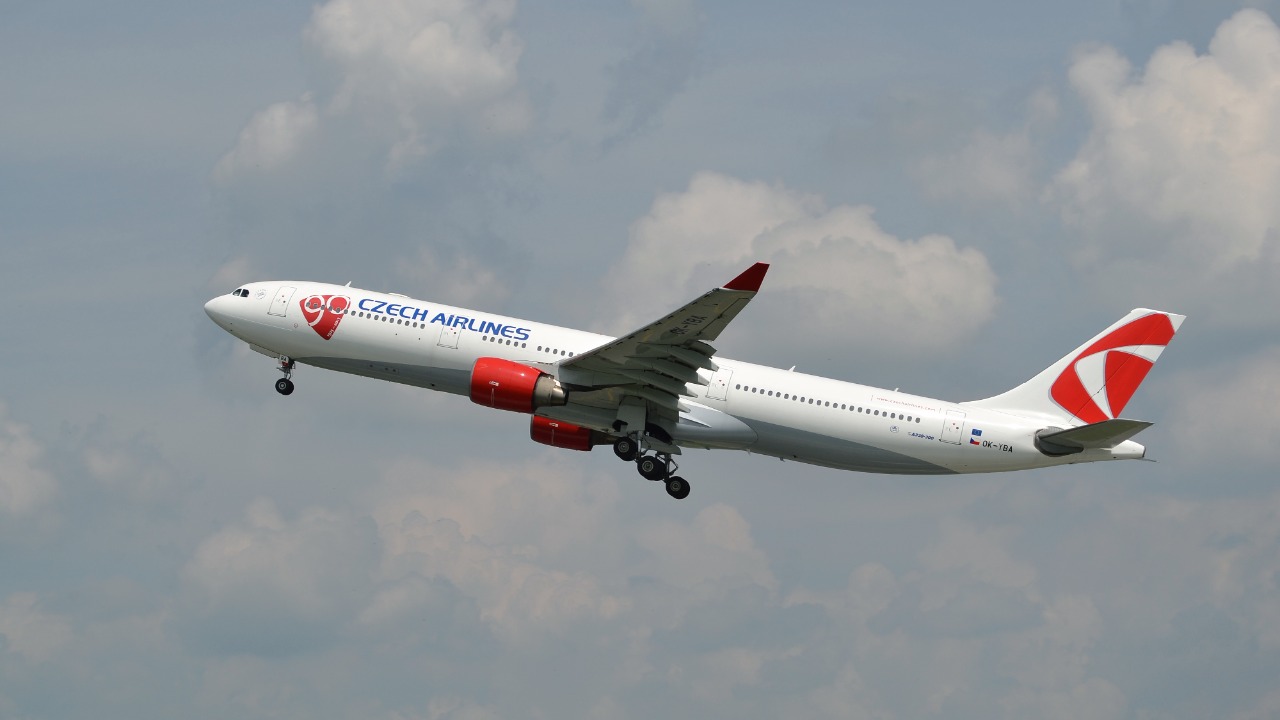

Hi Fly Malta has achieved a world-first by landing an Airbus A330 on an ice runway in Antarctica, marking the first time this wide-body aircraft has touched down in the polar region. The historic operation by the Portuguese wet-lease airline signals a major milestone in polar aviation capabilities, expanding what is technically and operationally feasible on the continent. By bringing a long-haul wide-body jet onto an ice runway, the landing opens new possibilities for efficient transport in extreme environments that were previously limited to smaller aircraft.
The Preparation and Planning Behind the Flight
Hi Fly’s decision to attempt the Airbus A330 landing in Antarctica builds directly on its history of polar operations, with the company already credited with earlier Antarctic firsts involving other aircraft types and mission profiles. According to detailed accounts of the mission, the Malta-based carrier used its experience from previous flights to the continent to refine route planning, crew training, and contingency procedures, treating the A330 operation as the next logical step in expanding wide-body access to the ice. By framing the flight as “another Antarctic first,” Hi Fly positioned the mission as part of a deliberate strategy to push the boundaries of commercial aviation in one of the world’s harshest environments, a move that has clear implications for governments, research programs, and private operators that depend on reliable seasonal access.
Preparing the Airbus A330 for Wolf’s Fang Runway required extensive technical and operational adjustments that went well beyond a standard long-haul deployment. Reporting on the mission notes that Hi Fly implemented modifications to the aircraft, including reinforced landing gear components and specialized tires, to cope with the unique friction, braking, and load-bearing characteristics of a compacted blue-ice surface. The airline also worked in close collaboration with Antarctic logistics specialists to ensure that every aspect of the operation, from fuel planning to ground handling, complied with strict environmental protocols and safety standards that govern activity on the continent, a level of coordination that underscores how high the stakes are for any operator seeking to scale up capacity without increasing ecological risk.
Details of the Historic Landing
The centerpiece of the mission was the successful touchdown of the Airbus A330 at the Wolf’s Fang ice runway, a privately operated blue-ice strip used for seasonal access to inland parts of Antarctica. Coverage of the event confirms that the wide-body aircraft, operated by Hi Fly Malta, completed the first-ever landing of an A330 on the continent, with the crew executing a carefully managed approach profile tailored to the runway’s length, slope, and surface condition. As the aircraft descended over the stark white landscape, pilots had to rely on precise visual cues and calibrated navigation aids to align with a runway that lacks the visual contrast and infrastructure of conventional paved airports, a challenge that illustrates why only a handful of operators have attempted large-jet operations in the region.
Once on final approach, the A330 demonstrated notable stability on the unprepared ice surface, with reports highlighting how the aircraft maintained directional control and effective braking during rollout despite the absence of traditional runway markings and the presence of variable surface friction. Pilots had to account for rapidly changing weather, including low contrast light and potential crosswinds, while also managing the aircraft’s weight and speed to stay within the performance margins validated for the mission. The successful landing, which has been described as a “historic moment” for both Hi Fly and Antarctic aviation, represents another major milestone for the airline following its earlier polar achievements and signals that wide-body jets can be operated safely in conditions that were once considered the exclusive domain of smaller, specialized aircraft.
Significance for Polar Aviation and Logistics
The most immediate impact of the A330 operation lies in its capacity advantage over aircraft that have traditionally served Antarctic routes. By bringing a wide-body jet to Wolf’s Fang, Hi Fly has shown that a single flight can carry significantly more passengers and cargo than the narrow-body or turboprop aircraft typically used for polar logistics, a shift that could allow operators to reduce the number of rotations required to support research stations, tourism operations, and seasonal construction projects. As one detailed account of the mission notes, the ability to consolidate loads into fewer flights has the potential to lower overall fuel burn per transported kilogram and reduce the cumulative environmental footprint of air operations on the continent, a priority for stakeholders who must balance access needs with strict conservation goals.
Beyond raw capacity, the successful A330 landing highlights a broader evolution in aircraft versatility for remote and extreme environments, signaling what several observers have described as a new era in polar aviation efficiency. By proving that a long-haul wide-body can safely operate on a blue-ice runway, Hi Fly Malta has effectively expanded the toolkit available to national programs, private logistics providers, and high-end expedition operators that rely on predictable, high-volume access windows. One analysis of the flight argues that this breakthrough could reshape planning for scientific campaigns and tourism seasons, since larger aircraft can move teams, equipment, and supplies in fewer waves, compressing deployment timelines and potentially freeing up resources for on-the-ground research rather than repeated transit.
Future Implications and Industry Reactions
The landing also carries strategic implications for the future of commercial and research flights to Antarctica, with Hi Fly positioning itself as a leader in extreme-environment aviation. By executing what one report describes as a “world-first” A330 ice runway operation, the airline has created a proof of concept that other carriers and charter clients are likely to study closely as they evaluate how to scale up their own polar capabilities. Industry observers quoted in coverage of the mission suggest that the success of this flight could accelerate interest in using wide-body jets for seasonal Antarctic operations, particularly for point-to-point services from long-haul hubs that can support the A330’s range and payload, a development that would further integrate the continent into global aviation networks while keeping access tightly controlled.
Experts in polar operations have also pointed to the potential influence of the Hi Fly mission on global standards and best practices for flying large aircraft in high-risk environments. Detailed reporting on the flight notes that regulators, aviation safety bodies, and specialized logistics firms are likely to examine the procedures, performance data, and environmental safeguards used during the A330 operation as they refine guidance for future missions. At the same time, stakeholders emphasize that the long-term viability of such flights will depend on continuous monitoring of the Wolf’s Fang ice runway’s performance after repeated wide-body landings, including assessments of surface integrity, braking action, and any measurable environmental impact, since those findings will shape how often similar aircraft can be deployed and under what conditions.
How the Mission Reshapes Stakeholder Access to Antarctica
For scientific institutions, the A330 landing represents more than a technical feat, it offers a potential reconfiguration of how research seasons are planned and supplied. Detailed accounts of the mission explain that a wide-body aircraft can deliver large research teams, heavy equipment, and time-sensitive cargo in a single rotation, reducing the logistical complexity that comes with staging multiple smaller flights through intermediate gateways. That consolidation could allow national Antarctic programs and university-led projects to shorten transit windows, increase the proportion of time spent on fieldwork, and respond more flexibly to emerging research priorities, particularly in disciplines such as glaciology and climate science that depend on rapid deployment when conditions align.
Tourism operators and high-end expedition companies are also watching the Hi Fly achievement closely, since the ability to land an Airbus A330 on an ice runway may reshape the economics and accessibility of premium Antarctic travel. One report on the mission notes that the larger cabin and cargo volume of the A330 can support more passengers, specialized gear, and higher-comfort configurations than smaller jets, potentially enabling new product offerings that combine direct long-haul flights with short, intensive itineraries on the ice. However, industry voices stress that any expansion of tourism capacity must remain tightly aligned with environmental regulations and site-management plans, since the same efficiency that makes wide-body operations attractive could, if unmanaged, increase visitor pressure on fragile ecosystems, a risk that regulators and operators will need to address through strict quotas and route planning.
Technical Lessons and Operational Data from the A330 Landing
From an engineering and safety perspective, the Hi Fly mission is expected to generate a valuable dataset on how a wide-body aircraft behaves on a blue-ice runway under real-world conditions. Reporting on the flight indicates that performance metrics such as landing distance, braking effectiveness, tire wear, and engine response in low-temperature, low-friction environments were closely monitored throughout the operation. That information will be critical for aircraft manufacturers, maintenance organizations, and regulators as they refine performance charts, maintenance intervals, and operational limitations for future missions, helping to ensure that any repeat flights are grounded in empirical evidence rather than theoretical modeling alone.
Operationally, the mission also offers insights into crew training, cockpit procedures, and ground coordination that could inform future Antarctic operations by other carriers. Detailed coverage notes that Hi Fly’s pilots underwent specialized preparation focused on visual approaches over featureless terrain, contingency planning for rapid weather changes, and coordination with ground teams responsible for runway inspection and real-time condition reporting. Those lessons, once distilled into training syllabi and standard operating procedures, may influence how airlines and charter operators prepare crews for flights into other remote or minimally equipped airfields, extending the impact of the A330 landing well beyond Antarctica and into broader discussions about resilience and adaptability in global aviation.
According to a comprehensive account of the mission, Hi Fly marks another Antarctic first with Airbus A330 landing, underscoring the airline’s strategy of pioneering complex operations in extreme environments. A detailed feature titled Historic moment: Hi Fly touches down Airbus A330 in Antarctica for first time highlights how the Wolf’s Fang ice runway served as the proving ground for this world-first wide-body landing. Further technical context is provided in Hi Fly Malta achieves another world-first with historic Airbus A330 landing in Antarctica, which details the planning and aircraft preparation behind the flight. An operational overview in Hi Fly lands first Airbus A330 in Antarctica explains how the mission fits into broader trends in long-haul charter and wet-lease services. The wider implications for tourism and polar logistics are captured in Antarctica Records First A330 Ice Runway Landing by Hi Fly, Marking a New Era of Polar Aviation, which frames the flight as a turning point for how people and cargo reach the continent.