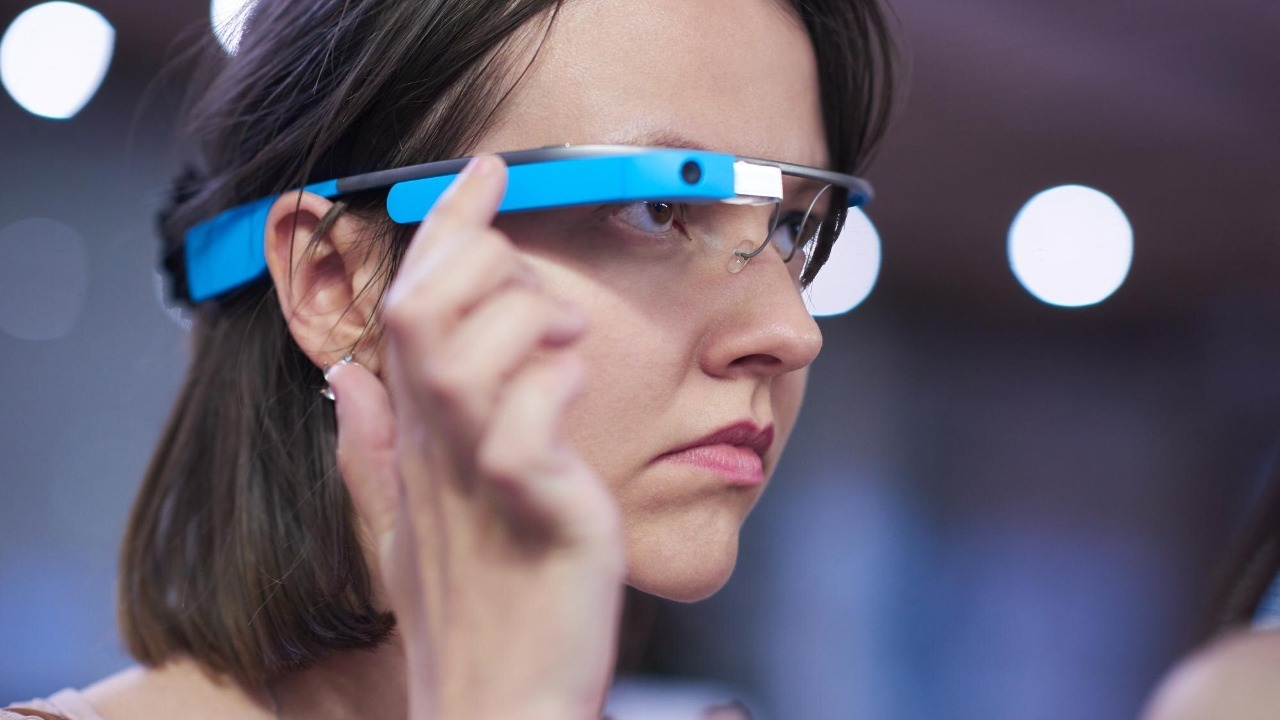

Google and Warby Parker plan to launch AI-powered smart glasses in 2026, representing Google’s first entry into wearable AI technology that places the Gemini AI model directly in the user’s line of sight. The partnership shifts Google from exploratory prototypes to a concrete product rollout next year, building on prior AI hardware efforts and signaling a new phase in how people may interact with artificial intelligence throughout the day.
Google’s Entry into AI Wearables
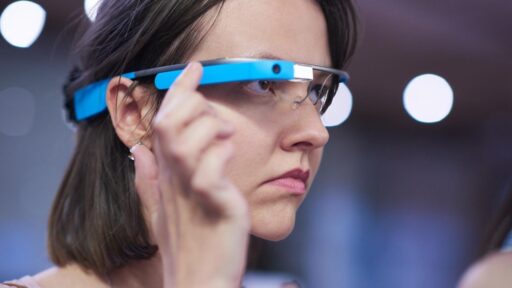
Google is preparing to move beyond experimental headsets and into a full consumer product with its first AI glasses, which are scheduled for launch in 2026. Reporting on the project describes the upcoming device as a clear evolution from earlier smart glasses experiments like Google Glass, with a focus on everyday usability rather than limited pilot programs, and notes that the company is now working toward a defined commercial release rather than open-ended research. According to one detailed account, the company has committed to bring what it calls its “first AI glasses” to market in 2026, a milestone that marks a shift from software-only AI features on phones and laptops to a dedicated wearable built around artificial intelligence.
Recent updates indicate that these AI glasses are expected to debut next year, with production and supply chain planning moving into a more advanced phase as Google locks in specifications and partners. One report on how Google to launch first AI glasses in 2026 explains that the company is treating the device as a flagship entry into AI wearables, not a niche accessory, which raises the stakes for performance, reliability, and long-term software support. Another account that describes how Google’s first AI glasses are expected next year underscores that the timeline has tightened from vague “future” plans to a specific 2026 window, a change that matters for developers, competitors, and consumers who are planning around the next wave of AI hardware.
Partnership with Warby Parker
The 2026 launch will not be a solo effort from Google, but a collaboration with Warby Parker that is designed to blend advanced AI with familiar eyewear design. Reporting on how Google plans AI glasses launch in 2026 with Warby Parker describes the eyewear company as a key manufacturing and styling partner, responsible for turning Google’s technology into frames that people will be comfortable wearing in public. A separate account that details how Warby Parker and Google will launch AI-powered smart glasses in 2026 notes that the alliance is intended to make the product feel like a natural extension of prescription or fashion eyewear, rather than a conspicuous gadget, which is crucial for mainstream adoption.
Warby Parker’s established retail network is also central to the rollout strategy, since it gives Google immediate access to physical locations where customers already shop for glasses and get fitted for lenses. Reports on the partnership emphasize that Warby Parker’s stores and online channels will help bring the AI glasses to a broad audience, instead of limiting availability to tech-focused outlets or online-only sales. By pairing Google’s AI hardware and software with Warby Parker’s distribution and customer service, the companies are positioning the 2026 launch as a large-scale market entry that could influence how other eyewear brands and technology firms approach smart glasses.
Integration of Gemini AI
At the core of the new device is Gemini, Google’s advanced AI model, which will be integrated directly into the glasses to provide real-time assistance in the user’s line of sight. Coverage of how Google prepares new AI glasses that put Gemini in your line of sight explains that the system is designed so that information, prompts, and suggestions appear where the wearer is already looking, rather than on a separate phone or watch screen. Another report that notes how Google glasses will put AI on your face describes Gemini as the engine behind features such as contextual awareness and proactive recommendations, which could range from translating text in the environment to surfacing reminders when the wearer enters a specific location.
Placing Gemini on the face rather than keeping it confined to a handheld device represents an evolution from cloud-dependent, screen-based AI interactions to more ambient, hands-free assistance. Reports highlight that the glasses are being built to function as a proactive AI companion, not just a passive display that mirrors smartphone notifications, which could change how people think about tasks like navigation, messaging, and information lookup. By embedding Gemini into the glasses themselves, Google is also signaling that it wants AI to feel less like a separate app and more like a constant, low-friction presence, a shift that has implications for privacy expectations, user interface design, and the competitive landscape for AI platforms.
Design, Use Cases, and Everyday Scenarios
Although detailed specifications have not been disclosed, the collaboration with Warby Parker points to a design that aims to resemble conventional eyewear as closely as possible while still housing cameras, microphones, and display components. Reporting that focuses on how Google’s AI glasses will put AI on the face notes that the company is prioritizing a form factor that can be worn throughout the day, rather than a bulky headset that is only practical in limited settings. That emphasis on subtlety and comfort is significant for workers in fields like logistics, retail, and healthcare, where all-day wear and social acceptability are essential for any new device to be adopted at scale.
Use cases described in the reporting center on everyday scenarios where instant, contextual information could save time or reduce friction. For example, a commuter might glance at a subway entrance and see updated service alerts in their field of view, or a traveler could look at a street sign in a foreign language and receive an immediate translation without pulling out a phone. In professional environments, warehouse staff could see pick lists and bin locations overlaid on shelves, while clinicians might receive medication reminders or patient notes as they move between rooms. These scenarios illustrate why stakeholders in sectors from consumer electronics to enterprise software are watching the 2026 launch closely, since successful adoption could spur a wave of industry-specific applications built on top of Google’s AI glasses platform.
Launch Timeline and Market Expectations
Across multiple reports, Google’s timeline has solidified around a 2026 debut, with the company anticipating that its first AI glasses will be available to consumers next year. One briefing that describes how Google AI glasses are expected to launch next year notes that production is set to ramp up imminently, a sign that hardware design and core software features have reached a level of maturity suitable for manufacturing. Another account that details how Google to launch first of its AI glasses in 2026 reinforces that the company is treating the upcoming release as the first in a potential family of AI eyewear products, which suggests that long-term roadmaps and update cycles are already under discussion.
Expectations for the device focus heavily on AI-driven features like contextual awareness, natural language interaction, and seamless integration with existing Google services. Reporting that outlines how Google’s first AI glasses are expected next year points out that the company is entering a competitive smart eyewear market where other technology firms are also experimenting with AI-enabled glasses, but few have yet combined a large-scale AI model like Gemini with a mainstream retail partner such as Warby Parker. For developers, the 2026 launch offers a new hardware target for building applications that rely on persistent, camera-based perception and voice input, while for consumers it raises questions about pricing, battery life, and how much control they will have over what the glasses see and store.