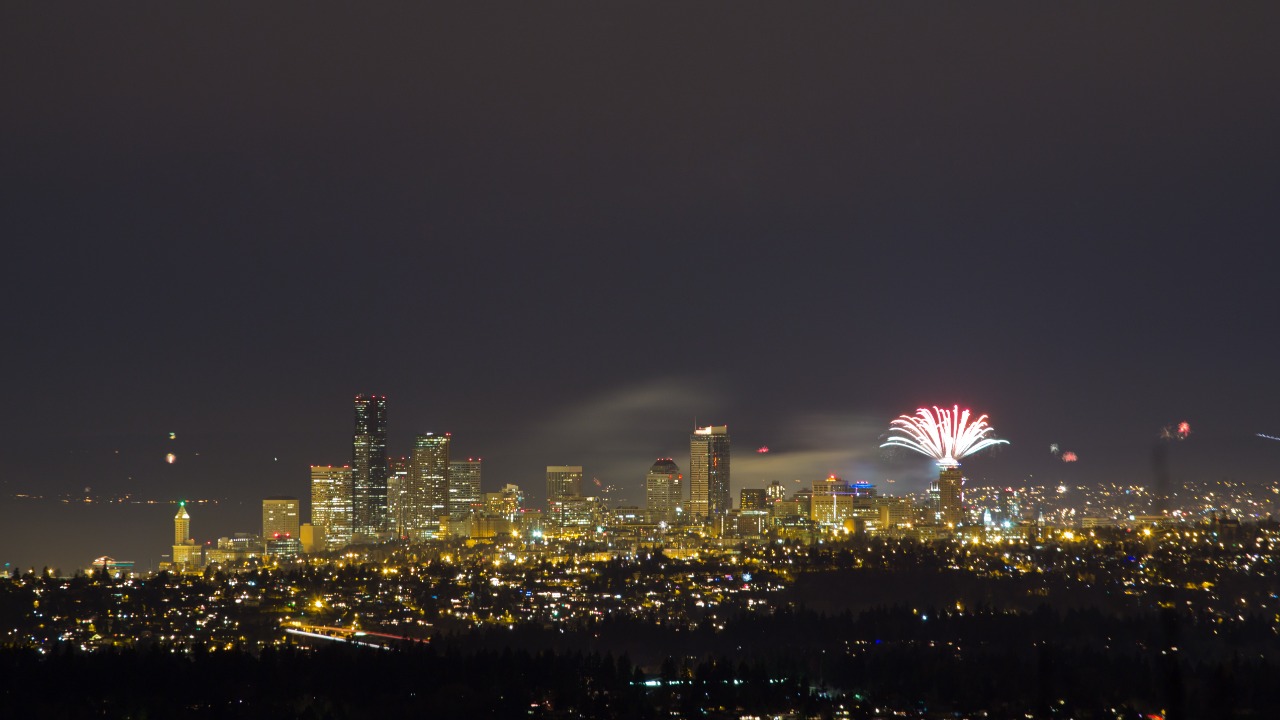

As the European Space Agency releases new imagery of cosmic “fireworks” to mark the 2025 holiday season, Seattle is preparing its own pyrotechnic send-off for New Year’s Eve 2025 and the countdown to 2026. The visual echo between stellar explosions and the city’s skyline show underscores how both the universe and urban planners are staging light displays that mix spectacle with scrutiny from scientists, residents, and visitors alike.
Celestial Fireworks Discoveries
Astronomers are reporting that a nearby star is surrounded by what they describe as “fireworks” created by violent collisions, a phrase that captures both the beauty and the brutality of the event. According to detailed space coverage, observations of this system show debris and energetic outbursts that resemble a continuous pyrotechnic finale, with each collision releasing fresh material and light that can be tracked over time, turning the star’s environment into a natural laboratory for high-energy astrophysics and planetary formation dynamics. The stakes for researchers are significant, because every new collision mapped around this nearby star helps refine models of how young planetary systems evolve and how often such destructive episodes might reset the clock on emerging worlds, which in turn shapes expectations for where life-friendly environments might survive.
The European Space Agency is leaning into the seasonal resonance of these discoveries with its own holiday-themed visuals, presenting interstellar bursts and nebular structures as a kind of cosmic light show. In its featured image titled “Fireworks from space”, the agency highlights filaments of gas and dust lit by energetic processes that, when rendered in false color, look strikingly like chrysanthemum shells and comet tails arcing across a night sky. I see a clear narrative link between the scientific content and the public-facing imagery: by framing supernova remnants, star-forming regions, or colliding stellar winds as “fireworks,” mission teams can translate complex physics into a visual language that resonates with people watching New Year’s Eve shows on Earth, potentially boosting support for future observatories and deep-space missions that will capture even sharper views of these explosive environments.
Seattle’s New Year’s Eve Preparations
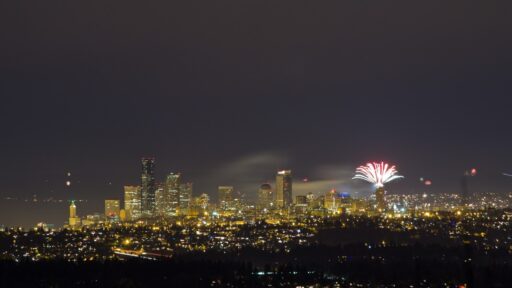
On the ground in Washington state, Seattle officials and tourism promoters are gearing up for New Year’s Eve 2025 with a focus on prime viewing locations for the fireworks that will ring in 2026. Local event guides describe a network of vantage points across the city, from waterfront promenades to hilltop parks, that are expected to draw large crowds seeking clear sightlines to the downtown skyline and the Space Needle. The emphasis on accessible locations reflects a broader shift in urban event planning, where organizers must balance the desire for iconic backdrops with the need to disperse spectators enough to keep sidewalks, transit hubs, and emergency routes functional during peak celebration hours.
One widely shared list of recommendations, published as “Ring In 2026 From These Prime Viewing Spots For Seattle’s New Year’s Eve Fireworks”, highlights elevated and central areas that offer unobstructed views of the show. The guide points readers toward spots that combine skyline panoramas with relative ease of access, such as parks with open lawns, waterfront piers, and neighborhoods that sit just far enough from downtown to avoid the densest congestion while still capturing the full arc of the fireworks. For residents and visitors, these curated suggestions matter because they can reduce last-minute scrambling, help families and older attendees avoid steep climbs or long walks in winter conditions, and spread economic benefits to businesses in multiple districts rather than concentrating all spending in a single core zone.
Criticism of the Space Needle Show
Despite the enduring image of the Space Needle as the centerpiece of Seattle’s New Year’s Eve, not everyone is convinced the show lives up to its reputation. In a sharply worded opinion column titled “Rantz: Don’t bother with Space Needle fireworks this New Year’s Eve — it’ll disappoint again”, commentator Jason Rantz urges locals to skip the event altogether. He argues that recent iterations of the show have fallen short in both scale and impact, pointing to underwhelming sequences and technical hiccups that, in his view, do not justify braving cold temperatures, large crowds, and downtown traffic. For stakeholders such as downtown businesses and city promoters, this kind of criticism is not just rhetorical, because it can influence whether long-time residents decide to attend, stay home, or seek alternative venues that might siphon off spending and media attention.
Rantz’s skepticism extends to the 2026 countdown, where he signals that no major improvements are on the horizon compared with previous years. By framing the Space Needle fireworks as a repeat of past disappointments rather than a refreshed production, he challenges the promotional narrative that often surrounds the show and implicitly calls for either a substantial creative overhaul or a reallocation of resources to other forms of celebration. I read this as part of a broader debate about how cities should invest in marquee events: whether to double down on a single iconic spectacle, diversify into neighborhood-scale gatherings, or experiment with hybrid formats that combine fireworks, drones, and projection mapping to deliver more value for both in-person audiences and those watching from home.
Viewing Tips for Seattle Celebrations
For those who still plan to take in the New Year’s Eve fireworks, practical guidance is emerging on how to navigate Seattle’s streets, transit, and timing. A detailed explainer on how to watch New Year’s Eve fireworks in Seattle walks prospective attendees through step-by-step logistics, from when to arrive to how to use public transportation to avoid parking headaches. The piece underscores that winter weather, early nightfall, and the concentration of people around downtown corridors all raise the stakes for planning ahead, particularly for families with children, visitors unfamiliar with the city’s layout, and anyone who needs accessible routes or backup options if a chosen viewing spot fills up earlier than expected.
Alongside transit and timing advice, local guides are emphasizing updated viewing protocols that reflect lessons learned from recent years of crowd management and public health concerns. Organizers are encouraging people to spread out across multiple recommended vantage points, to use light rail and bus services instead of driving into the core, and to build in extra time for security checks or temporary street closures that may be implemented to keep pedestrian flows safe. I see these recommendations as part of a post-pandemic recalibration of large public events, where the goal is not just to stage a visually impressive show but also to maintain resilience in the city’s infrastructure, minimize strain on first responders, and ensure that the experience feels welcoming rather than chaotic for a diverse mix of attendees.
Connecting Cosmic and Urban Fireworks
The juxtaposition of Seattle’s New Year’s Eve planning with the latest astronomical findings invites a broader reflection on how humans interpret and stage displays of light. Coverage of the nearby star system, where astronomers “see fireworks from violent collisions around [a] nearby star,” describes a dynamic environment in which clumps of material crash together and release bursts of energy that can be tracked with modern instruments, as detailed in specialized space news reporting. These events unfold on scales of distance and time that dwarf any city show, yet the language of fireworks persists because it offers a familiar metaphor for sudden brightness, cascading fragments, and the sense of watching a story unfold in the sky. For scientists, that metaphor can be a powerful outreach tool, translating technical measurements into imagery that resonates with people who might otherwise tune out discussions of stellar evolution.
At the same time, the European Space Agency’s decision to frame its holiday imagery as “Fireworks from space” mirrors the way Seattle brands its own celebrations around the Space Needle and the city skyline. Both efforts rely on recognizable silhouettes, whether a spiky observation tower or a glowing nebula, to anchor attention and create a sense of shared experience across large audiences. I interpret this parallel as a reminder that public engagement with science and civic life often hinges on spectacle, but that spectacle carries responsibilities: astronomers must avoid oversimplifying complex phenomena, while city planners must ensure that the pursuit of a memorable show does not overshadow concerns about safety, accessibility, and the lived experience of residents who navigate the streets long after the last shell has faded from the sky.