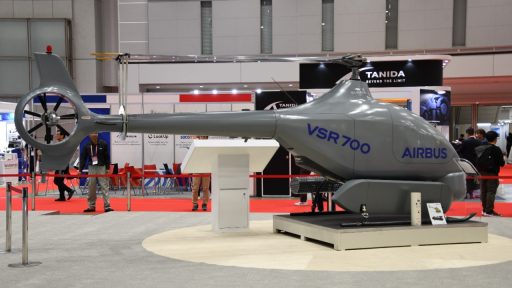
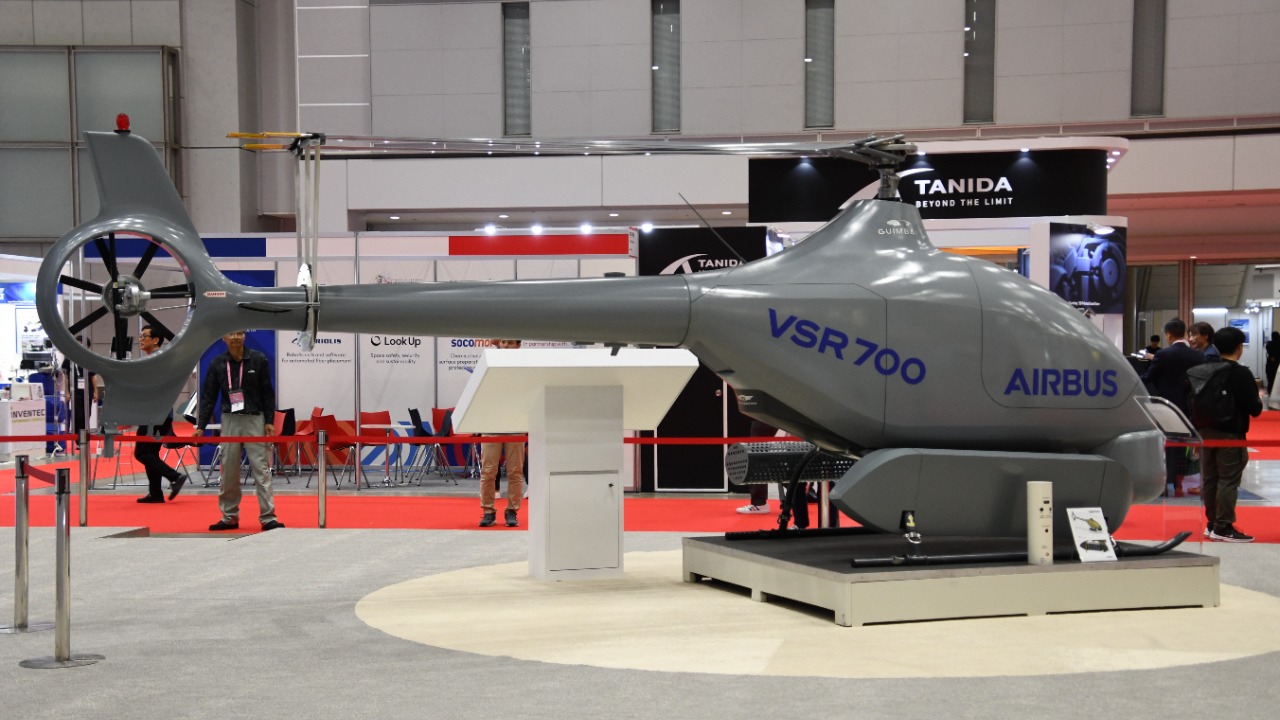

France is moving to put uncrewed helicopters at the heart of its surface fleet, committing to six Airbus VSR700 systems that will begin sailing with the French Navy from 2028. The decision gives the service a new tier of long‑endurance eyes and ears at sea, while anchoring a domestic industrial partnership around a platform designed from the outset for shipborne operations.
By locking in a first production batch now, Paris is signaling that uncrewed vertical takeoff and landing aircraft are no longer an experiment but a core element of future naval aviation. The order also positions France as the launch customer for Airbus’s new naval drone, a status that carries both operational advantages and strategic expectations.
How the VSR700 deal came together
The contract is the product of a deliberate push by France’s defense procurement agency, the DGA, to translate years of trials into an operational capability. Earlier this year, France confirmed that the DGA had awarded a production order to Airbus Helicopters and Naval Group for six VSR700 shipborne drones, locking in a program that will equip front‑line warships for intelligence, surveillance and reconnaissance missions. The agreement follows a contract signature between the DGA, Naval Group and Airbus Helicopters that was inked on 30 December 2025, a milestone that formalized the transition from prototype to series production for what the DGA describes as a new VTOL drone for the French Navy.
The industrial choreography behind the deal is as important as the numbers. In Marignane, France, the French Armament General Directorate, identified as the DGA, has formally tasked Airbus Helicopters with delivering the uncrewed aerial system, while Naval Group is responsible for integrating it with combat systems on board French frigates. A separate account of the award notes that the French Armament General Directorate, the DGA, selected Airbus Helicopters and Naval Gr as prime partners, underlining the intent to keep both aeronautical and naval integration expertise rooted in national industry through this French Armament General program.
From Cabri G2 to naval drone workhorse
Technically, the VSR700 is less a clean‑sheet design than a careful adaptation of a proven light helicopter to uncrewed naval service. The aircraft is derived from and adapted from the Cabri G2 light helicopter, certified by the French SME Hélicoptères Guimbal, a lineage that gives the drone a manned flight heritage and a mature rotor system before any sensors are added. Reporting on the VTOL program stresses that this Cabri airframe, developed by the French SME Guimbal, has been progressively re‑engineered into what is now described as the VSR700 VTOL UAV, with structural and avionics changes tailored to unmanned operations at sea.
Design and development notes on the type explain that it was Developed by Airbus and is based on the Cabri G2 light helicopter, with the VSR700 prototype evolving into a navalized system able to operate alongside the NH90 NFH helicopter on frigate decks. In that account, the Design and evolution of the aircraft are framed as a way for Airbus to leverage Cabri technology while adding the sensors, data links and shipboard handling features required for a modern uncrewed helicopter, a path that has culminated in the current production configuration described in detail for the Airbus Helicopters VSR700.
Capabilities tailored for French Navy operations
Operationally, the VSR700 is being bought to extend the reach of French surface combatants rather than to replace existing crewed helicopters. The DGA has been explicit that the VSR 700 is a multi‑mission system, with the contract for these VTOL drones framed around tasks such as maritime surveillance, over‑the‑horizon targeting and support to anti‑submarine warfare, all from the constrained decks of frigates and other combatants. Program details emphasize that the VSR700 contract was agreed between the DGA, Naval Group and Airbus Helicopters to deliver a platform that can be progressively introduced alongside existing assets, with the figure 700 used consistently to distinguish this new class of shipborne UAV from smaller rotary systems already in service, as highlighted in the French DGA orders coverage.
Technical descriptions of the payload suite underline why the French Navy sees the aircraft as a force multiplier. The VSR700 is designed for ship‑based operations and will be equipped with a surveillance radar, an electro‑optical system and an electronic support measures package, a combination that allows a single drone to detect surface contacts, classify them visually and contribute to electronic intelligence in both maritime and land environments. According to program summaries, these drones will be operated by the French Navy starting in 2028, strengthening its maritime surveillance and operational capabilities, with the French Navy explicitly cited as the end user that will bring the system into daily service for future ISR missions in the French Navy to briefings.
Strategic stakes for French naval aviation and industry
Strategically, the order is being framed in Paris as a sovereignty move as much as a capability upgrade. Program documents describe this as a strategic contract for French sovereignty that provides for the operational deployment of six units starting in 2028, with The Director of the program highlighting how the partnership between Airbus and Naval Group will keep key technologies and integration skills inside the national ecosystem. The same account notes that Airbus and Naval Group are to produce six aerial drones for the French Navy and to deliver associated mission systems via Naval Group’s Steeris solution, underlining the depth of the Airbus and Naval collaboration.
For naval aviation planners, the VSR700 is also a way to stretch scarce crewed helicopter hours while reducing risk to aircrews. Analyses of the program argue that France Orders Airbus VSR700 Uncrewed Aerial Systems for Naval Operations in order to strengthen French naval aviation for the next decade, with particular emphasis on reducing risk to aircrews and creating future growth and export opportunities around a domestically anchored product. That perspective is echoed in commentary that describes how France Orders Airbus systems as part of a broader Uncrewed Aerial Systems for Naval Operations roadmap, positioning France as both a user and potential exporter of this class of drone, as laid out in the France Orders Airbus analysis.
France as launch customer and what comes next
Politically and symbolically, France is using the VSR700 to recast its image in naval unmanned systems. One detailed account notes that France will become the first nation to use Airbus’s new naval drone, with the decision taken at Airbus Helicopters’ site in Marignane and framed as a leap from laggard to pioneer in this segment. That narrative stresses how France, working with Airbus Helicopters in Marignane, is quietly becoming the launch customer for the aircraft and will be responsible for integrating the drone into daily operations, a point underscored in the France will become commentary.
Public messaging around the order has also been calibrated to highlight its novelty and scale. Short video explainers describe how France Boosts Navy with Six Airbus VSR700 Uncrewed Aerial Systems, presenting the deal as a way to equip Navy frigates with a new generation of drones and repeating that France Orders Six Airbus VSR700 Drones for Navy Frigates Fr as part of a broader modernization push. Other summaries emphasize that these drones will be operated by the French Navy starting in 2028, strengthening its maritime surveillance and operational capabilities in both maritime and land environments, a framing that is consistent across the French orders six and France Boosts Navy coverage.