

Elon Musk has quietly shifted the Starship calendar again, pointing to early March for the first launch of 2026 and tying that schedule to a more ambitious push toward Mars later in the decade. The new target, centered on a Version 3 prototype lifting off from Starbase in Texas, raises the stakes for a program that Musk has repeatedly framed as essential to making humanity multiplanetary. I see this updated window as less a single date on a pad and more a stress test of whether SpaceX’s rapid-iteration model can keep pace with its own rhetoric.
The coming flight is meant to be more than another spectacle of stainless steel and methane. Musk is now aligning the 2026 test campaign with a late‑2026 attempt to send an uncrewed Starship toward Mars, a move that would turn the next launch from a routine milestone into a critical rehearsal. How well SpaceX executes this first mission of the year will help determine whether those interplanetary ambitions remain aspirational talking points or start to look like an operational plan.
Early March launch window and what it signals
Musk has indicated that the next Starship launch could occur in early March 2026, effectively setting the pace for the company’s entire flight test program this year. That timing lines up with separate reporting that the 12th test flight, the first to use the upgraded Version 3 vehicle, is targeted for roughly six weeks after Musk’s latest comments, which again points to early March. By tying the schedule to a specific flight number and hardware configuration, he is signaling that this is not just another incremental hop but a deliberate step in a longer sequence of increasingly capable missions.
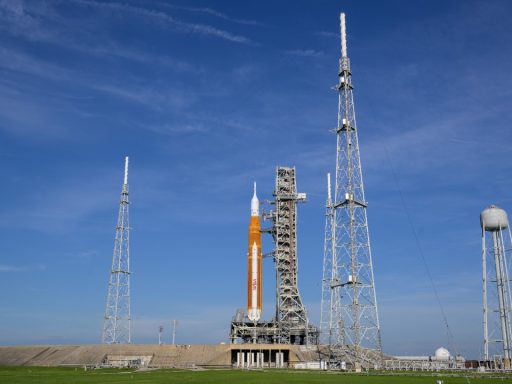
The hardware that will attempt this launch is not a minor refresh. Musk has described the upcoming Version 3 stack as a more powerful prototype designed to push performance closer to what will be needed for deep space missions. Standing over 400 feet tall, the combined Starship and Super Heavy system is already the largest rocket ever built, and the new configuration is expected to test higher thrust levels and more demanding flight profiles. In practical terms, that means this first launch of 2026 is as much about validating the architecture for future Mars and lunar missions as it is about simply reaching orbit and returning safely.
Starbase, Texas and the road to a Florida debut
The updated timeline also reinforces Starbase’s role as the primary testbed for the program. Musk’s early March target is tied to a launch from the company’s complex in Starbase, the coastal site in South Texas that has hosted every full‑stack Starship flight so far. That facility has already seen a progression of increasingly complex tests, including a notable fifth flight in which, on October 13, 2024, the team achieved the first catch of a vehicle using the launch tower’s mechanical arms. According to the record of On October operations at the site, later attempts to repeat that maneuver on flight 7 and flight 8 were aborted, underscoring how experimental the campaign remains.
At the same time, Musk and his team are preparing to expand beyond Texas. Plans are underway to debut Starship from Cape Canaveral Space Force Station, a shift that would bring the vehicle into the same Florida corridor used by Falcon 9 and Falcon Heavy. Those Plans matter because they hint at a future in which Starship is not just a one‑off experimental platform in Texas but a workhorse integrated into the broader launch infrastructure. If the early March flight from Starbase goes well, it will strengthen the case for regulators and range officials in Florida to support that expansion.
Version 3 hardware and the Mars test campaign
The most consequential part of Musk’s updated schedule is how tightly it is coupled to Mars. He has been clear that the long‑term goal is to send Starship to Mars as soon as orbital mechanics and engineering readiness allow, and he is now targeting late 2026 for the first uncrewed flight to the Red Planet. In that scenario, the Version 3 prototype that flies in early March becomes a pathfinder for the vehicles that will attempt the interplanetary journey. The upgraded engines, structural changes, and thermal protection system are all being tuned with that Mars trajectory in mind, not just for low Earth orbit.
Earlier commentary from Musk framed this as part of a broader campaign in which Musk aims for a Mars landing in 2027, using the late‑2026 uncrewed mission as a dress rehearsal. Separate reporting notes that he is aiming to send Mars an uncrewed Starship by the end of 2026, while acknowledging that the timeline depends heavily on future test‑flight progress and the ability to reach Orbit reliably. That caveat is crucial. It means the early March launch is not just a symbolic start to the year but a gating item for whether the Mars schedule remains even remotely plausible.
NASA’s HLS milestones and the lunar link
While Mars captures most of the public imagination, the updated Starship schedule is also tightly bound to NASA’s lunar plans. The vehicle is central to the agency’s Human Landing System, or HLS, which is supposed to ferry astronauts from lunar orbit down to the surface and back. According to SpaceX’s own updates, the next major flight milestones tied specifically to HLS include a long‑duration flight test and an in‑space propellant transfer demonstration, both of which require a mature Starship platform. The early 2026 launch, using the Version 3 hardware, is a necessary precursor to those more complex operations.
In practical terms, that means the same test flights Musk is counting on for Mars are also carrying the weight of NASA’s schedule. The company has outlined that the HLS campaign will involve multiple tankers, the addition of docking probes, and a series of orbital refueling maneuvers, all of which depend on a reliable base vehicle. The upcoming updates on those milestones make clear that the company is trying to thread a needle: it must prove Starship’s capabilities to NASA while also keeping enough flexibility to chase Musk’s own Mars timetable.
From catching Stars to sending Optimus
One of the more telling details in Musk’s recent comments is how casually he treats feats that would have been headline‑grabbing on their own just a few years ago. A video update highlighted a “crazy schedule” to catch Stars on Pad B, a reference to using the launch tower’s arms to physically grab the returning booster instead of relying on downrange drone ships. That one‑word confirmation of the plan set off waves of anticipation among close watchers of the program, because it suggests SpaceX is confident enough in its guidance and control systems to attempt one of the most complex recovery maneuvers ever attempted with a rocket of this size.
Looking further out, Musk has tied the late‑2026 Mars mission to a very specific payload. He has said that Elon Musk expects Starship to head to Mars at the end of 2026 carrying Optimus, Optimus being the humanoid robot developed by Tesla. That plan, detailed in a Mars focused update, even concedes that 2031 may be a more realistic horizon for a fully operational presence. Yet the symbolism of sending a robotic worker ahead of humans is hard to miss. It frames Starship not just as a transport system but as the backbone of a broader ecosystem of machines and infrastructure that Musk hopes to plant on another world.