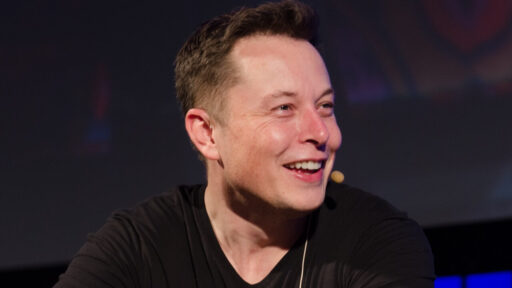

Elon Musk has pulled xAI into SpaceX, ripped up its leadership chart, and is now steering the combined group toward what is being framed as one of the biggest tech IPOs in years. The shake-up follows the merger of the artificial intelligence startup with his rocket company and comes as he pitches investors on a story that links AI, space infrastructure, and a vast new energy build-out.
The reorganization, announced after key co-founders left, is Musk’s attempt to reset xAI as a core engine inside SpaceX rather than a side project. The changes appear less about short-term turmoil and more about how Musk wants to fuse rockets, satellites, and data centers into a single growth narrative for public markets.
From startup to SpaceX division in record time
The first big move was structural. Earlier this year, SpaceX said it had acquired Musk’s artificial intelligence startup xAI in a deal that pulled the young lab directly under the rocket company’s control. By folding xAI into SpaceX, Musk turned what had been a separate venture into a unit that can plug straight into the company’s launch, satellite, and manufacturing operations, as described in the merger announcement on xAI-SpaceX. That same reporting framed the tie-up as a way to keep the SpaceX IPO timeline on track while giving xAI a clearer path to public markets.
SpaceX CEO Elon Musk on Wednesday followed up by telling staff that the combined business would keep hiring aggressively in AI and infrastructure, even after the deal closed. In a company meeting, he presented the merger and reorganization as a way to move faster on both training and deployment of new models, according to comments he made that day on Wednesday. His message was clear: xAI is no longer a standalone startup scrambling for resources, it is now meant to be a core part of SpaceX’s long-term growth story.
Co-founder exits and a top-down rebuild
The structural merger arrived just as xAI’s founding team was being reshaped. After several co-founders left, Musk did not try to quietly patch the gaps. Instead, he overhauled xAI’s top management and described the process as tearing the company down and stitching it back together, a phrase that appeared in a detailed account of his plans on Just. In another briefing, he was quoted as saying that he had “tore xAI down and stitched it” again, a description repeated in a separate analysis of What his next steps might be.
That language matters. Musk signaled that this was not a gentle reshuffle but a reset of who runs xAI and how it fits into SpaceX. One report described how he overhauled xAI’s top management a week after the merger and presented the changes in a company meeting posted on X, according to Reuters. Another account framed the same shift under the headline “Billionaire Elon Musk Overhauls xAI Ahead of Planned IPO,” describing how Billionaire Elon Musk made significant changes to the management of xAI ahead of a listing that could be one of the largest ever, a description that appeared in a detailed IPO-focused write-up on Billionaire Elon Musk.
AI, rockets, and an aggressive IPO pitch
With the reorganization in place, Musk is now selling a story to investors that stretches from Earth’s surface to deep space. In internal remarks, he described the work as a grind but tied it to “interstellar ambitions,” a phrase that came up when Executives highlighted how the merger gives xAI access to SpaceX’s launch and satellite network, according to a briefing that quoted those Executives. The pitch is that AI models trained on vast data sets will run inside data centers linked to Starlink satellites, and that this combined network can support services from autonomous navigation to scientific computing.
On the financial side, the merger has given xAI what one analysis described as a better shot at a blockbuster IPO in 2026, by attaching it to SpaceX’s existing investor base and revenue streams. One detailed breakdown said that, just like that, xAI’s initial public offering chances for 2026 potentially increased in an unexpected way once it became part of SpaceX, and that the SpaceX IPO timeline itself remained intact, as described in a report on Elon Musk’s. A separate analysis focused on how Billionaire Elon Musk is positioning the listing as one of the largest ever, with the reorganization framed as preparation Ahead of Planned IPO, a point that appeared in the same IPO-focused coverage on historic IPO.
Energy, satellites, and the “Global” AI power problem
Behind the management drama sits a more basic constraint: electricity. Musk has argued that Global electricity demand for AI simply cannot be met with terrestrial solutions, even in the near term, a warning he laid out in a blog post quoted in a report on Global. That argument helps explain why he wants xAI tied to SpaceX, which already operates Starlink satellites and has experience building power-hungry ground infrastructure.
He has also been linked to plans for new data centers that lean on space-based connectivity. One social media post described how Elon Musk is in advanced talks on data centres powered by satellite networks, a claim that appeared alongside a short caption about SpaceX’s acquisition of xAI, as seen in a post that mentioned Elon Musk and included the figure 102. In another report, the merger was framed around SpaceX’s mega-rocket Starship, which made a test flight from Starba and was presented as part of a broader plan to link heavy-lift rockets, satellites, and AI infrastructure, according to an explainer on Starship.
Musk’s personal stake and the political spotlight
The reorganization is not happening in a vacuum. Musk’s profile as SpaceX CEO and xAI founder means every move is watched by regulators and politicians who are still working out how to treat AI and space infrastructure. One photo that circulated widely showed Elon Musk boarding Air Force One at Joint Base Andrews in Maryland in March 2025, captured by Eric Lee, an image that resurfaced in coverage of the merger and IPO plans on Air Force One. The image served as a reminder that Musk is not just a tech founder but also a regular presence in policy discussions that touch on defense, space, and now AI.
That visibility, combined with the promised blockbuster IPO, raises questions about how much influence one executive should have over critical infrastructure. One detailed analysis of What are Elon Musk’s plans for xAI now after co-founder exits and SpaceX merger asked whether his decision to tear xAI down and stitch it back together would make the company more responsive to his personal priorities, a concern that was raised in the same What are Elon analysis. For now, the reorganization, the merger, and the IPO pitch all point in the same direction: Musk wants xAI to sit at the center of a vast web of rockets, satellites, and AI systems, and he is willing to rebuild the company from the ground up to get there.