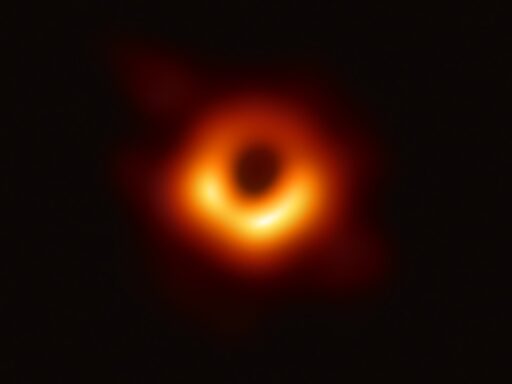
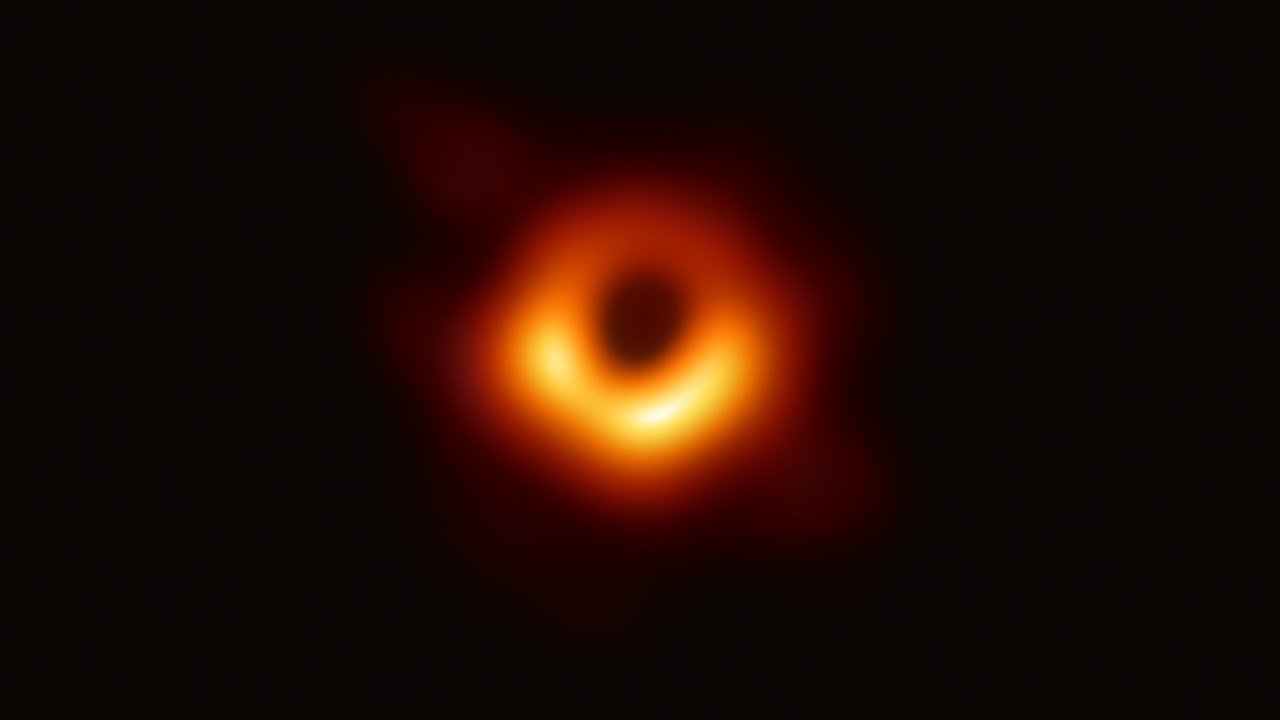

A supermassive Black Hole about 450 million light-years away is behaving in a way that defies the usual cosmic playbook, twisting its high-energy outflows into bizarre S-shaped jets that snake across intergalactic space. Instead of the straight or gently curved beams astronomers expect, these structures kink and wobble, hinting at violent dynamics in the heart of a distant galaxy. I see this discovery as a rare window into how black holes can literally sculpt the galaxies that surround them.
At this distance, the object is close enough for modern observatories to resolve its structure in detail, yet far enough that we are looking back in time at a different phase of galactic evolution. The strange geometry of these jets suggests that the central engine is not just swallowing matter, but also reorienting itself in a way that can redirect energy across tens of thousands of light-years.
The strange S-shape and what it reveals
From what researchers have reported, the core of this system sits roughly 450 M light-years away, with the central Black Hole driving twin outflows that twist into a clear S pattern on the sky. Instead of the classic picture of two narrow beams punching straight out of a galaxy’s poles, the jets appear to wobble and bend, as if the nozzle of a cosmic fire hose is slowly sweeping through space. That geometry implies the black hole’s spin axis is changing over time, likely through a process known as precession, which can be triggered when the central object is torqued by surrounding matter or by the gravitational pull of a companion.
About 450 m light-years from Earth, this system sits in a galaxy where the jets do not simply shoot outward and fade, but appear to be fountaining in the surrounding space, looping back and folding over themselves. The result is a pair of S-shaped structures that look more like a calligraphic flourish than a straight line, a pattern that suggests the outflows are repeatedly sweeping through different regions of the galaxy’s halo. That repeated sweeping is exactly the kind of motion that can redistribute gas, shock it, and potentially shut down or ignite pockets of star formation.
How telescopes stitched together the full picture
To decode such a complex structure, astronomers needed a full toolkit of instruments rather than a single spectacular image. High resolution radio maps from facilities like the Very Large Array, or VLA, trace the jets themselves, revealing where charged particles spiral in magnetic fields and light up as radio emission. Infrared and optical data then fill in the host galaxy, showing where gas and dust sit relative to the jets and how the stars respond to this ongoing bombardment of energy.
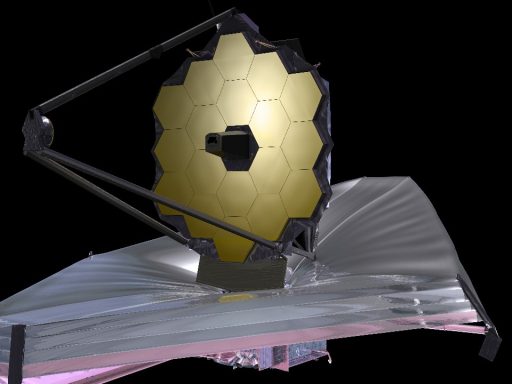
In related work on wobbling jets, researchers have already used the Keck Observatory, NASA’s James Webb Space Telescope and the Very Large Array together to show how a precessing outflow can starve a nearby galaxy of stars by sweeping gas out of its disk. That multiwavelength approach, which tied the jet’s motion to a deficit of stellar nurseries, underscores how crucial it is to combine ground based and space based views when trying to understand these extreme environments. The same logic applies to the S-shaped system, where only a stitched together view can reveal how the contorted jets intersect with the galaxy’s gas and dust.
Wobbling jets and the fate of galaxies
I see the S-shaped jets as part of a broader pattern that is forcing astronomers to rethink how black holes regulate their host galaxies. Now that researchers have identified a supermassive black hole whose wobbling outflow acts like a snowplow, pushing gas out of a spiral galaxy’s disk and stifling new stars, it is clear that jet geometry is not a cosmetic detail. A straight, tightly collimated beam might drill a narrow channel and escape, while a precessing or S-shaped jet can sweep across a wide swath of the galaxy, heating or expelling the very material that would otherwise collapse into new suns.
That perspective is reinforced by work on a galaxy wide wobbling jet where astronomer Justin Kader has described a precessing, kiloparsec scale radio structure that drives a massive outflow in a disk galaxy. When I put that result alongside the 450 M light-year S-shaped system, the message is consistent: once a central Black Hole starts to wobble, its influence can extend far beyond the immediate core. The contorted jets become tools of feedback, capable of either quenching star formation by clearing gas or, in some regions, compressing clouds enough to spark brief bursts of activity. In that sense, the strange S-shaped jets are not just a curiosity, but a vivid example of how the most compact objects in the universe can dictate the long term destiny of entire galaxies.