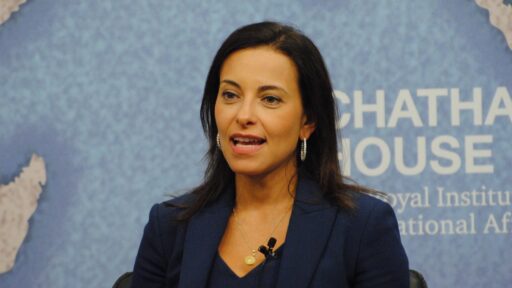
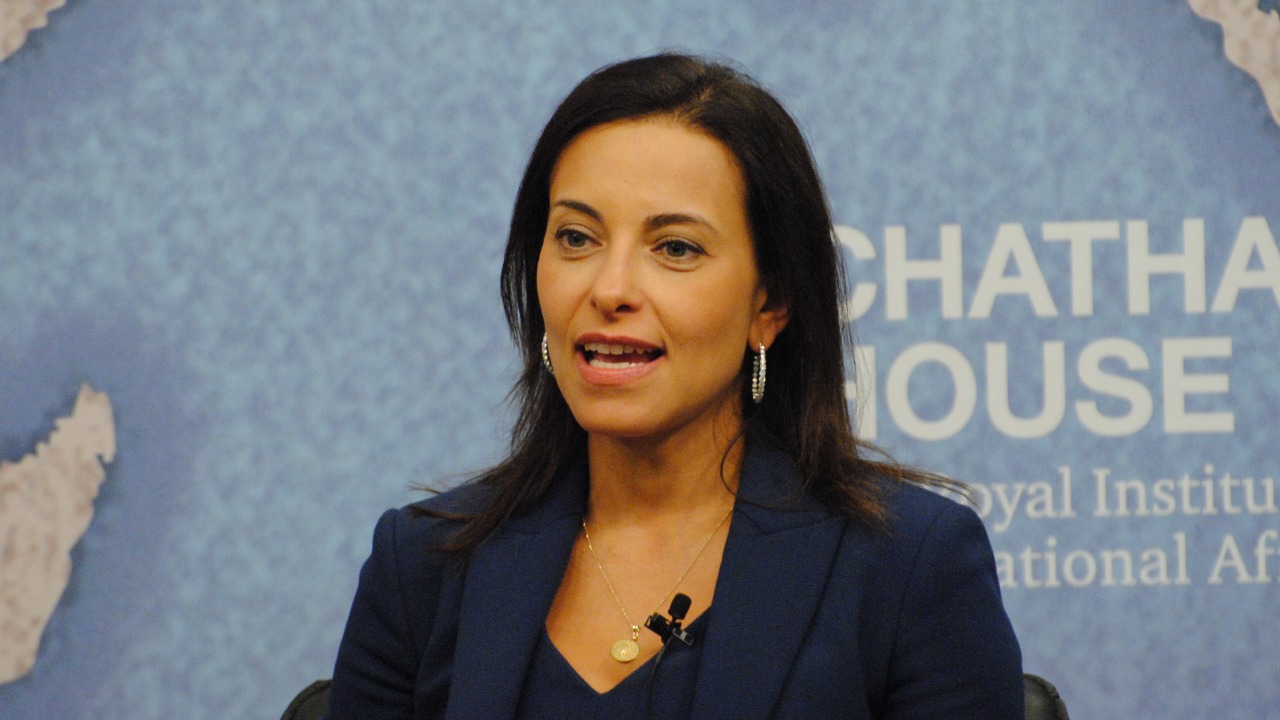

Dina Powell McCormick, a former Donald Trump adviser who joined the Meta Platforms board only eight months ago, has resigned as a director effective immediately, according to a securities filing. The longtime Goldman Sachs executive and close adviser to Mark Zuckerberg is, however, considering remaining involved with Meta in a senior advisory role, a potential arrangement that would preserve her influence even as she exits the company’s formal governing body.
Powell McCormick’s abrupt resignation from Meta’s board
Dina Powell McCormick has quit the Meta board after roughly eight months as a director, marking a notably short tenure for a member of the company’s governing body. Her departure, reported as a change in the composition of the board of Meta Platforms, comes at a time when the company continues to navigate regulatory scrutiny, political pressure and strategic shifts in areas such as artificial intelligence and virtual reality, making the loss of any director with deep policy and financial experience particularly significant.
An official notice filed with regulators states that Powell McCormick’s resignation from the Meta Platforms board is “effective immediately,” a formulation that underscores the sudden nature of the move and leaves no transition period for her board responsibilities. The filing, which confirms that she is stepping down from her role as a director of Meta Platforms, Inc., signals an abrupt end to a board tenure that had been expected to add seasoned geopolitical and financial insight to the company’s oversight structure, raising questions for investors and policymakers about how Meta will replace that expertise.
Possible continued role as adviser to Meta leadership
Although she is leaving the board, Powell McCormick is considering retaining an advisory role on Meta’s senior leadership team, according to a Bloomberg News account that describes ongoing discussions about her future involvement with the company. That potential arrangement, which would position her as a senior adviser rather than a voting director, suggests Meta is looking for ways to preserve access to her experience in global markets and public policy while recalibrating the formal structure of its board.
Reporting on her background notes that she has been serving as an advisor to Mark Zuckerberg, a relationship that could continue even after her departure from the board if she accepts a senior advisory position. The possibility of an advisory role is described as separate from her formal responsibilities as a director, meaning she would no longer participate in board votes or committee work but could still shape strategic conversations with Meta’s top executives, a distinction that matters for shareholders who track how influence and accountability are distributed inside the company.
Her brief tenure and what has changed at Meta
Powell McCormick is leaving the Meta board “in just eight months,” a characterization that highlights how short her directorship has been compared with the multi‑year terms typically associated with large technology companies. Her relatively brief stint stands out because Meta had presented her appointment as part of a broader effort to deepen the board’s expertise in global finance, diplomacy and regulatory affairs, areas that remain central to the company’s risk profile.
The change is framed as a notable shift in Meta’s board composition that comes relatively soon after she joined, underscoring how quickly the company’s governance lineup can evolve in response to internal or external pressures. The securities filing that records her resignation marks a concrete pivot from what had appeared to be an expanding role at Meta to an immediate exit from formal board responsibilities, a development that could prompt investors, employees and policymakers to scrutinize how the company balances continuity with flexibility in its leadership ranks.
Powell McCormick’s political and corporate background
Before joining Meta’s board, Powell McCormick built a high‑profile career in Washington as a former Donald Trump advisor, a role that underscored the political experience she brought into the company’s governance. Her time in the Trump administration, where she worked on national security and economic initiatives, gave her direct exposure to the intersection of technology, foreign policy and regulation, a combination of skills that is particularly relevant for a platform company that operates across jurisdictions and faces frequent scrutiny from governments.
She is also described as a longtime Goldman Sachs executive, a designation that establishes her credentials in global finance, capital markets and corporate strategy. That dual profile, as both a Trump administration alumna and a Wall Street veteran, is central to how her role and potential influence within Meta have been presented, since it positioned her as a bridge between political decision‑makers, financial institutions and a technology company that depends on all three constituencies to execute its long‑term plans.
Implications for Meta’s governance and advisory structure
Powell McCormick’s immediate resignation, as disclosed in the securities filing that records her exit from the Meta Platforms board, removes her voting role in the company’s formal governance and ends her participation in board‑level oversight. Without a seat at the board table, she will no longer be directly responsible for approving major corporate actions, reviewing risk frameworks or setting executive compensation, a shift that alters the mix of perspectives represented in Meta’s highest decision‑making body at a time when technology regulation and geopolitical tensions remain intense.
That loss of a board seat contrasts with the potential continuity of her influence if she accepts an advisory position on Meta’s senior leadership team, a possibility described in detail in the Bloomberg‑linked account of her ongoing talks with the company. Coverage of her departure underscores the uncertainty over whether she will stay on as an adviser, making Meta’s next move on governance and strategic counsel a key point to watch for investors, regulators and advocacy groups that track how the company structures accountability while still drawing on the expertise of politically connected and financially seasoned insiders.