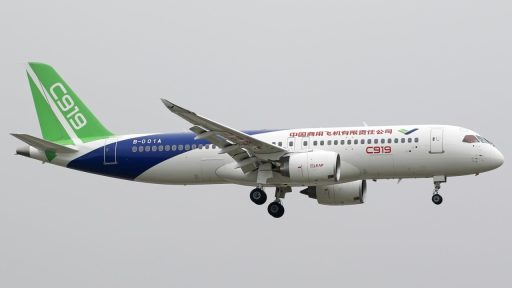
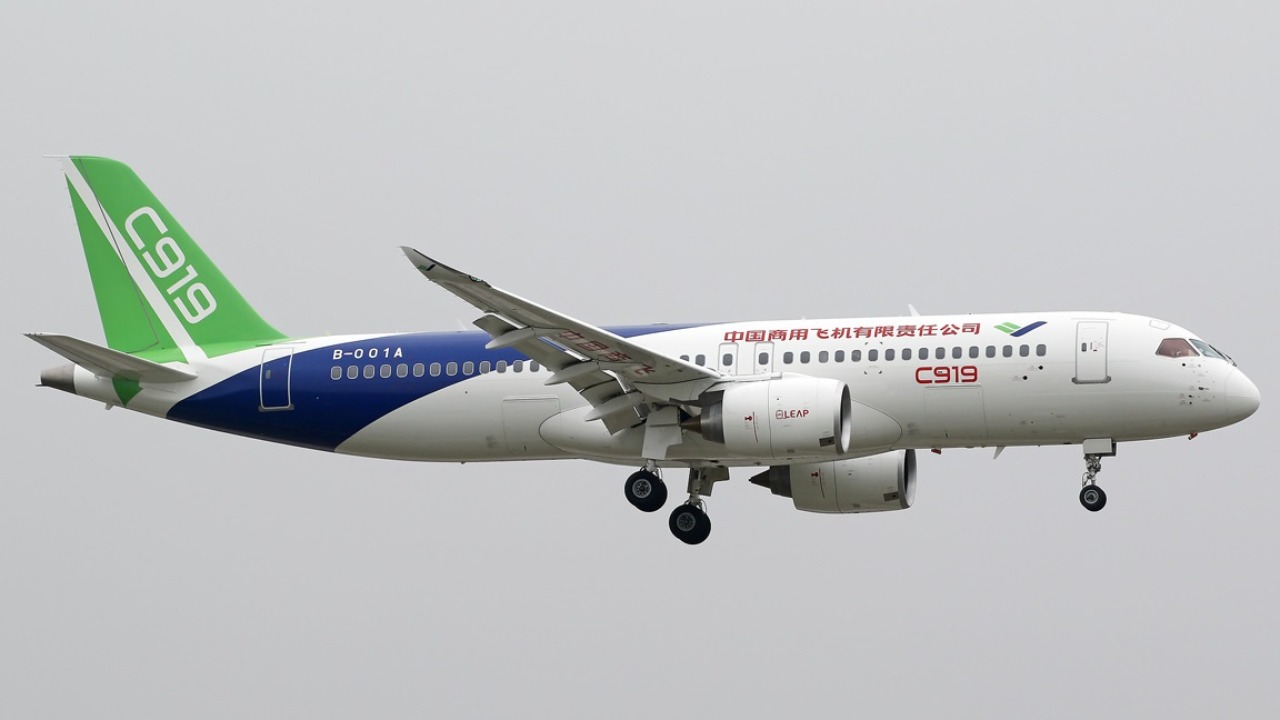

European test pilots have begun flying the COMAC C919 in Shanghai, marking a pivotal phase in the Chinese jet’s push for recognition beyond its home market. The evaluation sorties by the European Union Aviation Safety Agency are not routine check rides, but a gateway to whether China’s flagship narrowbody can win access to some of the world’s most tightly regulated airspace.
The flights signal that the C919’s long courtship with European regulators has moved from paperwork and simulations to hands-on scrutiny in the cockpit. What happens over Shanghai’s skies in the coming months will help determine if the aircraft can credibly challenge the Airbus A320 family and Boeing 737 on routes where safety, reliability and certification pedigree are non-negotiable.
The Shanghai test campaign and what EASA is looking for
The European Union Aviation Safety Agency, often shortened to EASA, has dispatched its own test pilots to fly the C919 from COMAC’s base in Shanghai, turning years of technical dialogue into live certification work. According to reports, two EASA pilots carried out verification flights using a C919 operated by a Chinese airline, with early feedback pointing to only minor issues that require adjustments rather than fundamental redesigns, a sign that the aircraft’s basic handling and systems are aligning with EASA expectations. These sorties are part of a broader evaluation program that moves beyond Chinese documentation and into how the jet behaves in real-world operations under European oversight.
European aviation evaluators have been putting the home-grown Chinese airliner through its paces at Shanghai’s main production and testing hub, a process that sources describe as a crucial step toward the certification needed for global operation and a reflection of closer technical exchanges between COMAC and the European regulator in recent months, as highlighted in European aviation evaluators. The flights in Shanghai are framed as validation rather than discovery, intended to confirm that the aircraft built in COMAC’s production base matches the design and safety assumptions already reviewed on paper.
How the C919 fits into the global single-aisle market
The C919 is designed as a single-aisle workhorse that directly targets the same segment as the Airbus A320 family and the Boeing 737, positioning China’s manufacturer as a new competitor in a market long dominated by two Western giants. The aircraft’s configuration, range and capacity are tailored to short and medium haul routes that form the backbone of global airline networks, and EASA’s own description of the program underscores that the jet is intended to rival the entrenched European and American models in both performance and economics, a point made explicit in comparisons with Airbus. For airlines, the promise is not only a third choice on the order sheet, but also potential leverage in pricing and delivery negotiations.
Although the C919 is largely a Chinese indigenous design, it is built around a network of Western suppliers that provide major components such as engines, avionics and flight control systems, reflecting a hybrid industrial model that blends domestic ambition with imported technology, as detailed in accounts of how Western suppliers underpin key systems. That mix helps explain why European regulators are willing to invest in a lengthy validation process, since many of the subsystems already have certification pedigrees in other aircraft, even as the overall airframe and integration remain uniquely COMAC’s responsibility.
A long road to European certification
Regulators on both sides acknowledge that certifying the C919 in Europe is a multi-year project rather than a quick endorsement of Chinese approvals. EASA officials have previously indicated that certification of COMAC’s C919 aircraft in Europe may take between three and six years, making clear that the jet cannot be certified in 2025 and that the agency is working within a longer horizon than some early expectations, a timeline spelled out in assessments of certification of COMAC. That range reflects both the technical complexity of validating a new type and the political sensitivity of recognizing a Chinese-built competitor in a market where safety standards are also a proxy for trust.
Earlier commentary from European officials suggested that the C919’s path to recognition could stretch up to six years, in part because the aircraft aims to rival Airbus and Boeing’s bestselling single-aisle models and because European regulators must decide how far they can rely on Chinese safety certification, a concern captured in analysis that the process could take up to six years if regulators accept Chinese. The current validation flights in Shanghai are therefore one chapter in a longer regulatory story, where each successful sortie and resolved discrepancy helps narrow the gap between Chinese and European standards but does not erase the structural caution built into EASA’s process.
What the Shanghai flights reveal about safety and performance
The ongoing sorties in Shanghai are not only symbolic, they are also generating detailed data on how the C919 behaves under European test protocols. Reports from the campaign describe these validation flights as a key component of the certification process that will regulate the aircraft’s market access, with EASA teams checking whether the jet meets European construction regulations in many areas, from structural integrity to systems redundancy, as outlined in coverage of how validation flights underpin compliance. The fact that early findings point to minor rather than fundamental issues suggests that COMAC’s design and manufacturing processes are broadly aligned with international norms, even if refinements are still required.
European sources familiar with the program have emphasized that the C919 cannot be certified in 2025, but they also stress that no hardware problems have been identified so far, a distinction that points to software, documentation or procedural tweaks rather than structural flaws, as noted in remarks attributed to Guillermet in reports on how Guillermet framed the findings. For airlines and passengers, that nuance matters, because it indicates that the jet’s core architecture is holding up under scrutiny and that the remaining work lies in aligning operational details with EASA’s rulebook rather than rebuilding major systems.
Strategic stakes for China, Europe and global airlines
For China, securing European certification for the C919 is a strategic objective that goes beyond selling a few dozen aircraft on foreign routes. The jet has already entered commercial service in China after receiving domestic approval, and officials see recognition from EASA as a critical step toward international acceptance of Chinese-built airliners, a point echoed in analyses that describe the C919 as a challenger to Airbus and Boeing and note that the aircraft is now in the third round of EASA’s certification process, with flight tests expected to intensify as it moves closer to EU approval. A successful outcome would validate years of industrial policy aimed at building a domestic aerospace champion and could encourage other countries to treat Chinese certification as a more reliable benchmark.
From the European side, the test campaign is framed as both an opportunity and a responsibility. Commentators note that the European Union Aviation Safety Agency’s flights are a crucial step in acquiring the certification needed for global operation and that the regulator must balance openness to new entrants with the need to maintain its reputation for rigorous oversight, a tension highlighted in references to the European Union Aviation. For airlines, especially those in emerging markets, a C919 that carries both Chinese and European approvals could become an attractive option, offering a third supplier and potentially more favorable terms than incumbents are willing to provide.