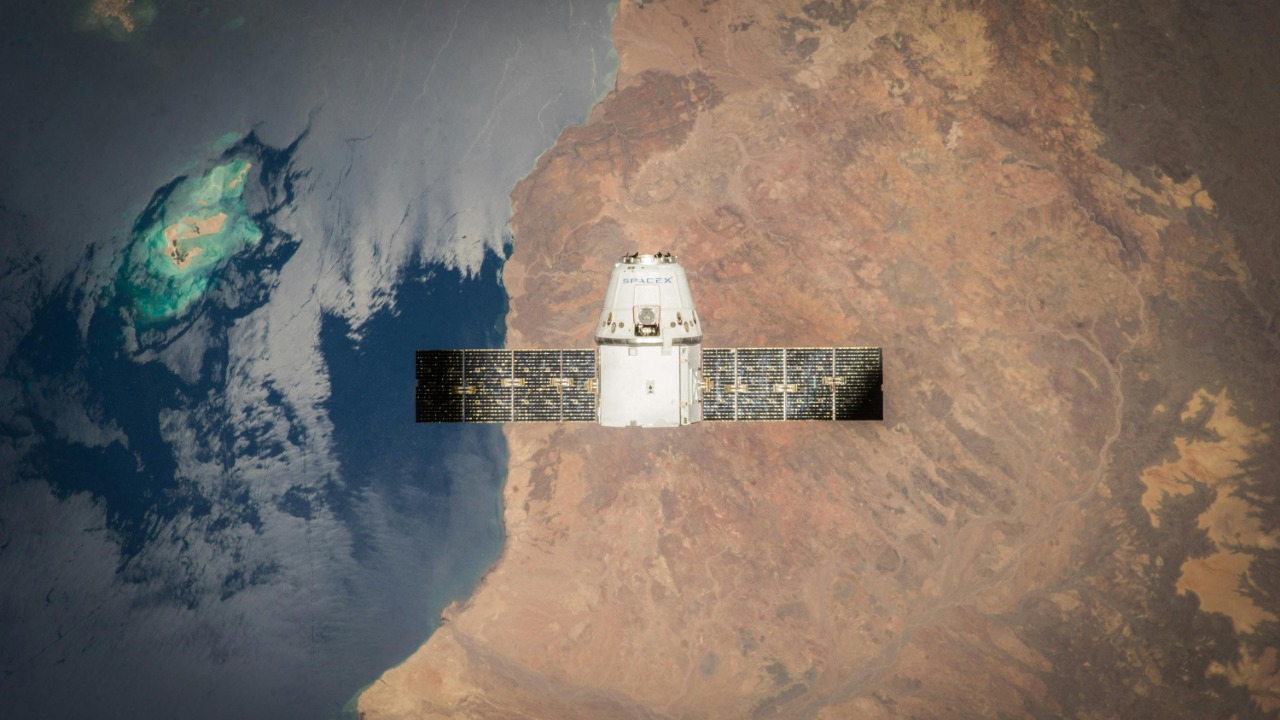

A spacecraft launched from China came dangerously close to colliding with a Starlink satellite operated by SpaceX, according to the company, which has framed the encounter as a near-miss in an increasingly congested orbital environment. The incident underscores how crowded low Earth orbit has become and how quickly a single close approach can raise alarms about space debris, collision cascades, and the safety of critical communications infrastructure.
As commercial constellations grow and more nations deploy satellites, the near slam between the Chinese spacecraft and the Starlink vehicle highlights the mounting pressure on space traffic management systems that were never designed for this level of activity. It also raises fresh questions about how operators share data, coordinate maneuvers, and assign responsibility when two spacecraft find themselves on a potentially dangerous trajectory.
The Near-Miss Incident
SpaceX reported that a spacecraft from a Chinese launch came uncomfortably close to one of its Starlink satellites, describing the event as a near slam that could have resulted in a serious collision in low Earth orbit. According to the company’s account, the Chinese vehicle’s trajectory brought it into a close approach corridor where standard safety margins were no longer guaranteed, prompting internal alerts and a detailed risk assessment. Although the exact miss distance has not been publicly disclosed, SpaceX characterized the geometry as tight enough that a small navigation error or delayed maneuver could have produced an impact, a scenario that would have scattered debris across a busy orbital shell used by multiple operators.
In low Earth orbit, even a glancing collision between a Starlink satellite and another spacecraft can generate thousands of high-velocity fragments, each capable of damaging or destroying additional satellites. The near-miss incident, as described in the reporting on the spacecraft from Chinese launch that nearly slammed into a Starlink satellite, illustrates how a single close approach can threaten not only the two vehicles involved but also the broader orbital neighborhood they occupy. For operators that depend on stable constellations for broadband, navigation, and Earth observation, the stakes include service interruptions, costly replacements, and long-term contamination of key altitude bands that are already under strain.
SpaceX’s Perspective
From SpaceX’s perspective, the episode is a textbook example of why large constellation operators invest heavily in tracking and autonomous collision avoidance. Company representatives have said the Starlink network continuously monitors conjunction data and uses automated systems to flag any object that appears to be on a converging path with one of its satellites. In this case, SpaceX has indicated that its internal tools identified the Chinese spacecraft’s trajectory as a concern, triggering a closer review by its flight dynamics team and leading to the characterization of the event as a near slam rather than a routine pass.
SpaceX has also emphasized that its Starlink satellites are capable of performing avoidance maneuvers when the probability of collision crosses a predefined threshold, and the company has suggested that such capabilities are becoming essential in a crowded sky. While the firm has not publicly detailed the exact maneuver sequence used in this encounter, its description of the incident implies that the Starlink vehicle either adjusted its orbit or was prepared to do so based on updated tracking data. For SpaceX, the episode reinforces its argument that operators with large fleets must maintain robust situational awareness and be ready to act quickly, because delays in decision-making can translate directly into higher risk for customers who rely on uninterrupted connectivity and for other spacecraft sharing the same orbital shell.
Chinese Launch Context
The spacecraft involved in the close approach originated from a Chinese launch that placed it into an orbit intersecting the altitude band used by the Starlink constellation, according to the reporting on the near-miss. While the specific mission designation has not been detailed in the available account, the description makes clear that the vehicle was part of China’s expanding presence in low Earth orbit, where it operates a mix of remote sensing, communications, and experimental platforms. The orbital path associated with this launch appears to have brought the spacecraft into a regime where it could cross the tracks of commercial constellations, increasing the likelihood of close approaches if coordination is limited.
Public statements from Chinese authorities about this particular incident have not been highlighted in the reporting, leaving a gap in the official narrative from Beijing’s side. That absence of comment, at least in the sources currently available, complicates efforts to understand whether Chinese mission planners were aware of the potential conjunction with the Starlink satellite or whether any avoidance measures were considered from their end. For other operators and policymakers, the lack of a clear response underscores the importance of transparent communication channels, because without timely data sharing and acknowledgment of close calls, it becomes harder to build trust and to refine procedures that protect all spacecraft in shared orbital corridors.
Implications for Orbital Safety
The near-miss between the Chinese spacecraft and the Starlink satellite is a stark indicator of how dense low Earth orbit has become, particularly at the altitudes favored by broadband constellations and Earth observation missions. As more satellites occupy similar orbital shells, the number of potential conjunctions rises sharply, increasing the workload on tracking networks and the frequency of avoidance decisions. This latest incident fits into a broader pattern of close approaches that, even when they do not result in collisions, consume operator resources and highlight the fragility of a space environment that is critical for navigation, weather forecasting, and global communications.
Internationally, guidelines on collision avoidance and debris mitigation exist through bodies such as the Inter-Agency Space Debris Coordination Committee and the United Nations Committee on the Peaceful Uses of Outer Space, but these frameworks rely heavily on voluntary compliance and data sharing. The reported near slam involving the Starlink satellite and a spacecraft from a Chinese launch underscores how gaps in coordination can translate into elevated risk, especially when operators from different countries or sectors do not share detailed trajectory information in real time. For stakeholders ranging from national space agencies to private broadband providers, the incident reinforces calls for more formalized space traffic management regimes, clearer norms on maneuver responsibility, and improved transparency so that close calls do not escalate into debris-generating collisions that could compromise entire orbital regions.