
China’s Lunar New Year break has become an unofficial launch window for artificial intelligence, with a wave of new models and products arriving just as families gather for the 2026 Chinese Spring Festival. A year after DeepSeek stunned global rivals with a low cost, high performance system, domestic competitors are using the holiday to showcase their own AI, from chatbots and image tools to humanoid robots and trading apps.
The result is a festival season where digital firecrackers and algorithmic fortune tellers sit alongside traditional couplets and gala shows, and where the race to match or beat DeepSeek runs straight through living rooms, smartphones and stock exchanges.
The “Spring Festival release” playbook after DeepSeek
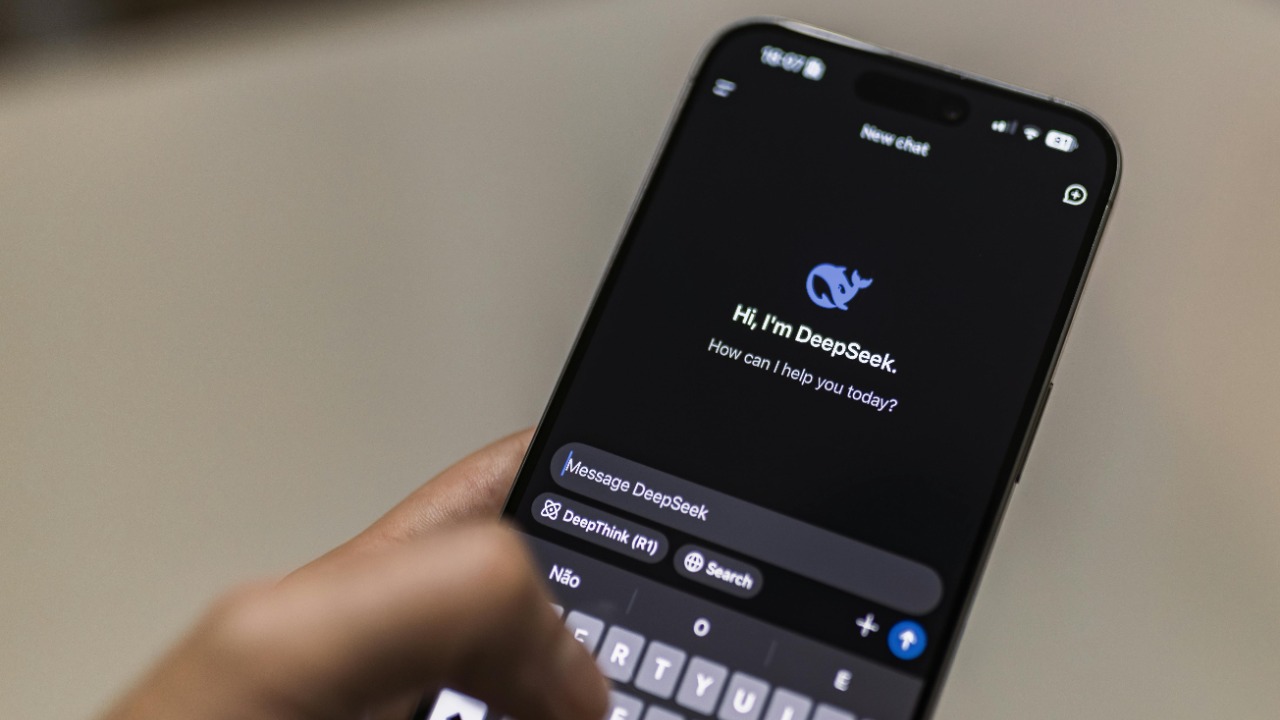
DeepSeek’s surprise move during last year’s Spring Festival has become the template for how Chinese AI firms try to grab attention when the country is on holiday. Industry analysis describes the Spring Festival raid tactic of DeepSeek in 2025 as an “industry textbook case,” with rivals now timing rollouts to the same window and treating the Lunar New Year as a kind of AI product season. Commentators say that by 2026, everyone has learned this strategy, turning the period into what some call a crowded Spring Festival release season, a pattern captured in reports on China’s large model launches.
Coverage of China’s large scale model Spring Festival release reinforces that shift, noting that DeepSeek’s Spring Festival surprise tactics in 2025 are now widely studied and copied. The same reporting describes how, by 2026, a long list of companies are lining up new systems for the holiday, turning what was once a quiet period into a crowded Spring Festival release season for AI models. That framing of DeepSeek as the original disruptor, and the festival as a stage for “the next DeepSeek moment,” runs through broader analysis of Spring Festival tactics.
Low cost Chinese AI models crowd the field
A year on from the initial shock, the most striking development is how many low cost Chinese AI models are now jostling for attention. Reporting on Chinese AI describes a flurry of systems pitched as cheaper, efficient alternatives to Western products, with investors and engineers alike looking for the next breakthrough. One account of this surge, framed as a look at Chinese AI a year on from the DeepSeek shock, highlights expectations of a new wave of low cost models and quotes analysts who see aggressive pricing as central to that strategy, a view laid out in coverage of low cost Chinese.
Researchers abroad are watching closely. Adina Yakef, a researcher at Hugging Face, the world’s largest open source AI community, has been quoted describing how DeepSeek’s success changed expectations and helped spark a wider AI arms race. Her comments underline that the stakes for China go beyond technology, tying the country’s push for cheaper, powerful models to questions of global influence and open source collaboration, as explored in reporting on DeepSeek a year.
Alibaba, Tencent and the AI titans chase a festival spotlight
The Spring Festival stage is no longer reserved for start ups. Major players like ByteDance, Alibaba and Tencent are now racing to launch new models over the holiday, hoping to convert festival buzz into long term users. One account of this contest describes how these major firms are vying for attention with advanced AI models that aim to capitalize on China’s rapidly evolving AI sector, painting the holiday as a kind of technology showcase for China’s AI titans.
Alibaba in particular has used the season to push its latest flagship system. The company has launched a new AI model, Qwen 2.5-Max, and is publicly claiming that this version is more advanced than DeepSeek-V3. That positioning, which ties the branding of Qwen and the specific 2.5-Max designation directly to the DeepSeek rivalry, is highlighted in coverage of Alibaba’s Qwen 2.5-Max, and it shows how the benchmark for success is now explicitly defined against last year’s upstart.
From trading floors to phones: DeepSeek’s commercial shadow
DeepSeek itself remains at the center of the story, both as a product and as a symbol. One factbox on the holiday season describes how, as China prepares for the Lunar New Year holidays starting on Sunday, rivals to DeepSeek are rushing out their own models, yet DeepSeek still looms over the market. That same summary, written By Eduardo Baptista BEIJING, frames the festival as a moment when investors and consumers alike are watching to see whether new launches can match the original shock, a perspective captured in reporting By Eduardo Baptista BEIJING on DeepSeek rivals.
That influence now stretches into regulation and geopolitics. OpenAI has warned US lawmakers that DeepSeek may be using distillation tactics to copy American AI models, according to Reuters, a claim that has turned the Chinese start up into a flashpoint in debates about safeguarding advanced AI development. The allegation that DeepSeek is bypassing safeguards to replicate American AI models shows how a company that once surprised the market during a holiday is now part of a broader argument over American AI protections.
Stocks, listings and the hunt for the next DeepSeek
Capital markets have been quick to follow the Spring Festival AI story. Investors are betting that companies aligned with China’s AI boom will benefit from the surge in interest, and some stocks have already moved sharply. Reports on Chinese AI models around the festival note that both Zhipu and another listed player have rallied strongly as investors position for future growth, with Zhipu planning a secondary listing in Shanghai after it went public on the Hong Kong Stock Exchange last month, a detail set out in a festival factbox.
The same theme appears in separate coverage of Chinese AI models around the festival, which again highlights that Both stocks have rallied strongly as investors bet on the companies benefiting from China’s AI boom. That report also details how MiniMax released its M2.5 model, how Tencent’s Hunyuan team is pushing into consumer hardware including mobile phones, how iFlytek released Spark for automotive and agent based applications, and how NetEase Youdao launched a desktop assistant that can take over a user’s computer after authorisation, all during the run up to the holiday, as summarized in analysis of festival AI launches.