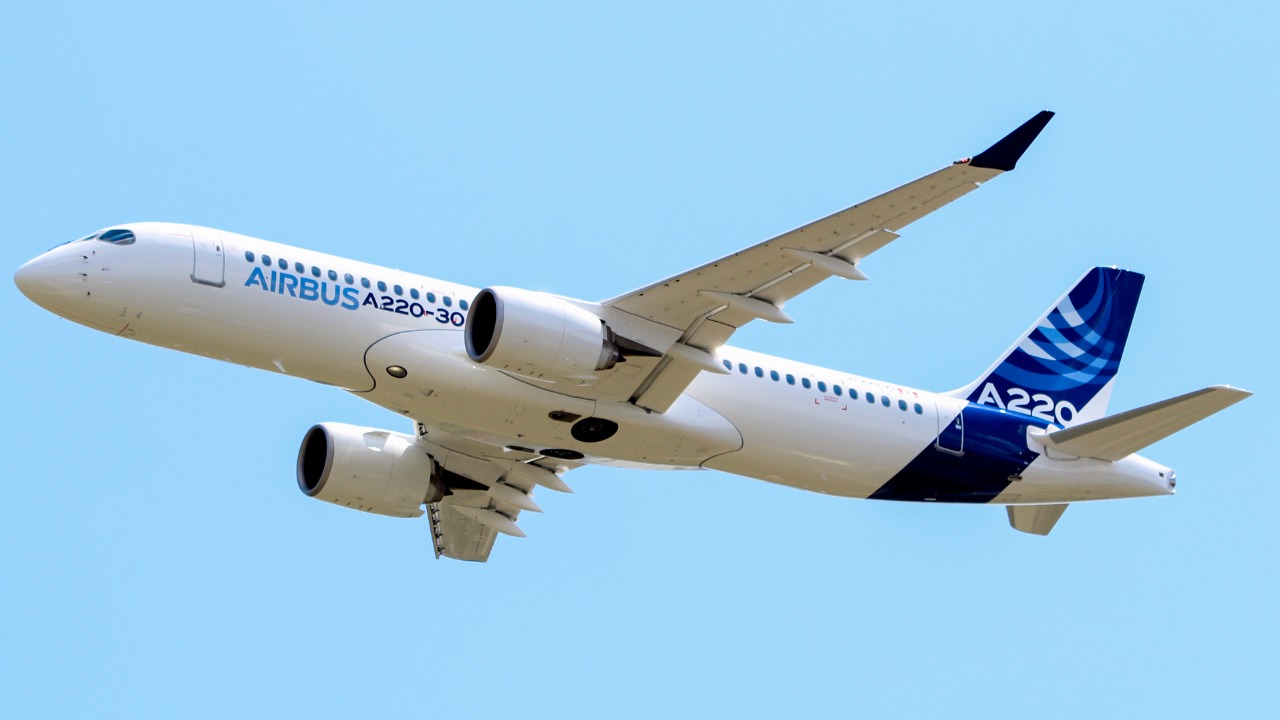

The next big commercial jet launch is no longer a distant hypothetical but a near-term strategic decision, with Avolon flagging 2027 as the likely moment a new program finally gets the green light. At the center of that call sit three very different concepts, the A220-500, the 777-10X and the A350-2000, each promising to solve a different problem for airlines squeezed by capacity constraints and surging demand. I see Avolon’s prediction as a stress test of how Airbus and Boeing balance backlog pressure, profitability and technological risk in the second half of the decade.
Behind the headline models is a wider industry context that is unusually supportive of bold moves. Avolon expects global airline profits to climb sharply on the back of strong traffic and limited aircraft supply, giving manufacturers a rare window to launch something new while customers are both cash-generative and desperate for lift. The question is not whether the market can absorb another clean-sheet or stretch, but which of these three airframes best matches the structural shifts now reshaping global aviation.
The demand backdrop Avolon is betting on
Avolon’s call for a new commercial jet program in 2027 rests on a simple premise: airlines are running out of seats faster than Airbus and Boeing can build them. In its latest outlook, the lessor highlights how order backlogs at Boeing and Airbus are so deep that carriers will struggle to match capacity to demand through the rest of the decade. That supply squeeze is a key reason Avolon expects global airline industry profits to reach $41 billion this year, a level that gives airlines more room to commit to long-term fleet bets.
The geographic shape of that demand also matters. Avolon’s 2026 outlook points to India, UAE, and to Lead Global Aviation Growth, with these markets planning aggressive capacity expansion that far exceeds their current in-service fleets. In its own analysis, Avolon frames this as a structural shift that favors lessors and manufacturers able to supply aircraft into high-growth hubs in South Asia and the Gulf. A companion paper on the same theme underlines how this growth will require both narrowbodies and new-generation widebodies, reinforcing the logic behind a fresh program launch and the focus on the A220-500, 777-10X and A350-2000 as the most likely candidates for that 2027 slot, a view echoed in Avolon’s forecast.
A220-500: the profitability puzzle for Airbus
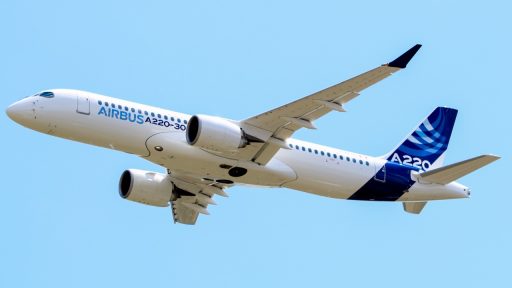
On paper, the A220-500 looks like the lowest-risk way for Airbus to answer airlines’ calls for more capacity in the 150 to 180 seat range. Stretching the existing A220 family would let Airbus slot a new variant just below the A320neo, potentially replacing aging A319s and 737-700s while offering better economics on thinner routes. Avolon explicitly lists the A220-500 among the three most plausible 2027 launches, alongside the 777-10X and A350-2000, underscoring how seriously lessors take the idea of a larger A220.
The obstacle is not demand but money. Airbus has been clear that any decision on the A220-500 will be paced by the program’s path to profitability, with Airbus CEO Guillaume stressing that a stretch will only come once the existing A220 line is closer to break-even. Airbus has already set a target to lift A220 output to around 14 aircraft per month by 2026, although reporting suggests that goal may slip toward the end of the decade as the company juggles supply chain constraints and potential industrial restructuring, according to Airbus focused analysis. In that context, a 2027 launch for the A220-500 would signal that Airbus believes the program has finally turned the financial corner.
777-10X and the long-haul capacity race
At the other end of the spectrum, the 777-10X would push Boeing’s 777X family to its maximum size, targeting airlines that want even more seats than the 777-9 without stepping into the ultra-large niche once occupied by the A380. The concept, referenced by Avolon alongside the A220-500 and A350-2000 as a leading 2027 candidate, would build on the same composite wing and advanced systems as the existing 777X, but with a longer fuselage to capture high-density trunk routes, as highlighted in Avolon’s program list. For Gulf carriers and some Asian airlines, a 777-10X could become the workhorse for mega-hub operations linking cities like Dubai, Riyadh and Delhi to Europe and North America.
The timing, however, is complicated by Boeing’s existing challenges with the 777X. The company has already acknowledged that the 777X will enter service no earlier than 2027, with certification issues pushing deliveries back and forcing airlines to adjust their fleet plans, as detailed in coverage of Deliveries Delayed To 2027. Video analysis of the latest delay describes how the trip 7X, Boeing’s newest long-haul product, has been pushed back by another year to 2027, a blow to the plane maker and its airline customers that is unpacked in a separate look at the Boeing 777X Delayed timeline. Against that backdrop, launching a 777-10X in 2027 would be a bold statement that Boeing is ready not only to certify the baseline 777X but to double down on the platform’s future.
A350-2000: Airbus eyes the “mega jet” crown
The A350-2000, a proposed stretch of the A350 family, is Airbus’s answer to the same high-capacity long-haul segment the 777-10X would target. The idea gained fresh momentum when, at the 2025 Dubai Air Show Airbus quietly signaled interest in a larger A350, reigniting what one detailed video analysis describes as a race for the next “mega jet” between the A350-2000 and Boeing’s largest 777X, as explored in coverage of the Dubai Air Show developments. A separate deep dive into the A350-2000 versus 777-10 frames the contest as a battle for the “king” of long-haul, noting how post-pandemic travel demand has surged past even the most optimistic projections and revived interest in very large twinjets, a theme unpacked in a video on Which Reigns The.
For Airbus, the A350-2000 would leverage an existing, proven platform while offering airlines a step up in capacity without the complexity of a double-decker. Industry commentary suggests the aircraft could be positioned as part of a broader “NEXT” strategy, with one widely viewed explainer arguing that an Airbus NEXT A350-2000 would “shock” the industry by resetting expectations for range and efficiency in the largest twin-engine category, as discussed in a video on Airbus NEXT. Avolon’s decision to list the A350-2000 alongside the 777-10X and A220-500 as the three most likely 2027 launches reflects a belief that airlines will want a counterweight to Boeing’s biggest 777X, particularly in markets like the UAE and Saudi Arabia where national carriers are building global super-hub strategies.
Why 2027, and which program moves first?
The choice of 2027 as the likely launch window is not arbitrary. Avolon’s own 2026 outlook notes that lessors are poised to benefit from a structural re-rating as airlines lean more heavily on leased capacity to bridge the gap between demand and the limited number of new aircraft available, a dynamic spelled out in its 2026 outlook. By 2027, the current wave of narrowbody and widebody deliveries will still be working through massive backlogs, but airlines will have clearer visibility on post-pandemic demand patterns and the performance of existing new-generation types, creating a sweet spot for committing to the next big thing. Avolon’s forecast that global airline profits could top $41 billion in 2026, combined with its expectation that carriers will continue to enjoy favorable market conditions, as reported in Its forecast, reinforces the idea that airlines will be financially positioned to place large launch orders.