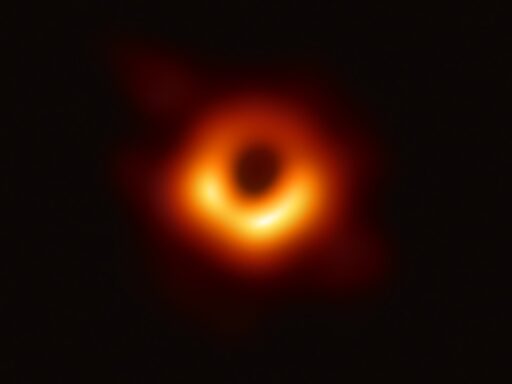

Astronomers have just watched a black hole tear apart a star so massive it has been likened to a “Super Sun,” turning a distant galaxy into a brief, blinding beacon. The flare was so intense and so fast that researchers now suspect they may be seeing a new twist on how black holes feed, one that makes stellar destruction look almost casual. I see this event as a turning point, not only in how we picture black holes eating stars, but in how we map the hidden population of these monsters across the universe.
When a “Super Sun” becomes a quick snack
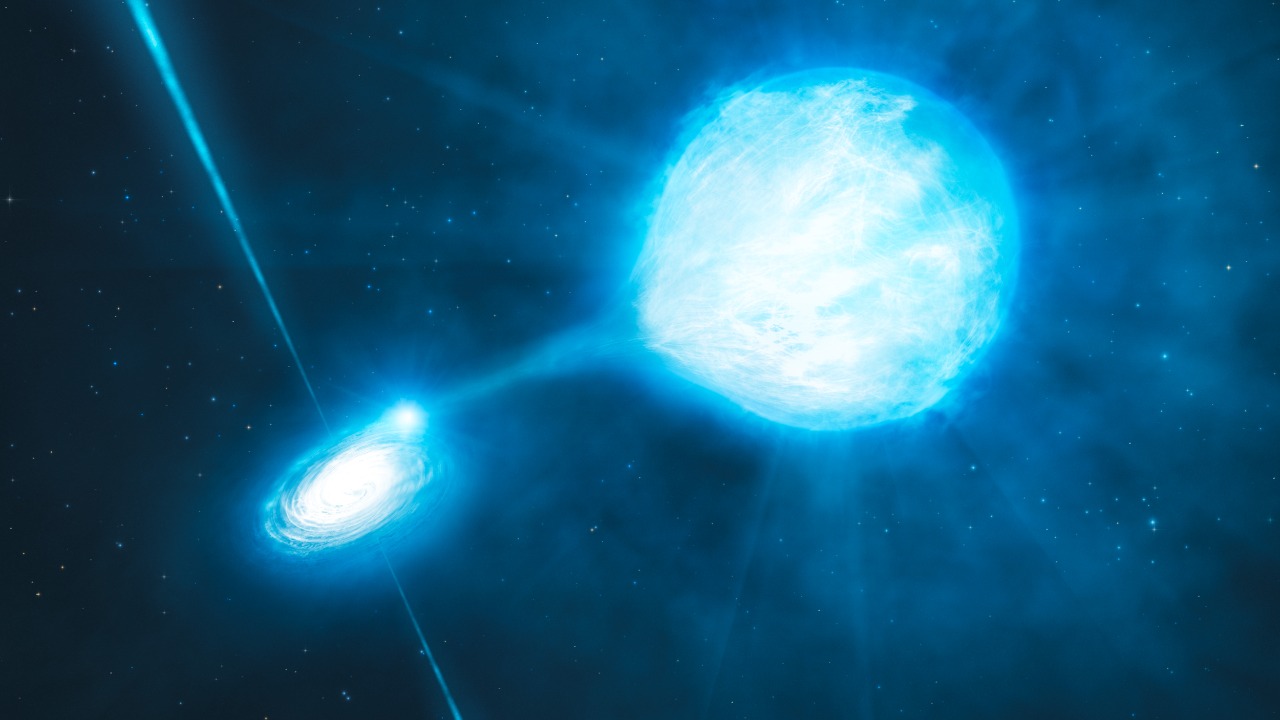
The core drama centers on a giant star that wandered too close to a supermassive black hole and was caught in its tidal grip. As the star spiraled inward, its gas stretched and twisted into a whirlpool, then began to peel away in luminous streams that made the whole system flare with extraordinary power. Astronomers describe the doomed star as a kind of “Super Sun,” a way of capturing both its huge mass and the sheer violence of the encounter as the black hole shredded it bit by bit while the stellar material whirlpooled like a puppet in the vortex of its tidal forces, a scene reconstructed from detailed modeling of the tidal forces.
What makes this particular outburst stand out is how quickly it brightened and faded, and how blue and energetic its light appears. Astronomers suspect the flare belongs to a rare class known as a Luminous Fast Blue Optical Transient, or LFBOT, a label that signals both its color and its speed. In this case, the event, which unfolded over a few days between January 5 and 8, has been nicknamed by some researchers as a kind of cosmic “quick snack,” because the black hole appears to have gulped down a significant fraction of the star in a remarkably short time, a pattern that fits the emerging picture of LFBOT behavior.
A record flare and a new class of cosmic blasts
This “Super Sun” event is not happening in isolation. Over the past year, astronomers have reported a record-setting flare from another supermassive black hole that ripped apart a huge star and produced a superflare roughly 10 trillion times brighter than the Sun, a blast so extreme it has been described as the Biggest black-hole outburst ever seen. In a separate case, a carefully monitored tidal disruption produced what researchers called a record flare, with an artist’s concept showing a supermassive black hole surrounded by a glowing disk of stellar debris as the doomed star met its end, a scenario reconstructed from multiwavelength data on the Record Flare. Together, these events show that when conditions are right, black holes can convert a single star into a beacon that briefly outshines entire galaxies.
At the same time, a different set of observations has revealed that some of the most mysterious bright blue blasts in the sky are almost certainly tied to black holes shredding stars. One such outburst, labeled AT 2024wpp, appears to have come from a star with a mass around 10 times that of the Sun, torn apart in a compact galaxy whose central black hole is now thought to be the trigger for these fast, blue flashes, a conclusion drawn from careful modeling of the AT 2024wpp data. In parallel, a separate “Whippet” event has been measured at roughly 400 billion times the power of the Sun, a Rare and Awe Inspiring Phenomenon that has stunned researchers and underscored just how efficient black holes can be at turning infalling matter into light, according to analyses of the Whippet flare.
Hidden black holes, new telescopes, and what comes next
To understand how common these stellar massacres really are, astronomers are turning to new instruments that can see through dust and gas that hide galactic centers. The James Webb Space Telescope, or JWST, has now been used to identify star-shredding black holes buried inside much dustier, gas-veiled galaxies than those typically surveyed before, with one study in Astrophysical Journal Letters showing that these hidden systems can host powerful tidal disruptions that would be almost invisible in optical light alone, a breakthrough that relies on JWST’s infrared sensitivity to uncover dustier galaxies. I see this as a crucial step, because it suggests that the spectacular flares we have caught so far may be only a small fraction of the true population.
Closer to home, NASA has used the Hubble Space Telescope to watch a black hole slowly eat a wandering star, capturing an unusually close glimpse of a system where a compact object can devour a bypassing star over time rather than in a single explosive burst, a process reconstructed from detailed monitoring by NASA and Jet Propulsion Laboratory Recent observations. These slower “snacks” complement the fast, blue transients and record flares, giving astronomers a fuller menu of how black holes feed. When I put all of this together, from the “Super Sun” torn apart in days to the Whippet blast hundreds of billions of times more powerful than the Sun, the emerging picture is of a universe where black holes are not just silent sinks, but dynamic engines that light up the cosmos whenever an unlucky star strays too close.