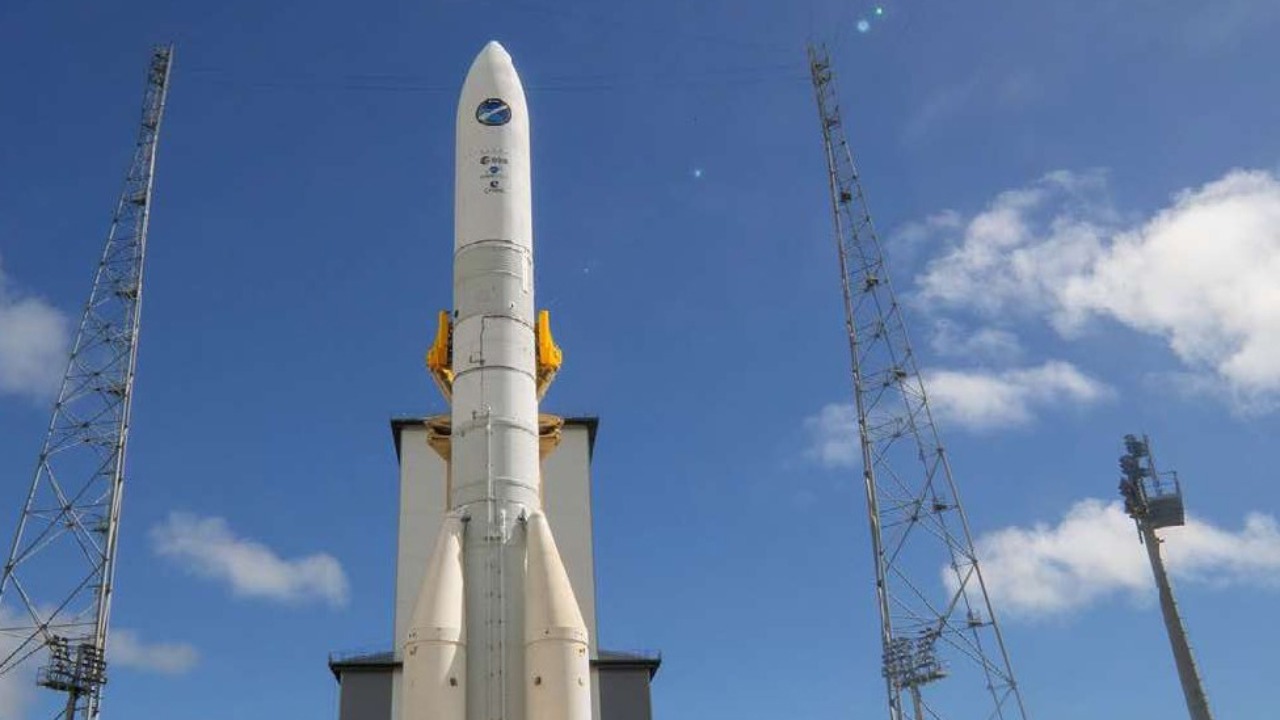

Europe’s new Ariane 6 rocket has successfully launched two Galileo navigation satellites from the Guiana Space Centre in Kourou, placing them into orbit for the European Union’s satellite navigation system. The mission, described as Ariane 6 successfully launching two Galileo satellites from Kourou, marked the first pair of Galileo satellites to fly on this new European launcher and added two new Galileo satellites to the EU’s navigation constellation.
Launch from Kourou: Mission Overview
The latest flight of the Ariane 6 rocket lifted off from the Guiana Space Centre in Kourou, French Guiana, carrying a pair of EU navigation payloads dedicated to the Galileo system. According to reporting that described how Europe’s Ariane 6 rocket puts EU navigation satellites in orbit, the vehicle followed a precisely planned ascent profile to reach medium Earth orbit, where Galileo satellites operate to provide global positioning and timing signals. For European institutions and industry, the ability to originate such a mission from Kourou reinforces the strategic value of the equatorial launch site, which offers performance advantages for high‑energy orbits and anchors a long‑standing European presence in French Guiana.
Mission controllers confirmed that the flight successfully launched two Galileo satellites from Kourou, validating Ariane 6 as a workhorse for Europe’s navigation infrastructure. Coverage that characterized the operation as Ariane 6 successfully launching two Galileo satellites from Kourou highlighted that the rocket achieved the targeted deployment conditions required by the Galileo system, a critical benchmark for any launcher entrusted with high‑value institutional payloads. For stakeholders across the European Union, from defense planners to civil aviation regulators, the confirmation that Ariane 6 can reliably place navigation satellites into their precise orbital slots directly supports continuity of services that underpin everything from airline routing to smartphone navigation apps.
First Galileo Pair on Ariane 6
The mission also marked a debut, with Europe’s Ariane 6 rocket launching its first pair of Galileo navigation satellites and demonstrating that the new launcher is ready to assume a central role in sustaining the constellation. Reporting that described how Europe’s Ariane 6 rocket launches its 1st pair of Galileo navigation satellites underscored that this was not a test flight but a fully operational mission carrying critical infrastructure for the European Union. For program managers, flying Galileo satellites on Ariane 6 signals a transition from development to routine service, a shift that affects planning cycles, industrial contracts, and the cadence of future launches needed to maintain and expand the constellation.
At the same time, the launch was framed as Ariane 6 rocket launches two new Galileo satellites, expanding the operational fleet in medium Earth orbit and reinforcing the system’s resilience. Coverage that described how the Ariane 6 rocket launches two new Galileo satellites emphasized that each additional spacecraft increases both capacity and redundancy, which is essential for continuous global coverage. For users ranging from logistics companies tracking container ships to carmakers integrating Galileo receivers into models like the Volkswagen ID.4 or the Peugeot 308, the arrival of new satellites can translate into more robust signals, improved availability in urban canyons, and better protection against outages or localized interference.
Strengthening the EU’s Navigation Constellation
The mission has been widely framed as a step that puts EU navigation satellites in orbit and strengthens Europe’s autonomy in positioning, navigation, and timing services. Reporting that described how the Ariane 6 rocket puts EU navigation satellites in orbit highlighted the strategic dimension of operating an independent constellation that is not subject to external control or policy shifts from non‑European providers. For policymakers in Brussels and national capitals, this autonomy is not only a matter of prestige but also a practical requirement for critical infrastructure, including power grids, financial networks, and emergency response systems that rely on precise timing signals.
By adding two new Galileo satellites, the launch boosts the capacity and redundancy of the Galileo system and helps ensure that the network can withstand individual satellite failures or maintenance outages without degrading service. Coverage that focused on how two new Galileo satellites were placed in orbit noted that each spacecraft contributes additional signal channels and orbital diversity, which can improve accuracy for end users. For sectors such as precision agriculture, where farmers use satellite‑guided tractors and drones to optimize fertilizer use, or ride‑hailing platforms that depend on accurate geolocation in dense city centers, incremental improvements in Galileo’s performance can have direct economic and operational benefits.
Technical and Programmatic Milestone for Ariane 6
From a launch‑vehicle perspective, the operation has been characterized as Ariane 6 successfully launching two Galileo satellites from Kourou, a key success for Europe’s next‑generation launcher program. Reporting that described the mission as Ariane 6 successfully launching two Galileo satellites from Kourou pointed to the rocket’s performance on a demanding profile that required precise orbital insertion and careful management of mission phases. For engineers and industrial partners across the Ariane 6 supply chain, including propulsion, avionics, and ground systems teams, the smooth execution of such a complex mission validates design choices and supports the case for using Ariane 6 on a wide range of institutional and commercial flights.
Space industry coverage has also stressed that Europe’s Ariane 6 rocket launches its first pair of Galileo navigation satellites as part of a broader shift toward routine service missions, moving beyond initial demonstration flights. Reporting that the Ariane 6 rocket successfully launches 2 Galileo navigation satellites noted that success on a high‑value European mission strengthens confidence among government customers and commercial operators that are evaluating launch options for future spacecraft. For satellite manufacturers planning constellations for broadband, Earth observation, or secure communications, a proven Ariane 6 offers an additional European‑based option in a market that has been increasingly shaped by competitors such as SpaceX’s Falcon 9 and Falcon Heavy.
Regional and Global Impact
European media have highlighted how Europe’s Ariane 6 rocket puts EU navigation satellites in orbit, underlining the strategic importance of the mission for the European Union’s technological and geopolitical standing. Coverage that described how Europe’s Ariane 6 rocket puts EU navigation satellites in orbit framed the launch as a visible demonstration of Europe’s ability to field both an independent navigation constellation and a domestically developed heavy‑lift launcher. For regional stakeholders, including smaller EU member states that rely on shared infrastructure, the combination of Galileo and Ariane 6 represents a tangible return on collective investment in space capabilities that support economic growth, security, and scientific research.
International reporting on how the Ariane 6 rocket launches two new Galileo satellites has placed the event in the broader context of global navigation satellite competition, where systems such as the United States’ GPS, Russia’s GLONASS, and China’s BeiDou also vie for users. Coverage that focused on how the Ariane 6 rocket launches two new Galileo satellites noted that each successful deployment reinforces Europe’s position as a full‑fledged provider of global navigation services rather than a passive consumer of others’ signals. For governments and companies outside the EU that integrate multi‑constellation receivers into smartphones, aircraft avionics, or maritime navigation systems, a stronger Galileo constellation offers additional resilience and choice, potentially influencing procurement decisions and standards in sectors from aviation to autonomous vehicles.