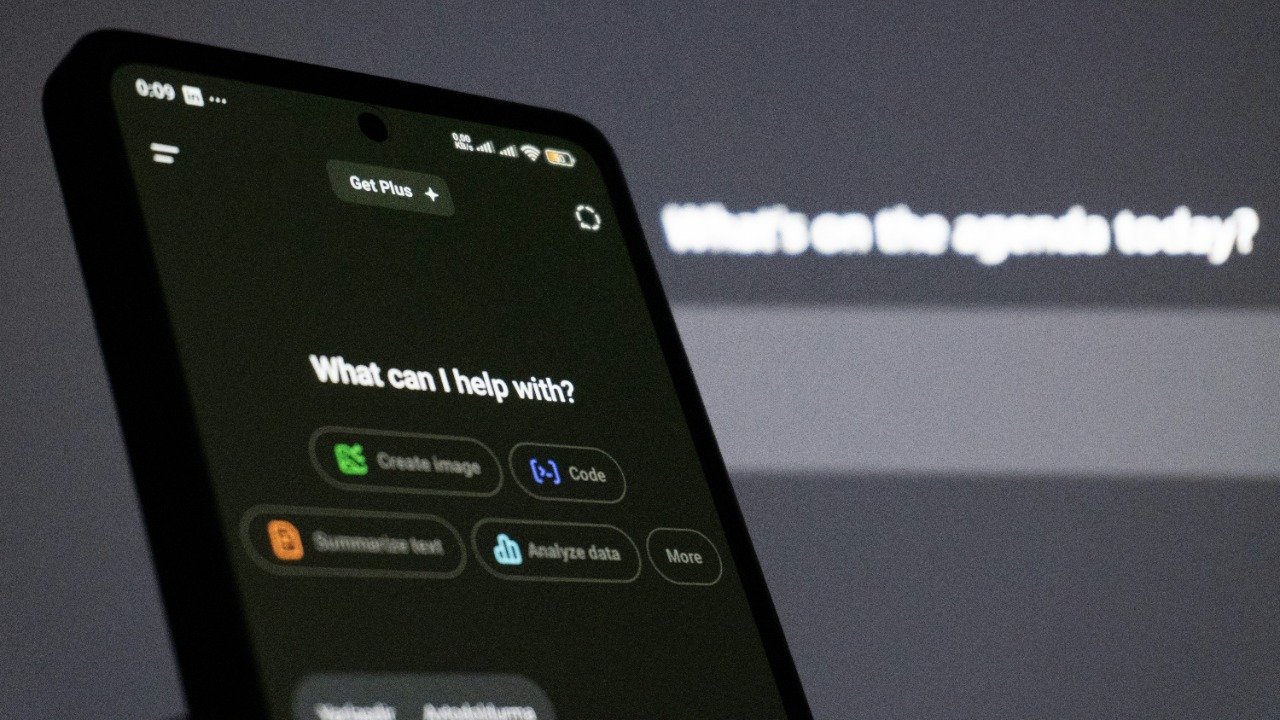

In a recent report, experts warn AI is making your brain work less, arguing that the rise of generative tools is subtly eroding everyday critical thinking. As systems like ChatGPT move from novelty to default assistant, neuroscientists and psychologists are beginning to track how prompt-driven habits might reshape attention, memory and problem-solving in ways that earlier AI tools never did.
Expert Warnings on Cognitive Decline
Neuroscientists quoted in the warning that experts warn AI is making your brain work less describe a clear pattern: when people outsource tasks that once demanded deep focus, brain regions linked to sustained attention and working memory show less engagement. Instead of wrestling with a blank page, a complex spreadsheet or a thorny email, users increasingly type a short prompt and skim the output, a shift that researchers say replaces “effortful construction” with “lightweight supervision.” The concern is not that a single query will dull the mind, but that thousands of such micro-outsourcing decisions could, over time, normalize a lower baseline of mental effort in daily life.
Psychologists cited in the same reporting highlight how generative systems shortcut reasoning processes that used to be central to learning and expertise. In professional settings, marketing teams now begin campaigns from AI-generated concept lists, lawyers draft first-pass arguments from model outputs, and managers ask chatbots to summarize performance data before forming their own view. Several experts argue that this pattern reverses the traditional sequence of thinking, where people first generate and test ideas, then refine them with tools. One cognitive scientist quoted in the report calls the current trend “a quiet trade of original ideation for prompt-tuning,” warning that the shift feels more urgent than anything seen in pre-2023 AI, when tools were narrower and less capable of end-to-end content creation.
Evidence from Recent AI Usage Studies
Researchers examining frequent prompt use report early signs that heavy reliance on generative systems correlates with weaker memory retention. According to the experts who warn AI is making your brain work less, brain activity patterns during AI-assisted tasks show reduced encoding of details compared with tasks completed unaided, suggesting that when a chatbot can always be re-queried, users invest less effort in remembering information. Psychologists in these studies describe a “search engine effect 2.0,” where the old habit of not memorizing facts because they are easily looked up is now extending to arguments, writing styles and even personal reflections, with potential long-term consequences for how knowledge is stored and retrieved.
Case studies of students and workers in the reporting point to diminished analytical skills after intensive AI integration into routines that once demanded step-by-step reasoning. University instructors describe assignments in which essays generated from prompts show fluent language but shallow argumentation, and follow-up oral exams reveal that some students cannot reconstruct the logic that appears in their own submissions. In offices, managers note that junior staff who lean on AI for slide decks or data summaries struggle when asked to defend assumptions or adapt the material on the fly. These examples suggest a departure from traditional learning methods that built competence through repeated practice, and they raise stakes for sectors that depend on deep analytical pipelines, from engineering to public policy.
Stakeholder Impacts: Education and Workplace
Educators responding to the warning that AI prompts are making brains work less are beginning to rethink curricula to preserve independent thinking. Some schools now require students to submit process logs that document how they moved from question to outline to draft, separating their own reasoning from any AI assistance. Others are redesigning assessments around in-class problem solving, oral defenses and handwritten work, in an effort to ensure that grades reflect cognitive effort rather than prompt skill. For teachers, the stakes are high: if foundational years of schooling become dominated by AI-shaped outputs, the next generation may enter adulthood with impressive-looking portfolios but fragile underlying skills.
In the workplace, the same reporting describes teams that increasingly default to AI for decision support, from drafting strategy memos to prioritizing product features. Project leads report that meetings sometimes revolve around editing chatbot-generated options instead of debating first principles, a shift that can narrow the range of ideas considered and subtly align decisions with patterns embedded in training data. Human resources departments worry that over-reliance on AI for performance reviews or hiring shortlists could weaken managers’ own judgment, while also importing hidden biases. Policymakers watching these trends have started to frame AI not only as an economic and ethical issue but as a public health concern for cognitive resilience, pushing for guidelines that keep humans in the loop as active thinkers rather than passive approvers.
Counterarguments and Future Outlook
AI advocates quoted in the expert analyses counter that prompts, used well, can enhance efficiency without causing a net loss in cognitive capacity. They argue that offloading routine drafting or data cleaning frees people to focus on higher-order tasks, much as calculators did for arithmetic. Some technologists point out that generative tools can expose users to a wider range of perspectives and examples than they would encounter alone, potentially enriching creativity and critical thinking when outputs are interrogated rather than accepted at face value. From this view, the problem is not the existence of prompts but the absence of norms that encourage users to challenge and build on what the system provides.
Looking ahead, researchers and practitioners in the reporting propose hybrid AI-human workflows as a way to capture benefits while limiting cognitive risks. Suggested practices include “think first, prompt second” rules, where individuals sketch their own outline or hypothesis before consulting a model, and “reverse prompting,” in which users ask AI to critique their reasoning instead of generating it from scratch. Organizations are experimenting with policies that require human-authored rationales alongside AI-assisted documents, making explicit which parts reflect independent judgment. These strategies reflect a shift from the early hype phase of generative AI, when speed and novelty dominated, toward a more measured approach that treats cognitive health as a design constraint.
Experts also anticipate that regulatory frameworks will increasingly incorporate cognitive impacts into AI governance. Ethics guidelines under discussion in the reporting include transparency requirements that flag AI-generated content in educational and professional contexts, as well as impact assessments that evaluate how new tools might affect attention, learning and decision quality over time. Some policymakers are exploring incentives for products that demonstrably support active learning, such as systems that ask users to explain their goals, test their understanding with questions or reveal intermediate reasoning steps. As these debates evolve, the central question is whether societies can integrate powerful prompt-driven systems in ways that extend human thinking rather than quietly training people to think less.