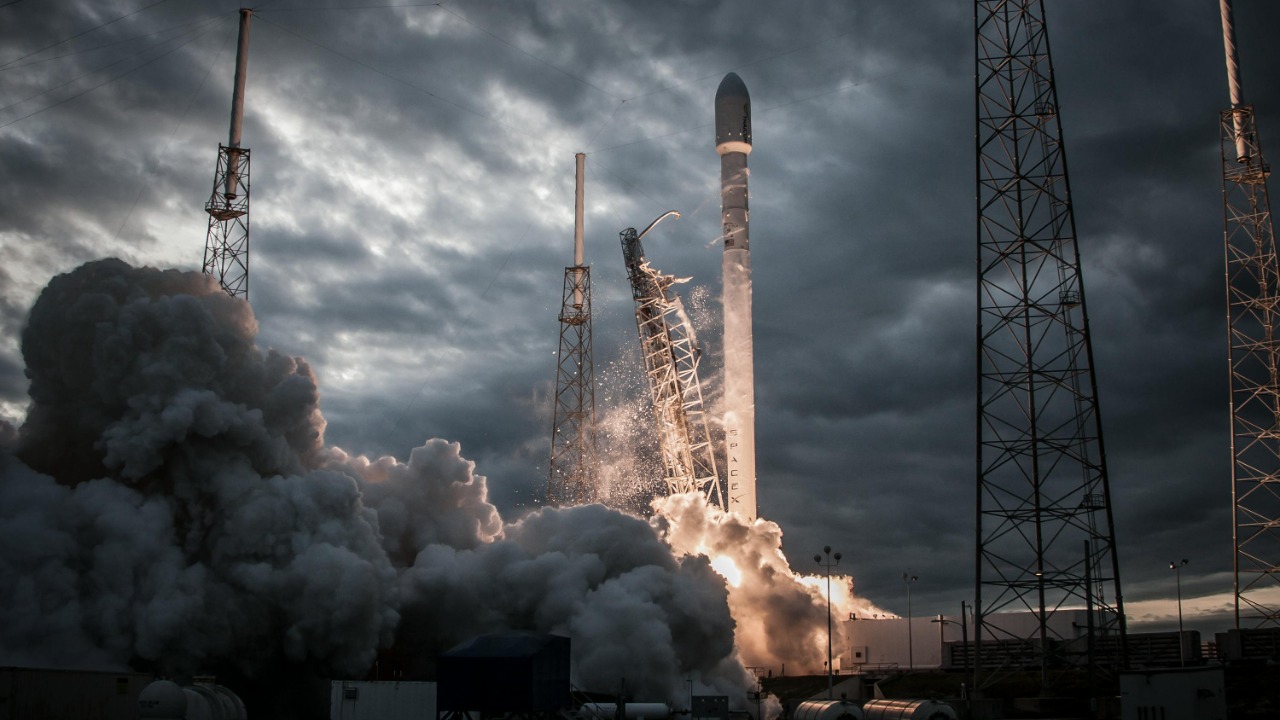

Artificial intelligence is rapidly reshaping spacecraft propulsion by optimizing fuel efficiency and trajectory planning in real time, with simulations from NASA and private firms like SpaceX indicating potential mission cost reductions of up to 30%. Building on machine learning algorithms that mine vast datasets from past launches, these systems can now predict and adjust engine performance mid-flight instead of relying solely on preprogrammed profiles. Looking ahead, the same techniques are being explored for nuclear-powered rockets that could cut Mars journey times from months to weeks, as the U.S. Department of Defense tests prototypes that blend advanced reactors with AI-driven control.
AI’s Role in Optimizing Traditional Chemical Propulsion
Artificial intelligence is already embedded in the control loops of traditional chemical propulsion, where algorithms process high-frequency sensor data to fine-tune thrust vectoring and combustion efficiency in liquid-fueled engines. By comparing live readings of chamber pressure, turbopump speed, injector temperature, and exhaust composition against patterns learned from thousands of prior firings, AI controllers can nudge valves and gimbals in milliseconds to keep engines at peak performance. In recent ion thruster tests cited in reporting on how AI is making spacecraft propulsion more efficient and could even lead to nuclear-powered rockets, similar optimization cut propellant use by 25 percent, a figure that hints at how much margin is still left in legacy chemical systems once they are paired with adaptive software. For launch providers, that kind of efficiency translates directly into lower mass to orbit, more payload capacity, or the ability to stretch mission profiles without redesigning hardware.
European operators are also using neural networks to keep chemical propulsion systems healthy for longer, particularly on missions where a single valve failure can end a spacecraft’s life. Case studies from European Space Agency missions describe onboard models that ingest telemetry from pressure transducers, accelerometers, and thermal sensors to predict anomalies in real time, flagging subtle vibration signatures or temperature drifts that historically would have gone unnoticed until a fault occurred. When these models intervene early, controllers can adjust burn sequences or throttle levels to prevent failures and extend operational life, a priority for agencies that must justify every kilogram of propellant and every hour of engine wear. The same predictive maintenance logic is being applied to high heritage hardware such as RS-25 engines, where adaptive control systems respond to micro-variations in atmospheric conditions during ascent, giving operators a way to squeeze more reliability and performance out of engines that already operate near their design limits.
Breakthroughs in Electric and Hybrid Propulsion Systems
Electric propulsion has become a natural testbed for AI because Hall-effect thrusters and ion engines operate in regimes that are difficult to model with traditional equations alone. In laboratory campaigns focused on Hall-effect thrusters, AI-driven simulations have been used to explore thousands of magnetic field configurations that would be impractical to test physically, searching for patterns that yield higher specific impulse without sacrificing thrust. By training on experimental data that link coil currents, plasma density, and exhaust velocity, these models can propose coil geometries and operating points that push performance beyond what human designers typically select. For satellite operators, even a modest increase in specific impulse can mean years of additional station-keeping capability or the freedom to carry more instruments instead of extra xenon.
Startups such as ThrustMe are extending this approach with reinforcement learning models that directly control plasma generation hardware, allowing software agents to discover how to maintain stable ionization while minimizing power draw. Instead of engineers manually tuning grids, cathodes, and RF power levels through trial and error, the AI agent iteratively adjusts parameters, receives feedback on beam stability and efficiency, and converges on operating regimes that keep ion beams smooth over long durations. That shift from manual calibration to AI automation in gridded ion engines reduces the time and expertise needed to commission new thrusters and can deliver measurable energy savings, a critical advantage for deep-space probes that must stretch limited solar power across years of cruise. As electric and hybrid propulsion systems become standard on commercial constellations and interplanetary missions, these AI tools are setting expectations that propulsion subsystems will self-optimize throughout their lifetimes rather than remain locked to launch-day settings.
Emerging AI Applications for Nuclear Thermal Propulsion
Nuclear thermal propulsion is emerging as the most ambitious frontier for AI in spaceflight, because managing a compact reactor inside a rocket stage requires continuous, high-stakes decision making. In prototypes associated with the Defense Advanced Research Projects Agency’s DRACO program, engineers are using AI models to simulate nuclear reactor behaviors and safely manage fission reactions in designs that aim for 10 times the efficiency of chemical rockets. These models track neutron flux, fuel temperature, and coolant flow in fine detail, then recommend control rod positions and propellant flow rates that keep the reactor within safe margins while still delivering the high exhaust velocities needed for rapid deep-space travel. If such systems prove reliable, they could cut Mars journey times from months to weeks, reshaping mission architectures for both crewed and robotic exploration and changing how agencies think about launch windows and life support.
Machine learning is also being applied to the materials science challenges that have historically constrained nuclear thermal propulsion. By training on data from high temperature tests, radiation exposure experiments, and computational fluid dynamics runs, AI models can predict how candidate alloys and composites will respond to the intense heat and neutron bombardment inside a nuclear rocket core. Those predictions help designers identify configurations that withstand extreme temperatures without meltdown risks, reducing the need for costly full-scale prototypes. Collaborative efforts between NASA and Roscosmos are exploring bimodal nuclear systems in which AI optimizes propellant flow for both high thrust burns and lower power electricity generation, signaling a move toward reusable nuclear stages that can serve as both propulsion units and power plants. For mission planners, that dual capability could enable sustained operations in deep space without the mass penalties of separate propulsion and power systems.
Challenges and Ethical Considerations in AI-Enhanced Propulsion
The same AI capabilities that make propulsion more efficient also raise difficult questions about data control, transparency, and international trust. Training high performance models requires access to detailed launch telemetry, engine health logs, and proprietary design information, which companies and agencies are often reluctant to share. When AI systems are developed using datasets that overrepresent certain vehicle types, operating environments, or national programs, there is a risk of algorithmic bias that could disadvantage partners in international collaborations or lead to control strategies that are less safe for underrepresented configurations. For stakeholders who depend on cross-border missions and shared launch infrastructure, these data privacy and equity issues are not abstract, they influence who gets to participate in the next generation of propulsion research and who must accept black box software supplied by others.
Regulators are also grappling with how much autonomy to grant AI in propulsion, particularly for nuclear variants that carry unique safety and geopolitical implications. The Federal Aviation Administration and the International Telecommunication Union are cited in discussions about rules that would require fail-safe overrides and clear human authority over any AI that can change thrust levels, reactor states, or trajectory in flight. Those requirements intersect with ongoing research into explainable AI, as engineers work to mitigate black box behavior and provide operators with understandable rationales for each control action in high-stakes propulsion systems. For governments and the public, confidence in AI-enhanced propulsion will depend not only on performance metrics but also on the ability to audit decisions after anomalies, assign responsibility when things go wrong, and ensure that safety margins are not quietly eroded in the pursuit of efficiency.