
The race to turn the Moon into an industrial outpost is no longer a sci‑fi thought experiment. A U.S. startup now says it will be shipping lunar resources home by 2029, and a growing cast of rivals is lining up its own robots, rovers and excavators to compete for the same dusty prize. What is emerging is an early blueprint for a space resources industry that could reshape energy, computing and even terrestrial mining.
At the center of this push is a plan to strip tiny quantities of valuable material from vast volumes of lunar soil, then send carefully packaged payloads back to Earth. The timelines are aggressive, the engineering is brutal and the legal framework is still evolving, yet capital is flowing in and government customers are already signing contracts.
The 2029 bet: Interlune’s helium‑3 pipeline from regolith to Earth
The most concrete pledge to start lunar mining by 2029 comes from Interlune, a Seattle based natural resources company that wants to harvest Helium‑3 from the Moon’s surface and sell it for quantum technology and next‑generation nuclear fusion material. Interlune has laid out a stepwise plan to use robotic collection and automated processing of regolith, then establish a pilot plant on the Moon’s surface that can operate without crews on site, a sequence detailed by CTO Gary Lai in a technical roadmap that treats lunar soil as a feedstock rather than a backdrop for exploration Interlune. The company has already raised $18 million in venture capital seed funding and, through Interlune Corporation, secured a $4.8 million Texas Space Commission grant to build a Texas based R&D facility that will support hardware and process development for deliveries on Earth beginning in 2029 Interlune Corporation. That timeline is reinforced by a separate commitment that Interlune will fly its first resource mission to the lunar surface no later than April 2029, with the goal of returning Helium‑3 to Earth for commercial use no later than April 2029.
Interlune is not just pitching a vision, it already has paying customers. In SEATTLE, the company announced that the U.S. Department of Energy Isotopes program agreed to buy Helium‑3, marking a historic agreement that effectively pre‑sells part of the future lunar output and validates the idea that government agencies will underwrite early space resources Department of Energy Isot. Interlune has also secured contracts with the US DoE and other buyers for Helium‑3 deliveries, a milestone highlighted in industry briefings that describe how these binding deals de‑risk the business case for lunar mining Interlune secures contracts. The company’s leadership frames Helium‑3 as a dual‑use resource, with one plan focused on quantum computing on Earth and another on future fusion reactors, a narrative echoed in coverage that describes how Interlune plans to gather scarce Helium from the Moon and ship it back to Earth from GOLDEN, Colorado operations hubs Helium. A separate analysis notes that Interlune has signed an over $300 m, or $300 million, agreement to supply Helium‑3 to Maybell, whose refrigerators cool quantum devices to near‑absolute zero, underscoring how lunar resources are already being woven into terrestrial supply chains $300 m.
Robots, excavators and micro‑rovers: how the hardware race is taking shape
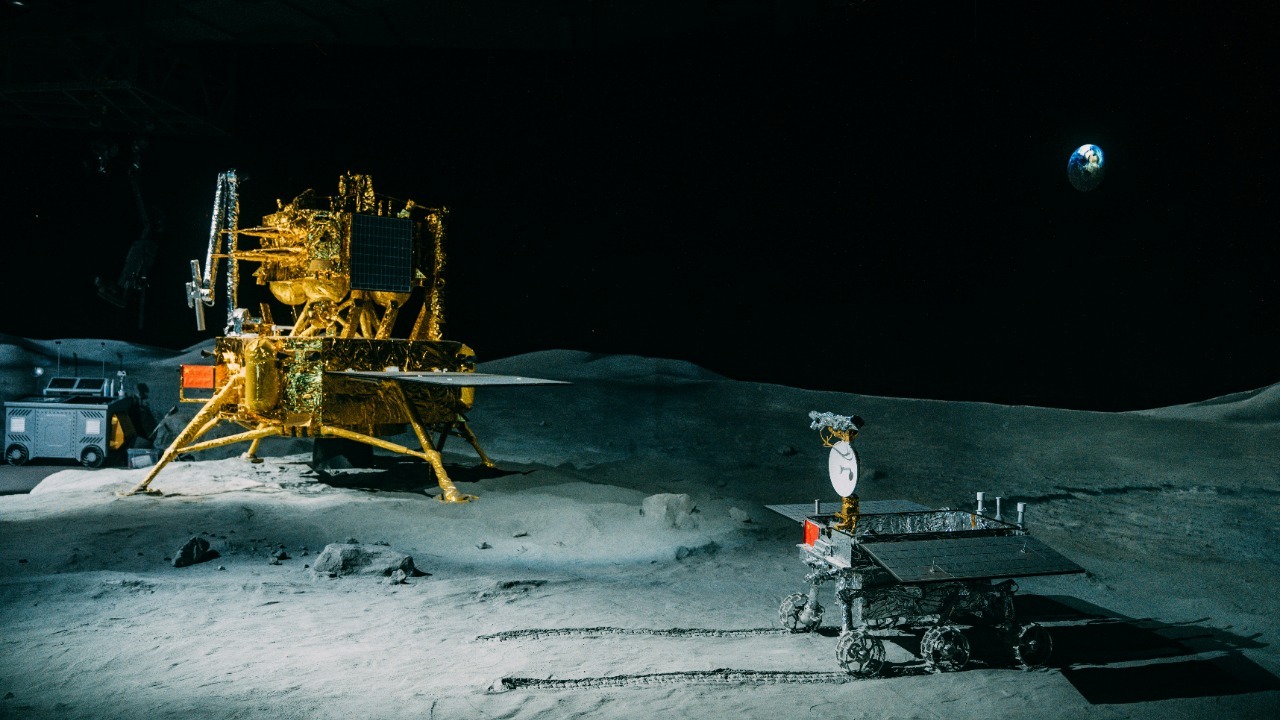
Turning that business model into reality depends on a new generation of machines built for low gravity, abrasive dust and extreme temperature swings. Interlune has partnered with Vermeer on a prototype lunar excavator that adapts terrestrial trenching know‑how to the Moon, with early tests focused on how an electric excavator can dig and strip regolith before feeding it into processing units, a design described as a prototype for future Helium‑3 mining systems prototype. Promotional material around this effort leans into bold rhetoric, with one sustainability focused outlet summarizing the pitch as “We’re Going to Dig the Moon Dry,” describing how a U.S. Startup Unveils Lunar Excavator to Harvest Helium‑3 and Dominate Space Energy in a bid to redefine global energy dynamics and geopolitics Going. Another report, titled Mining the Moon Begins, describes how a US Firm is preparing a Robot to Extract Rare Helium and Launch Payloads Back to Earth for Futuristic En uses, highlighting the ambition to close the loop from excavation to reentry capsules Mining the Moon Begins. A companion sustainability analysis reiterates that Mining the Moon Begins with a Firm deploying a Robot to Extract Rare Helium and Launch Payloads Back to Earth for Futuristic En, while also warning that this push will test international space regulations and environmental norms beyond Earth orbit Firm.
Other industrial players are positioning their own technology for “extreme applications” that could include lunar work. Komatsu, a heavyweight in terrestrial mining equipment, has highlighted innovation for extreme applications at CES, signaling how its autonomous haulage and remote operation systems might migrate from open‑pit mines to off‑world projects as partnerships mature Komatsu. A separate mining industry briefing notes that Komatsu has a contract beginning in 2026 that will extend over the first five years of a major project, described as the company’s first significant mini partnership and a sign of the growing partnership between the two companies involved, a template that could be replicated in lunar ventures Komatsu. On the exploration side, ispace Europe SA has developed the TENACIOUS micro rover, which is expected to launch in 2026 to conduct technology demonstrations on the Moon’s surface, and a separate video of ispace Europe’s Tenacious Moon Micro‑rover shows how Europe is building its own robotic foothold in lunar exploration for the European community TENACIOUSEurope. These hardware efforts sit alongside asteroid focused ventures like Asteroid Mining Corporation and Planetary Resources, which are listed among key competitors in a space mining market report that tracks End User Industry demand from Defense, electronics manufacturing, renewable energy, scientific research and the space sector itself End.
Rivals, markets and the scramble for lunar resources
Interlune is not alone in targeting the Moon’s resources, and the competitive landscape is already international. In TOKYO, ispace and Asteroid Mining Corporation Agree to Pursue Future Mission to the Moon, a partnership that explicitly links lunar exploration with future resource extraction and involves teams in the United States and Japan Asteroid Mining Corporation Agree. Another ispace announcement describes how TENACIOUS micro rover missions will test technologies that could later support resource prospecting, effectively turning each landing into a pathfinder for commercial mining Dec. Meanwhile, a broader survey of the sector notes that Space Startups Race to Mine Moon and Asteroids for Billion Dollar Resources, with a virtual image depicting Interlune’s lunar ambitions and highlighting how Helium‑3 is being framed as a next‑generation nuclear fusion material that could justify high launch and development costs Space Startups Race. That same competitive map includes asteroid focused companies and notes how the space mining market is being pulled by demand from sectors as varied as Defense and renewable energy, suggesting that lunar Helium‑3 is only one piece of a much larger puzzle Defense.
Interlune is already moving to secure its share of that future market. The company has teamed up with Astrolab to send a camera to the Moon for a Helium‑3 survey, a mission that will scout promising regolith deposits before heavy hardware is dispatched, and reporting notes that Interlune was founded in 2020 and, In May, announced this survey as part of its early campaign to de‑risk site selection In May. A separate podcast briefing underscores that Interlune has secured first customers for helium‑3 lunar mining, with contracts that include the Departm of Energy and other buyers, effectively locking in revenue ahead of launch Departm. Analysts tracking the sector point out that this lunar rush is unfolding alongside parallel efforts to mine asteroids, with companies like Asteroid Mining Corporation and Planetary Resources appearing in market forecasts that also flag AstroForge, whose own mission concepts focus on extracting metals from near‑Earth objects rather than the Moon AstroForge. As these plans advance, the phrase Mining the Moon Begins is shifting from a headline to a literal description of how a new class of Firm, Robot and excavator is being built to Extract Rare Helium, Launch Payloads Back and deliver resources to Earth for Futuristic En, setting up a decade in which lunar dust becomes a contested commodity rather than a distant backdrop Launch Payloads Back.