
Far beneath Antarctica’s ice sheet, our planet’s gravity field dips to its lowest value anywhere on Earth, forming what geophysicists call the Antarctic Geoid Low. Researchers now offer a clear explanation for how this extreme gravity hole formed, tying it to deep mantle motions and a chain of ancient tectonic events. By reconstructing how rocks have shifted hundreds of kilometers below the surface, they show that the continent’s weakest gravity is the outcome of a very long, very slow planetary story.
Tracing that story reveals how the gravity anomaly grew from a subtle feature into the strongest gravitational low on the planet between about 50 and 30 million years ago. The same forces that sculpted this invisible hollow also influenced when and how Antarctica froze, and they continue to shape how its ice sheet and surrounding oceans respond to climate change today.
What a gravity hole really is
A gravity hole is not a void or a tunnel under the ice, but a region where Earth’s gravity is measurably weaker than average. Satellite measurements show that the Antarctic Geoid Low marks the deepest dip in the global geoid, the hypothetical sea level surface shaped by variations in mass inside our planet. In practical terms, a plumb line would hang a tiny bit differently here than it would over the equator or most other continents, because the pull from below is slightly less intense.
Similar but smaller anomalies appear around the globe, often linked to dense mountain roots or lighter, hotter mantle regions, yet the feature beneath Antarctica is in a class of its own. Gravity varies over the Earth’s surface for many reasons, but the new work confirms that this polar low is the strongest single gravitational anomaly on the planet, not a side effect of the ice sheet alone. Researchers at the Antarctic gravity study emphasize that the key signal comes from deep rock structures, which subtly reshape the geoid far above.
The deep-time origin story beneath the ice
Explaining how such an extreme low developed means following the continent back through deep time, when Antarctica sat in a very different position and climate. Earlier reconstructions show that the Antarctic Geoid Low started off weaker, then, between about 50 and 30 million years ago, the anomaly intensified as tectonic plates shifted and cold slabs of oceanic crust sank into the mantle. That interval coincides with major reorganizations of plate boundaries around the Southern Ocean, which changed how dense material was distributed beneath the continent.
New research by geoscientists from the University of Florida reconstructs this evolution by combining plate motion histories, seismic images of the mantle, and numerical models of mantle flow. Their simulations show how subducted slabs and slowly rising hot rock reconfigured the deep structure under Antarctica over tens of millions of years, gradually carving out the present-day geoid low. In this view, the gravity hole is not a static oddity, but the frozen imprint of long-lived circulation patterns in Earth’s interior.
How mantle flow sculpts the Antarctic Geoid Low
At the heart of the new explanation is the behaviour of the mantle, the layer of rock that extends from just below the crust down to the core. Although it is solid on short timescales, the mantle flows very slowly over millions of years, carrying cold, dense slabs downward and allowing hotter, lighter regions to rise. The team’s models indicate that a broad region of relatively light mantle material now sits beneath Antarctica, reducing the gravitational pull in that area and creating the Antarctic Geoid Low measured at the surface.
According to the University of Florida collaborators, this pattern emerged as slow mantle motion rearranged deep density contrasts and thickened parts of the lithosphere under the continent. The same work highlights that the anomaly is tightly linked to the three-dimensional structure inside Earth, not just to the weight of the ice sheet resting above. When the simulated mantle flow is matched to satellite gravity data, the fit is strong enough to show that the Antarctic Geoid Low is a direct consequence of these sluggish but persistent interior currents.
A global effort to read Earth’s interior
Tracing this story required far more than a single model run, and international teams stitched together multiple lines of evidence. Researchers at the Institut de Physique du Globe de Paris built on seismic tomography, which uses earthquake waves to map fast, cold and slow, hot regions in the mantle, then linked those structures to the gravity field. Their synthesis, described in work on the deep-time story beneath Antarctica, shows how the continent’s present geoid low lines up with a complex pattern of buried slabs and upwelling mantle.
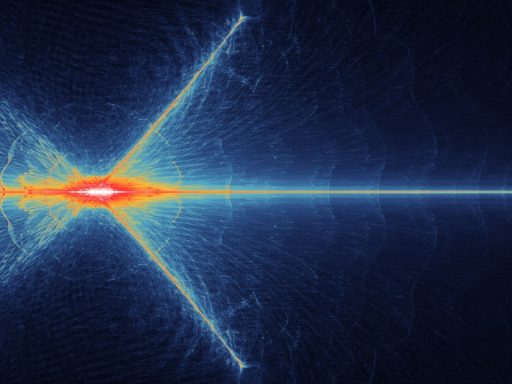
On the modelling side, the same collaboration relied on high resolution simulations that track how density variations produce surface gravity signals, then checked those predictions against satellite-derived maps of the Antarctic Geoid Low. The study’s core results are presented in the peer reviewed article at s41598-025-28606-1, which ties the evolution of the gravity field to specific phases of plate convergence and breakup. Visualizations of the anomaly, such as the image of the Antarctic Geoid Low, help show how the deepest part of the gravity hole sits beneath East Antarctica, aligned with a broad region of low density mantle.
Why a gravity hole matters for ice and oceans
Understanding this extreme gravitational low is not just an academic exercise, because gravity helps control how ice and ocean water move around the poles. Where gravity is weaker, the geoid surface dips, which slightly reshapes local sea level and the way water flows beneath floating ice shelves. Analyses of the Gravity is weakest beneath Antarctica highlight that this anomaly has implications for regional sea levels and ice stability, especially as climate change accelerates melting at the margins of the ice sheet.
There are also hints that the timing of the gravity hole’s growth may connect to when Antarctica began its transition into a continent-scale freezer. Work summarized in a study on why Antarctica has weaker gravity links the strengthening of the anomaly to the onset of widespread glaciation, suggesting that deep mantle changes and surface climate evolution may be intertwined. As these connections are refined, the Antarctic Geoid Low emerges not just as a curiosity of planetary physics, but as a key part of how we read Earth’s long-term climate history and anticipate future changes at the poles.