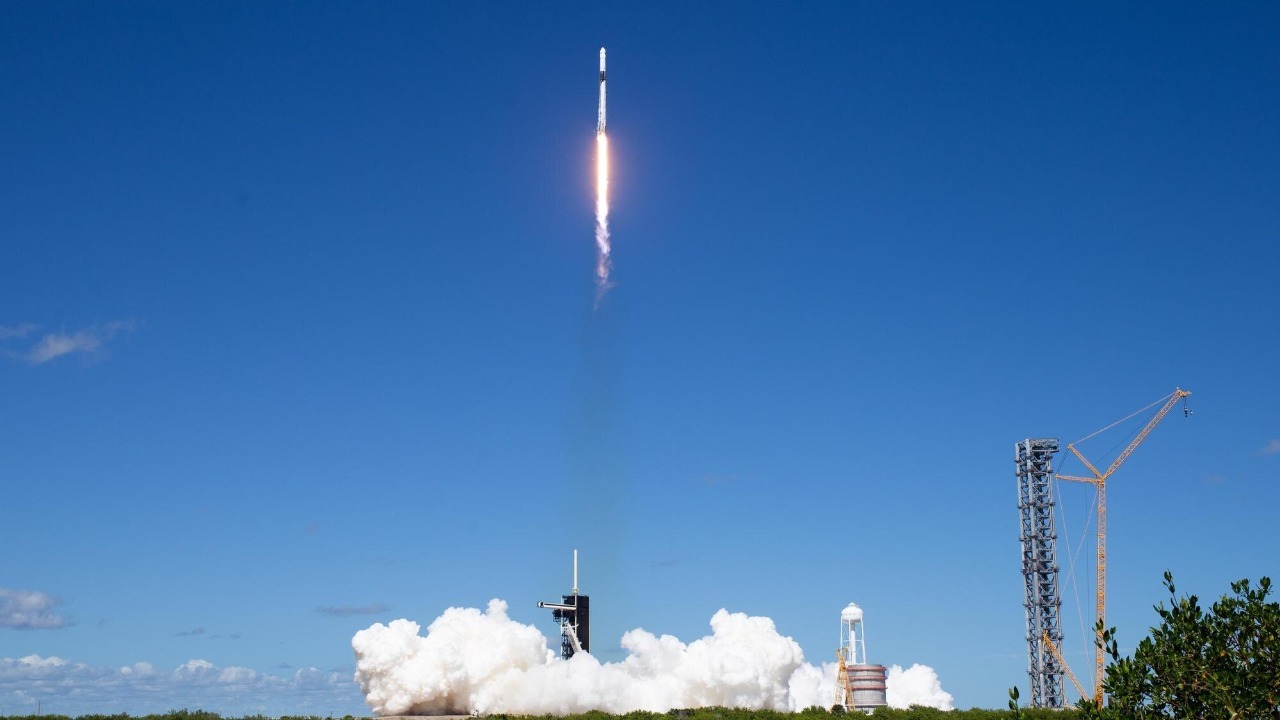

China has added another commercial mission to its growing list of private space achievements, sending an SQX 1 rocket into orbit with the Di’er 1 satellite. The flight confirms that the Hyperbola family is no longer an experimental sideshow but a recurring presence in the country’s launch calendar. With each successful mission, the vehicle strengthens China’s case that commercial providers can reliably support national space ambitions.
The Di’er 1 payload gives this launch more than symbolic value, showcasing how a small solid-fueled booster can place useful satellites into orbit at comparatively low cost. In a market that increasingly demands rapid, responsive access to space, a compact launcher like SQX 1 offers a distinct alternative to China’s larger state-run rockets.
What SQX 1 and Hyperbola-1 bring to China’s launch market
The SQX 1 label refers to a commercial carrier rocket that Chinese reports also identify with the Hyperbola and Shuangquxian family, a small orbital launcher built for quick-turnaround missions. According to official information from China, the vehicle flew from JIUQUAN carrying the Di’er 1 satellite, highlighting how a non-state manufacturer can operate from a national launch complex. That pairing of a commercial rocket with a government range gives SQX 1 a hybrid identity, rooted in state infrastructure but aimed at a competitive marketplace.
From a technical standpoint, Hyperbola-1, also known as Shuangquxian-1 and SQX-1, is a compact four-stage solid rocket sized for small payloads. Public data describe the vehicle as 20.8 m tall, 68 ft in height, and 1.4 m in diameter, with a total mass in the tens of tonnes, which places it firmly in the light-lift class of orbital launchers according to Hyperbola-1. The function of the system is listed as a launch vehicle, with the manufacturer identified as i-Space and the country of origin recorded as Chinese, details that frame SQX 1 as part of a broader commercial push rather than a one-off government project, as shown in the vehicle’s technical Hyperbola profile.
Inside the solid-fueled design and performance envelope
Hyperbola-1’s architecture is built around four solid stages that simplify storage and handling, a choice that trades some performance flexibility for responsiveness and lower operational overhead. The launcher’s configuration, described in independent technical digests, emphasizes stacked solid motors with small liquid-fuel attitude control engines, rather than a liquid-fueled upper stage, which keeps the main propulsion system straightforward while still allowing fine pointing during orbital insertion, as outlined in detailed Shuangquxian descriptions. This mix of solid thrust with limited liquid control is well suited to missions like Di’er 1 that prioritize quick access to standard low Earth orbits.
Performance figures place Hyperbola-1 in the same general category as other small launchers that target sun-synchronous orbits for Earth observation and technology demonstration payloads. Reference data list its payload capability to low Earth orbit and to higher inclination paths, including a 500 kilometre SSO, which makes it a natural fit for compact satellites such as Di’er 1 that do not require the lift capacity of larger Long March rockets, as seen in the published Hyperbola-1(1) performance tables. In practical terms, that means SQX 1 can serve commercial imaging constellations, experimental communications payloads, or in this case a dedicated Di’er 1 mission, without needing to share a ride on a heavier launcher.
From early setbacks to the Di’er 1 success
The road to the Di’er 1 launch has not been smooth, and that history matters for understanding why this mission carries extra weight inside China’s commercial space sector. Earlier flights of Hyperbola-1 suffered multiple failures, including a string of unsuccessful attempts that left the rocket’s future in doubt, as chronicled in independent Hyperbola launch tallies. That track record placed intense pressure on subsequent missions to demonstrate that the design and operations had matured.
A key turning point came when the rocket returned to flight and successfully reached orbit without carrying an operational payload, a step that showed the basic vehicle could complete a full mission profile again. Public records note that in April 2023 i-Space flew Hyperbola-1 without a satellite, then later the same year the launcher placed the DEAR-1 payload into a 500 kilometre SSO, a sequence that separates the test flight from the subsequent revenue mission, as detailed in the mission history for In April 2023. Against that backdrop, the Di’er 1 launch fits into a pattern of recovery, where each additional success helps shift the narrative from experimental comeback to dependable service.
How Di’er 1 fits into China’s commercial space strategy
China’s decision to fly Di’er 1 on an SQX 1 rocket from JIUQUAN reflects a broader strategy of pairing private launch providers with state-owned infrastructure. Official accounts describe how the SQX-1 commercial carrier rocket lifted off with the Di’er 1 satellite from an inland launch center, a configuration that blends government-managed pads and tracking assets with a vehicle developed by a non-state manufacturer, as reported in the central SQX-1 commercial launch summary. That model mirrors arrangements in other spacefaring countries, where private rockets fly from government ranges while paying for access and services.
Domestic coverage of the same mission emphasizes that China views SQX 1 as part of a growing commercial stable rather than an isolated experiment. Reports describe the launch as a successful flight of an SQX-1 commercial carrier rocket, highlighting both the Di’er 1 payload and the fact that the mission was carried out under a commercial banner, as reflected in detailed SQX-1 commercial carrier accounts. In that context, Di’er 1 is not only another satellite in orbit, it is also a proof point that customers can trust a private Chinese rocket to deliver on contract.
i-Space’s role and the path ahead for SQX 1
The company behind Hyperbola-1, often written as i-Space, has steadily moved from early demonstration flights toward repeat commercial service. Earlier coverage of its activities notes that on April 7 i-Space, described as a Beijing-based space technology company, launched an SQX 1 vehicle from a national satellite launch center in China, an event that signaled the firm’s readiness to compete for real payloads after its test campaigns, as outlined in reports on China Launches Commercial. That earlier mission, combined with the Di’er 1 flight, shows a company trying to turn a prototype launcher into a regular product line.
Analysts who track Chinese launch providers point out that i-Space benefits from being based in Beijing while still drawing on national facilities for its operations. Technical profiles describe a commercial carrier rocket developed by a Beijing company and using a government launch facility, a structure that gives the firm access to proven pads, tracking networks, and safety systems without having to build its own range from scratch, as summarized in background material on Beijing. If i-Space can maintain a run of successful SQX 1 missions with payloads like Di’er 1, it will strengthen the case for more such public-private arrangements in China’s launch sector.