
For the first time, astronomers have watched a star consume one of its own planets, catching in real time a violent finale that had only been modeled and inferred until now. The doomed world, a gas giant roughly the size of Jupiter, spiraled into its aging host and vanished in a brief, brilliant outburst. The same basic script awaits Earth when the Sun swells in its old age, although that cosmic reckoning sits billions of years in the future rather than on any human timescale.
The new observation turns an abstract prediction into a vivid preview of our planet’s distant fate. It shows how a seemingly stable solar system can be rearranged once a star runs out of fuel, and it offers a stark reminder that even long‑lived suns are temporary. I see it less as a cause for panic than as a rare chance to watch, in another corner of the galaxy, the kind of transformation that will eventually erase Earth from the sky.
What astronomers actually saw when a star ate a planet
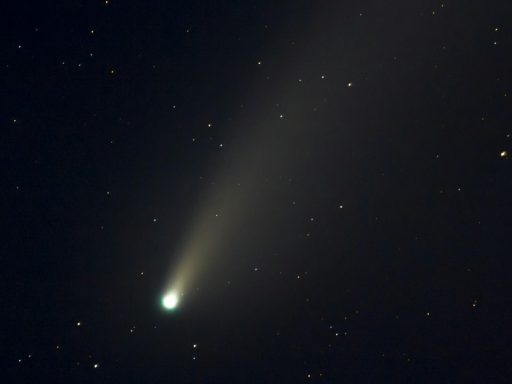
The event that has captured so much attention unfolded around a star cataloged as ZTF SLRN‑2020, located about 12,000 light‑years away. In optical light, telescopes saw the star suddenly brighten over roughly ten days, a flare that initially looked like a modest stellar explosion rather than planetary doom. Only when astronomers combined those optical data with infrared observations did the pattern point to a planet plunging into the star, a scenario later visualized in a dramatic animation that traces the final orbit and impact.
According to detailed follow‑up, the host star is similar to the Sun but older, roughly 10 billion years, and had already begun to puff up as it left its long stable phase. Researchers concluded that a gas giant about the size of Jupiter was dragged into the star’s outer layers, where friction robbed it of orbital energy and sent it spiraling inward. As the planet finally merged with the stellar core, the star swelled to about four times its previous size and brightened by a factor of more than a hundred, a transformation described in depth in a technical report on For the discovery.
A galactic preview of Earth’s far‑future death
What makes this single event resonate is how closely it mirrors what is expected to happen in our own solar system. When the Sun exhausts the hydrogen in its core, it will leave its stable main‑sequence stage and balloon into a red giant, expanding to perhaps 100 to 1,000 times its current radius. One analysis of similar systems notes that a sun‑like star in this phase can swell until it is 100 to 1,000 times its original size, a transformation that will engulf any inner planets that stray too close, as outlined in a detailed study of ZTF SLRN‑2020.
For Earth, that means the Sun will eventually grow to perhaps 100 times its current size and could reach or even overrun our planet’s orbit. One synthesis of stellar evolution work notes that in about 5 billion years the Sun will enter this red giant phase, potentially swallowing Mercury, Venus and possibly Earth (the Earth), a scenario laid out in accessible language in a summary of the new observation. Another explainer on stellar life cycles describes how, when our Sun approaches its red giant phase some 6 billion years from now, its outer layers will expand and cool while the inner system is reshaped, a process mapped out in a chapter on aging stars.
How stars turn into planet killers
The physics that turns a life‑giving star into a planetary predator is straightforward but unforgiving. After stars stop converting hydrogen into helium via nuclear fusion in their cores, gravity begins to win, compressing the core and forcing the outer layers to expand and cool. The study of ZTF SLRN‑2020 notes that when a star leaves its stable main‑sequence stage, nearby planets begin to be pulled inward, a process that can unfold within just a few hundred thousand years as the star grows to tens or even hundreds of times the size of the Sun today, a sequence summarized in a brief explainer.
As the star swells, tidal forces and drag from its extended atmosphere sap orbital energy from close‑in planets, causing them to spiral inward. In the case of ZTF SLRN‑2020, astronomers estimate that the doomed gas giant spent hundreds of thousands of years skimming the star’s surface before finally plunging in, a slow‑motion catastrophe that culminated in the sudden brightening captured in optical and infrared light. A visual breakdown of this process, including the frictional heating and final impact, is presented in a widely shared video that walks through the stages of planetary engulfment.
What this means for Earth, and why it is not an emergency
The obvious question is whether Earth is literally “on deck” to be eaten in the same way, and the honest answer is yes, but on a timescale so vast that it barely intersects with human concerns. One detailed report on the ZTF SLRN‑2020 event notes that Earth may share the same fate when the Sun becomes a red giant in about 5 billion years, a point underscored in a clear explanation that compares the two systems. Another overview of the discovery notes that in May 2023 astronomers shared the news that they had witnessed a star swallowing a planet and that this first‑of‑its‑kind observation offers a preview of what awaits our Earth in the far future, a framing echoed in a reflective blog on the subject.
That does not mean the world is about to end, or that the latest headlines signal an imminent disaster. One commentary on how we process apocalyptic news points out that, at least this time, we know the scary headlines and dramatic tweets do not mean the world is about to end and that, compared with more immediate threats like climate change or nuclear conflict, stellar evolution is not an imminent threat, a perspective laid out in a thoughtful essay. In practical terms, humanity must survive countless other challenges long before the Sun’s slow transformation becomes a direct concern, and any civilization that lasts billions of years would have ample time to adapt, migrate or engineer its way around a swelling star.
How common are star‑planet collisions, and what they reveal about other worlds
Although this is the first time astronomers have caught a star red‑handed eating a planet, the underlying process is thought to be common across the galaxy. One analysis of the ZTF SLRN‑2020 event notes that such engulfments should occur a few times each year in the Milky Way, even if only a fraction are bright or nearby enough to detect, a conclusion detailed in the same research that framed the event as a preview of our future. Earlier work on evolved stars has already hinted at this pattern, including a case where a common star like the Sun, known as KIC 05807616, swelled into a red giant and stripped a giant alien planet, possibly splitting it into two Earth‑size worlds, an outcome described in a detailed account of KIC’s evolution.
New instruments are now letting astronomers see not just the act of engulfment but also its aftermath. The Background In 2020 astronomers spotted an intriguing event labeled ZTF SLRN‑2020, and Over about 10 days optical light from the star brightened while infrared observations later revealed dust and molecules that looked like the remains of a shattered world, a picture sharpened by the James Webb Space Telescope and summarized in a technical overview. A companion video from the discovery team notes that the aging star ZTF SLRN‑2020 is roughly 10 billion years old and that, as the planet came close to touching the surface, frictional forces caused it to rapidly spiral inward before the star inflated and brightened, a sequence narrated in a short clip.