

NASA has quietly shifted the schedule for Artemis 2 again, nudging the first crewed flight of its new lunar program out of its current launch window and into early spring. The change follows a problem-plagued fueling test that exposed a hydrogen leak and forced teams to halt a key rehearsal. The agency is now eyeing a new cluster of dates in March, a subtle but telling adjustment that underscores how unforgiving this mission’s technical and trajectory constraints really are.
The latest delay does not rewrite the overall Artemis roadmap, but it does tighten the margin for error on a flight billed as the deepest human journey in more than 50 years. With four astronauts set to ride the Space Launch System around the Moon and back, every slip in the countdown is a reminder that NASA is still learning how to operate its most powerful rocket and the Orion spacecraft as an integrated system.
From February ambitions to a March reality
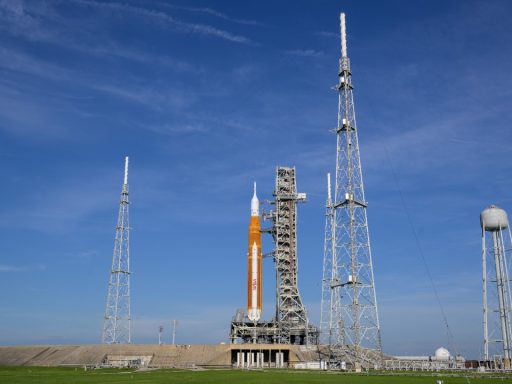
NASA entered the year signaling that Artemis 2 was on track for an early launch window, with teams working through final hardware checks and rehearsals at Kennedy Space Center. That confidence took a hit when a critical fueling run of the Space Launch System was cut short after engineers detected a hydrogen leak, a setback that immediately put pressure on the existing schedule and forced managers to reassess how much risk they were willing to carry into the first crewed flight. Reporting on the wet dress rehearsal described how controllers halted the operation and acknowledged that the earliest realistic opportunity had slipped to March, with NASA pushing the launch window rather than trying to salvage the earlier dates.
The hydrogen issue was not just a nuisance, it was a direct threat to the kind of clean countdown the agency wants for a mission that will send humans farther from Earth than any crew since Apollo. Coverage of the incident noted that the leak emerged during a dress rehearsal and that the resulting delay would push the lunar flyby at least a month, with TNND describing how the agency will have to wait to launch humans to their deepest point in space in over 50 years. That “over 50” year gap is not just a historical footnote, it is a measure of how much institutional memory NASA is rebuilding as it relearns the art of deep space crewed flight.
The leak that forced a rethink
The hydrogen leak that derailed the fueling test was a stark reminder of how sensitive the Space Launch System is to even small anomalies in its cryogenic plumbing. Hydrogen is notoriously difficult to handle, and the SLS core stage relies on vast quantities of supercooled propellant that must be loaded, vented, and monitored with extreme precision. When sensors flagged the leak during the wet dress rehearsal, controllers had little choice but to stop the operation, a decision that effectively closed the door on the original launch period and set in motion the latest schedule revision described by NASA and its partners.
The stakes are higher than a typical test campaign because Artemis 2 is not a cargo or uncrewed demonstration, it is a 10 day mission that will carry astronauts on a looping trajectory around the Moon and back. That profile demands a flawless ascent and precise engine burns, and any unresolved leak in the fueling system would be unacceptable for a crewed flight. Reports on the scrubbed rehearsal emphasized that the launch of the lunar flyby will now wait at least a month and that TNND framed the mission as sending humans to their deepest point in space in over 50 years, a benchmark that helps explain why managers are willing to accept another delay rather than rush the fix.
A new March window, quietly defined
Behind the scenes, NASA has already begun to pencil in a new set of target dates that reflect both the technical work ahead and the celestial mechanics that govern the mission. A recent internal document, described in coverage by NASA watchers, indicates the agency is apparently now targeting March 6 to 11 for the Artemis 2 launch. That narrow band reflects the need to hit a trajectory that will allow Orion to loop around the Moon and then return to Earth with the right entry conditions, a constraint that sharply limits when the rocket can actually lift off.
The emerging March plan lines up with earlier hints from live coverage of the fueling test, which noted that Refresh and Get updates showed NASA eyeing March at the earliest and flagging a later opportunity that stretches to April 30. In parallel, a separate account of the internal planning noted that Claire Cameron reported the same March 6 to 11 band, reinforcing that the agency has quietly converged on that window even as it avoids making a high profile announcement before the hydrogen issue is fully resolved.
Why the trajectory leaves little room to improvise
The reason NASA cannot simply pick any convenient day on the calendar comes down to the physics of the Artemis 2 flight path. The mission plan calls for Orion to leave Earth, loop around the Moon, and then reenter the atmosphere on a very specific corridor that keeps heating and g-forces within acceptable limits for the crew. As the agency has explained in its own mission briefings, the launch date must support a trajectory that allows for the proper entry profile planned during Orion’s return to Earth, and only certain combinations of lunar position and vehicle performance will satisfy that requirement within a given launch period, a constraint detailed in mission documentation.
That tight coupling between launch timing and reentry conditions is why the new March 6 to 11 window is so narrow and why missing it would likely push the flight to a later period, potentially toward the end of April. The same mission overview that spells out the trajectory constraints also notes that only a limited number of opportunities exist within a launch period, which is why managers are so focused on clearing the hydrogen leak and completing another fueling test before committing to a specific day. In practice, that means the schedule is driven as much by orbital mechanics as by ground processing, and it explains why Orion and its return to Earth sit at the center of every scheduling discussion.
What still has to go right before liftoff
Even with a fresh March window in sight, NASA still has a checklist of technical and procedural milestones to clear before it can commit the crew to the pad. Engineers must identify the root cause of the hydrogen leak, implement a fix, and then repeat the fueling sequence to prove that the system can handle a full tanking without triggering alarms. The agency has already highlighted how it is conducting an Artemis 2 fuel test while it eyes a March launch opportunity, describing how teams are using the rehearsal to validate both the hardware and the countdown procedures in a recent fuel update.
On top of the leak investigation, mission planners are still refining the detailed flight plan that will govern everything from Orion’s outbound burns to its splashdown. That work is informed by the same trajectory rules that limit the launch dates, and it must account for contingencies such as alternate landing sites and potential wave-off days. Live coverage of the fueling test noted that Artemis 2 will not launch before March at the earliest, and that the agency is already looking at backup opportunities that extend toward the end of April, a sign that managers are building flexibility into the plan even as they publicly stick to the tighter March 6 to 11 band described by PST time zone reporting.