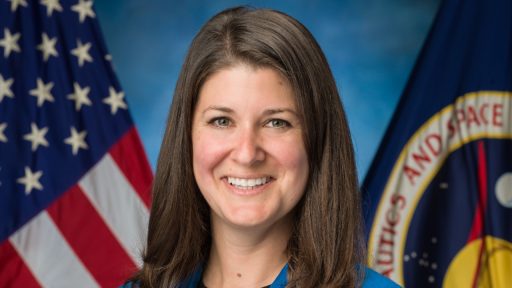
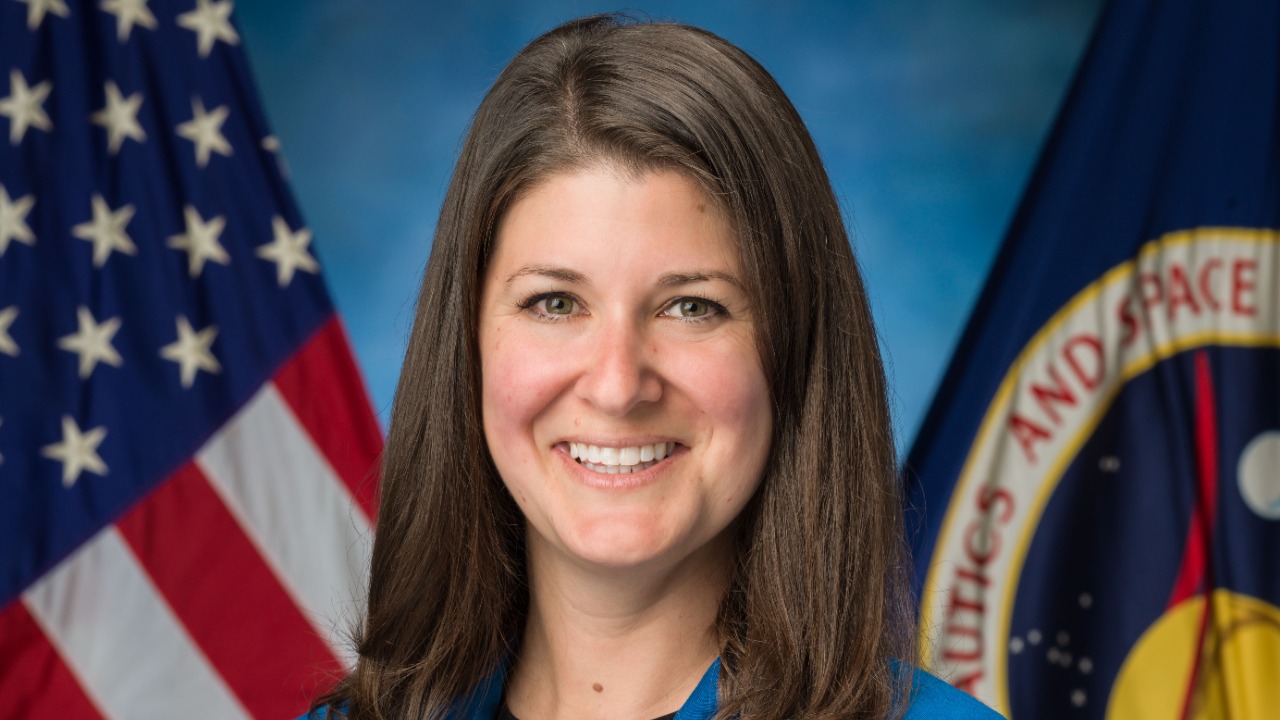

When NASA looks for the next person to walk on the Moon, the search often leads to a high desert city better known for ponderosa pines than rocket launches. One of the agency’s newest Moon mission contenders, geologist Lauren Edgar, is the latest to emerge from Flagstaff’s long, quietly influential role in space exploration. Her candidacy is not an outlier so much as the newest chapter in a relationship that has tied this northern Arizona community to lunar history for more than six decades.
From the Apollo era to the Artemis generation, Flagstaff has functioned as a proving ground for astronauts, engineers, and planetary scientists. Edgar’s story, rooted in years of work on the city’s volcanic terrain and in its federal labs, shows how deeply that legacy still shapes who gets to chase the Moon.
From mountain town to lunar classroom
Flagstaff’s connection to the Moon starts with geography and timing. When President John F. Kennedy challenged the country to land a person on the lunar surface, NASA needed a place that could double as another world. The agency found that mix of altitude, lava flows, and relative isolation in Flagstaff, turning the surrounding craters and cinder cones into a natural classroom for Apollo crews. As one account of astronauts in northern Arizona notes, when President John F. Kennedy proposed landing a man on the Moon, NASA quickly “found its way” to this high plateau, and now, decades later, that decision still shapes how the agency trains.
Locals sometimes describe their city as a small mountain town with an outsized role in space history, and the record backs them up. Travel writers have marveled that Still they “never knew that NASA and the USGS trained every single one of the moonwalkers in this small mountain town,” a reminder that the city’s role has often been better known inside mission control than on tourist brochures. That quiet influence is now resurfacing as Artemis planners again look to Flagstaff’s terrain and institutions to prepare crews for a new generation of lunar expeditions.
Lauren Edgar, from USGS rocks to Artemis short list
Lauren Edgar’s path to NASA’s astronaut corps runs straight through Flagstaff’s scientific infrastructure. Before she ever donned a flight suit, she worked as a research geologist at the USGS Astrogeology Science Center in the city, part of the broader U.S. Geological Survey network. A detailed profile from the agency describes how the “From Rocks to Rockets” journey began with her work as a “Former USGS” scientist, where the Geological Survey notes she studied the Earth, Moon, and Mars from her base in Flagstaff. That same account credits her with leading the Terrestrial Analogs for Research and Geologic Exploration Training program, known as TARGET, which sent teams to Iceland, Arizona, New Mexico, and Antarctica to rehearse the kind of field geology astronauts will need on other worlds.
By the time NASA selected Edgar as one of its newest astronaut candidates, she had already logged more than 17 years supporting Mars rover missions and helping define science goals for Artemis III, according to the USGS summary. Local television coverage identifies her as one of 10 astronaut candidates for the Aremis missions, a misspelling that still captures the core point: Edgar is now in the small group of people NASA is grooming for future Moon flights. In a separate interview, she calls it “such an honor to be a part of Flagstaff’s lunar legacy and continue that legacy as we return to the Moon,” a sentiment echoed in coverage that highlights how deeply her candidacy is intertwined with the city’s past and present role in exploration.
A decade in Flagstaff’s labs and lava fields
Edgar’s résumé is not just about titles, it is about time spent in the field and in Flagstaff’s scientific community. One report notes that she worked alongside planetary geologist Brad Skinner at USGS in Flagstaff for more than a decade, contributing to missions like the Mars Exploration Rovers and other robotic campaigns. A related story specifies that she worked with Skinner at USGS in Flagstaff for missions that included the Mars Exploration Rovers and related projects, grounding her expertise in the kind of comparative planetology that Artemis planners now prize.
Local coverage of Edgar’s selection underscores how personal those ties are. One segment on her candidacy highlights how Edgar credits mentors in the community, including colleagues like Jack who she describes as “really instrumental,” and notes that “we’re here for her” as she moves into astronaut training. Another video report on NASA Moon mission candidates reinforces that she is seen locally not just as a national figure but as a neighbor whose career grew out of Flagstaff’s own institutions. That blend of community support and technical depth is part of what makes her story resonate far beyond northern Arizona.
Flagstaff’s living training ground for Moonwalkers
Edgar’s candidacy is unfolding at a moment when Flagstaff is once again full of astronauts in bulky suits, picking their way across volcanic rock. In recent years, NASA crews have been practicing simulated moonwalks outside the city, using the region’s lava fields and craters to rehearse extravehicular activities. One report on these exercises quotes mission leaders explaining that “we have a full science team, the full EVA team, including the flight director, the CAPCOM, and the Eva directors,” describing how the EVA and CAPCOM roles are integrated into field tests. Later in that same account, planners emphasize that these simulations are not stunts but full-up mission rehearsals, with communications and decision-making chains mirroring what crews will experience in lunar orbit and on the surface.
Another detailed look at current training notes that the next astronauts who go to the Moon are using Flagstaff as their training ground, with instructors explaining that “They talk to Mission Control the whole time, and within Mission Control, the science team is there exercising all those components again in the near future.” That description of how They interact with Mission Control the entire time underscores that these sessions are as much about team dynamics as geology. A related video segment on astronauts using Flagstaff as a training ground reinforces that Mission Control the science team and Mission Control operations are being stress-tested in real time, not just in simulators, giving Artemis planners confidence that crews will be ready when they step onto the lunar surface.
A legacy every Moonwalker shares
For longtime residents, the idea that a Moon mission contender has deep Flagstaff roots is less a surprise than a continuation of a pattern. A widely shared social media post from a local broadcaster flatly states that “every astronaut who has ever been to the Moon has trained here in Flagstaff,” a claim repeated in a separate Jan post that celebrates the city’s role in lunar history. A video package on Flag and lunar training echoes that point, tying Edgar’s selection to a broader pattern in which NASA, the Moon, and Flagstaff are repeatedly linked.
That history is not just about people, it is about hardware and concepts being tested in the same rugged landscapes. Recent reporting on a “lunar RV” notes that NASA is testing a cozy mobile habitat for Moon astronauts, part of a broader push to refine how crews will live and work on the surface. While that specific testbed is not limited to Arizona, it fits into a pattern in which new concepts are vetted in analog environments like those around Flagstaff before they ever fly. Travel writers who have chronicled the city’s role in lunar history emphasize that NASA and the USGS used the town to train all the original moonwalkers, and that continuity helps explain why a modern astronaut candidate like Edgar still feels she is “continuing that legacy” rather than starting something new.