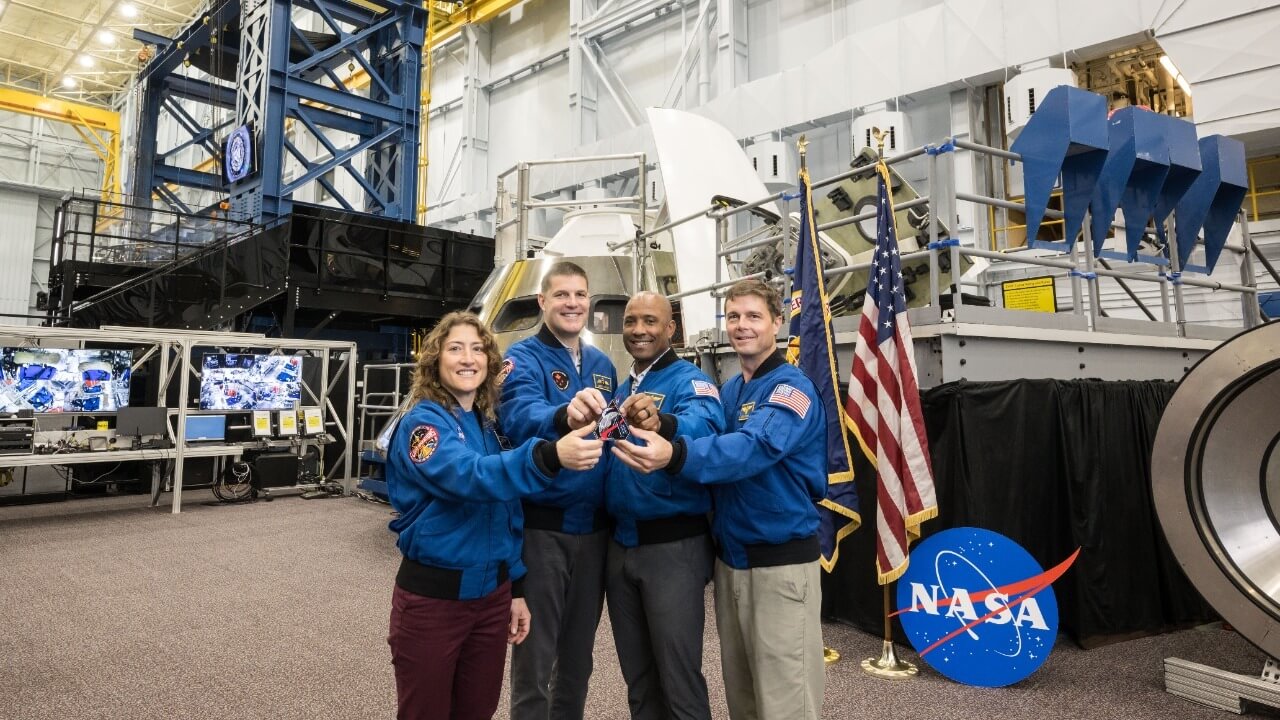

For the first time in 54 years, a crewed spacecraft is preparing to arc out of Earth orbit and head for the moon, this time with a Canadian astronaut in a starring role. Artemis II will send four people farther from Earth than any human has ever traveled, reviving a kind of deep-space exploration that has existed only in archives and memory since the end of Apollo. The mission is both a technical proving ground and a political statement that lunar exploration is no longer a purely American story.
At the center of that shift is Canadian Space Agency astronaut Jeremy Hansen, who is set to become the first Canadian to fly to the moon. His seat on Artemis II reflects years of investment by Canada in robotics and lunar technology, and it signals that the next chapter of moon exploration will be built on shared capability rather than solo national heroics.
The first human trip to the moon in 54 years
Artemis II is designed as the first crewed flight of NASA’s new lunar program, a mission that will loop around the moon and return to Earth without landing. It will be the first time humans travel toward the moon since the Apollo program ended in 1972, a gap of exactly 54 years that underscores how rare and risky this kind of voyage remains, as detailed in recent Artemis coverage. NASA plans to use this flight to validate the Orion spacecraft’s life support systems and deep-space operations before attempting a lunar landing on Artemis III.
Several analyses describe Artemis II as the first human mission to the moon in 54 years, a figure that has become shorthand for the distance between the Apollo era and today’s return, with one report emphasizing that it has been exactly 54 years since astronauts last ventured there. Another account frames the mission as America’s first crewed return to the Moon after 53 years, noting that, After 53 years, America is preparing to send humans back beyond low Earth orbit. Taken together, the reporting makes clear that Artemis II is not just another launch, it is a generational pivot back to deep space.
A Canadian star at the heart of Artemis II
Canada’s role in this mission is embodied in Jeremy Hansen, a colonel in the Royal Canadian Air Force and a member of the Artemis II crew. The Canadian Space Agency notes that Canada will make history when Jeremy Hansen becomes the first Canadian to travel to the moon, a milestone that flows from the country’s contributions to lunar robotics and the Gateway station. His assignment is not symbolic window dressing, it is a recognition that Canada’s hardware and expertise are woven into the architecture of the broader Artemis program.
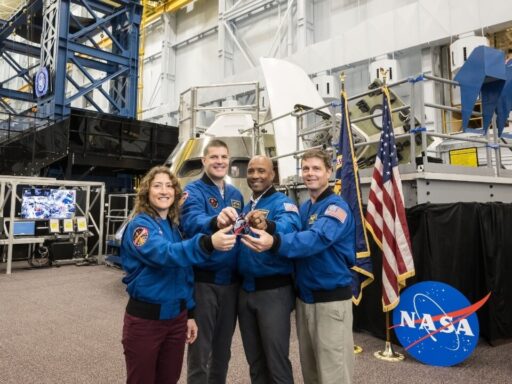
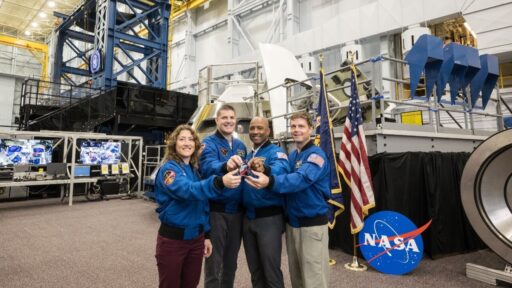
Hansen’s presence on the crew also reflects a deliberate effort to internationalize lunar exploration, moving beyond the purely American crews of Apollo. Profiles of the astronauts emphasize that the four-person team, sometimes dubbed the Artemis 2 Explor crew in mission materials, is meant to represent a coalition of partners who will help sustain a long-term lunar presence, as outlined in mission summaries that list the Names and roles of the Artemis 2 Explor group. In that sense, Hansen is both a mission specialist and a political signal that the moon is becoming a shared destination.
A fast-approaching launch window, with Florida weather in play
NASA has been circling an early February launch target for Artemis II, describing the mission as a ten day voyage around the Moon that could begin as soon as the first week of the month. One agency update notes that the flight is currently targeted for a February window, while another briefing from CAPE CANAVERAL, Fla, describes Artemis II as slated for a possible early February launch from Florida’s Space Coast, with a crewed Orion capsule riding the Space Launch System rocket off the pad at CAPE CANAVERAL, Fla. The mission profile calls for a distant lunar flyby that will take the crew farther from Earth than any previous human flight.
Despite the excitement, the schedule remains fluid. NASA has not yet announced an exact liftoff time, with one overview noting that When the Artemis rocket will actually leave the pad depends on final testing and propellant loading. A cold snap in Florida has already forced the agency to delay its final wet dress rehearsal, with reports from Florida explaining that extreme temperatures at the launch site led NASA to push back the last major prelaunch test. Another schedule update notes that NASA has revealed a sequence for the wet dress rehearsal and launch window, explaining that According to the latest plan, the mission will set the stage for future exploration of Mars once it clears these final hurdles.
Inside the crew’s training and the mission’s technical goals
While the launch date firms up, the four astronauts have been deep in training for their historic flight around the moon. NASA officials have described the Artemis II astronauts as prepared for their forthcoming lunar orbital mission, with one briefing explaining that NASA now wants to launch its Artemis mission in February 2026 as the first human trip to the moon since 1972. A separate look inside their regimen describes final preparations underway for NASA’s first crewed mission in the Artemis program, with reporter Read Full Bio and Jennifer Earl detailing how the crew practices emergency procedures, spacecraft operations, and the choreography of their ten day journey.
Mission planners have been explicit that Artemis II is a test flight, not a landing attempt, and that its success is a prerequisite for putting boots back on the lunar surface. NASA materials describe the mission as a planned lunar spaceflight that will send four astronauts on a ten day voyage around the Moon inside the Orion spacecraft, with one update from Jan noting that Artemis II will test navigation, communication, and life support systems in deep space. Another overview explains that Artemis II is a planned mission that will follow the uncrewed Artemis I flight and precede Artemis III, with the Artemis II Has Fast Approaching Launch Date And New Streaming Show, Moonbound coverage highlighting how the mission will be documented for audiences on Earth as it validates the hardware needed for a future landing.
Why Artemis II matters for the future of lunar exploration
Beyond the spectacle of a crewed moon flyby, Artemis II is a test of whether a new, more international model of exploration can work at scale. Analysts have pointed out that the mission is the first step in a broader campaign to build a sustained presence in lunar orbit and on the surface, with one detailed explainer noting that DOI materials describe how the mission will feed into later flights that assemble the Gateway station and test technologies for Mars. The same analysis, published under a Republish our articles for free, online or in print, under a Creative Commons license banner, stresses that the 54 year gap has allowed planetary science and geology to advance dramatically, so Artemis crews will arrive with far more sophisticated questions and instruments than their Apollo predecessors.
Public interest appears to be building as the launch window nears. NASA’s own social channels have framed the mission as sending four humans farther from Earth than any previous human has ever been, with a Jan update explaining that NASA is about to send 4 humans on a planned lunar spaceflight that will pave the way for a lunar landing on Artemis III. Other coverage notes that Artemis II is the second mission in the broader program and the first to carry humans toward the moon since Apollo, with one poll referenced in that reporting suggesting strong public support for a return to the moon. If Artemis II flies as planned, with a Canadian star sharing the spotlight, it will mark not just a return to a destination last visited in the early 1970s, but the start of a more collaborative era in which the moon becomes a proving ground for the next great leap outward.